

What if the stock market had an emergency brake to stop panic selling?
That’s basically what circuit breakers are: automatic pauses that freeze trading across U.S. exchanges when prices fall fast, forcing everyone to stop and reassess.
They don’t save you from losses, but they slow the speed of selling so liquidity providers (the firms who buy and sell to keep markets working) can step in and prices can reset.
This post shows how those halts work, the three S&P-based thresholds, single-stock pause rules, and why regulators added them after big crashes.
Core Explanation of Stock Market Circuit Breakers
Circuit breakers are automatic pauses that freeze all trading across major U.S. stock exchanges when the market drops too fast in one day. They’re built to interrupt panic selling before it spirals. During extreme volatility, fear pushes investors to sell without thinking. Prices fall further because everyone’s selling, and that drop scares more people into selling. Circuit breakers break that feedback loop by forcing everyone to stop, take a breath, and figure out what’s actually happening versus what fear’s telling them to do.
Market‑wide halts work across every exchange at the same time. When a circuit breaker triggers, trading freezes for the New York Stock Exchange, Nasdaq, and every other U.S. equity market simultaneously. The pause gets measured by how far the S&P 500 index has fallen from the previous day’s close. If the index crosses a certain threshold, computers automatically freeze the entire market for a set period, or for the rest of the day, depending on how bad the drop is. The goal isn’t to prevent losses. It’s to slow down how fast those losses happen so liquidity providers (the firms and traders who buy and sell to keep markets functioning) have time to step back in.
The system applies to all listed stocks and exchange‑traded funds. Retail investors, institutions, algorithms, and market makers all stop trading at the same instant. You can’t call your broker and ask to trade through a halt. The entire infrastructure pauses, order books freeze, and no new transactions occur until the market reopens under controlled conditions. This coordination prevents one exchange from staying open while another closes, which would create chaos and unfair advantages.
Market-Wide Circuit Breaker Levels, Thresholds, and Trigger Rules
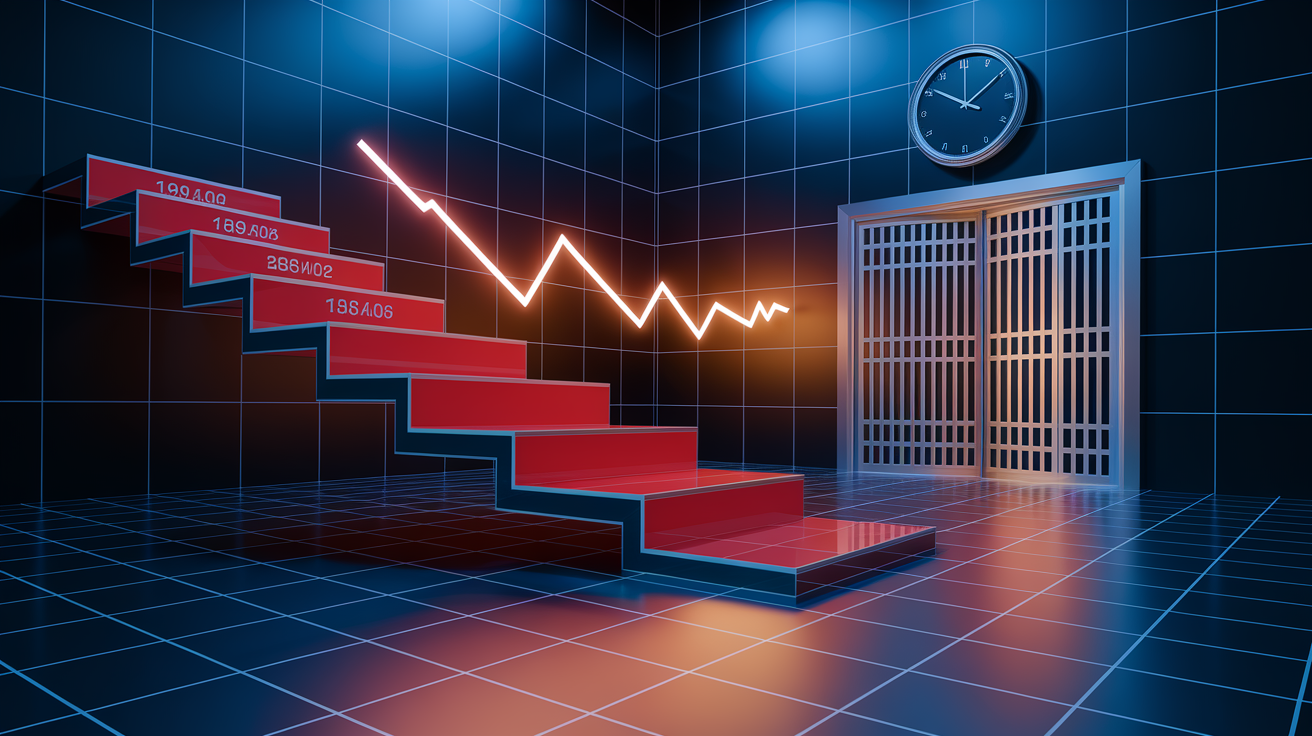
The U.S. uses a three‑tier system tied to percentage declines in the S&P 500 from the prior trading day’s close. Each morning, regulators and exchanges calculate the exact index points that match the percentage thresholds. When the index hits or falls below one of those point levels during the trading day, the circuit breaker activates. Level 1 is set at a 7 percent decline, Level 2 at 13 percent, and Level 3 at 20 percent. The 7 and 13 percent triggers halt trading for 15 minutes if they occur between 9:30 a.m. and 3:25 p.m. Eastern Time. If a 7 or 13 percent drop happens after 3:25 p.m., trading continues without a pause because markets are already close to the 4:00 p.m. close and a short halt wouldn’t meaningfully restore order. The 20 percent threshold closes the market for the remainder of the day no matter what time it triggers.
Only one Level 1 halt and one Level 2 halt can occur per trading day. If the market falls 7 percent and pauses for 15 minutes, then recovers slightly and drops again to 7 percent, the circuit breaker doesn’t re‑trigger. The index must decline all the way to 13 percent before the next halt kicks in. After a Level 2 halt, the only remaining circuit breaker is the 20 percent Level 3 shutdown. This daily limit structure prevents endless cycles of pauses and makes sure that repeated small bounces near a threshold don’t keep freezing trading. When a halt ends, exchanges run a brief reopening auction to collect orders and determine a fair restarting price, then normal continuous trading resumes across NYSE, Nasdaq, and all other U.S. equity venues at the same moment.
- Level 1: 7 percent decline triggers a 15‑minute halt if the drop occurs between 9:30 a.m. and 3:25 p.m. ET. After 3:25 p.m., no halt occurs.
- Level 2: 13 percent decline triggers a 15‑minute halt under the same time window. No halt after 3:25 p.m. ET.
- Level 3: 20 percent decline halts trading for the rest of the day at any time, including after 3:25 p.m.
- Daily limit rule allows one Level 1 and one Level 2 halt per day. A second dip to 7 percent doesn’t re‑trigger Level 1.
- Time‑of‑day restriction means the final 35 minutes of the session (after 3:25 p.m. ET) don’t impose 15‑minute pauses for 7 or 13 percent drops, but the 20 percent rule still applies and will end the day.
Individual Stock Halts and the Limit Up–Limit Down (LULD) System

Individual stock halts are separate from market‑wide circuit breakers. A single company’s shares can be paused for news pending (merger announcements, earnings surprises, regulatory issues) or because the price is moving so violently that exchange rules step in to slow it down even when the broader market is calm.
The Limit Up–Limit Down system sets price bands around every stock based on recent trading activity. If a stock’s price tries to trade outside its allowed band for 15 continuous seconds, the exchange pauses that stock for five minutes to let order flow stabilize. Tier 1 stocks (S&P 500, Russell 1000, and select exchange‑traded products) have tighter bands. Plus or minus 5 percent if the stock’s priced above three dollars. Tier 2 stocks (everything else in the National Market System) typically get plus or minus 10 percent bands when priced above three dollars. For cheaper stocks, the bands widen significantly. A stock priced between 75 cents and three dollars may have a 20 percent band, and stocks under 75 cents can have bands as wide as 75 percent or 15 cents, whichever is lower. During the final 25 minutes of the trading day, all LULD bands double in width to reduce nuisance halts near the close. If a stock triggers a LULD pause in the last 10 minutes of the session, it won’t reopen and remains halted until the next trading day.
| Tier | Price Condition | Band Percentage |
|---|---|---|
| Tier 1 | Above $3.00 | ±5% |
| Tier 1 | $0.75–$3.00 | ±20% |
| Tier 2 | Above $3.00 | ±10% |
| Tier 1/2 | Below $0.75 | ±75% or ±$0.15, lower of the two |
Regulatory Foundations Behind Stock Market Circuit Breakers

The Securities and Exchange Commission mandates circuit breakers and trading halt protocols under federal securities law. After the October 1987 Black Monday crash, when the Dow Jones Industrial Average fell roughly 22 percent in a single session, regulators and exchanges built the first version of circuit breakers to prevent a repeat. The original 1988 rules used fixed point declines in the Dow (250 points triggered a one‑hour halt, 400 points a two‑hour halt), but as markets grew and index levels climbed, point‑based triggers became meaningless. The system evolved to percentage‑based thresholds measured against the S&P 500, a broader and more representative benchmark of U.S. equities. The modern framework relies on principles from Regulation NMS, which coordinates trading rules across all national securities exchanges to keep markets fair and orderly.
Every major U.S. equity exchange (NYSE, Nasdaq, Cboe BZX, and others) follows the same circuit breaker levels and timing rules because the SEC requires uniform application. When a halt triggers, all venues pause simultaneously, preventing traders from jumping to a different exchange to continue trading. This cross‑market coordination also extends to options markets and futures tied to U.S. equity indexes, which pause or adjust their own trading rules in response to stock market halts. The regulatory structure treats circuit breakers as a shared public good. No single exchange wants to be the first to stop trading and lose volume to competitors, so the SEC imposes the rule universally and monitors compliance through routine surveillance and post‑event reviews.
Historical Circuit Breaker Activations and Market Chaos Events
Circuit breakers were born from crisis. Every major activation since 1988 has occurred during moments of extreme fear or structural breakdown. Understanding when and why these halts have triggered helps investors recognize the difference between normal volatility and the kind of panic that freezes the entire market.
Black Monday 1987
On October 19, 1987, the Dow Jones Industrial Average dropped approximately 22 percent in a single trading day. Still the largest one‑day percentage decline in U.S. stock market history. Trading didn’t halt that day because circuit breakers didn’t exist yet. The crash exposed how quickly panic could spread without any mechanism to slow it down. Within months regulators and exchanges agreed to build automatic pauses into the system. The first circuit breaker rules went live in 1988, using point‑based triggers on the Dow. Though the exact mechanics have changed, the core purpose (interrupt feedback loops, restore liquidity, give time to think) traces directly back to the lessons of Black Monday.
The 2010 Flash Crash
On May 6, 2010, the Dow plunged nearly 1,000 points in minutes during the afternoon session, then recovered most of the loss almost as fast. Individual stocks traded at absurd prices. Some blue‑chip shares briefly hit one cent, others spiked to $100,000. The event didn’t trigger a market‑wide circuit breaker because the S&P 500 never crossed the percentage thresholds, but the extreme intraday volatility and disorderly trading prompted regulators to strengthen individual‑stock protections. The Limit Up–Limit Down system and tighter quote rules emerged from Flash Crash post‑mortems, adding layers of defense against runaway algorithms and liquidity vacuums.
March 2020 Halts
The COVID‑19 pandemic triggered the most intense sequence of circuit breaker activations in modern history. As lockdowns spread and economic uncertainty spiked, the S&P 500 crossed the 7 percent Level 1 threshold four times in two weeks: March 9, March 12, March 16, and March 18, 2020. Each halt paused trading for 15 minutes, but the pauses didn’t stop the broader selloff. Markets stabilized only after central banks and governments announced massive fiscal and monetary support. The March 2020 period demonstrated that circuit breakers slow panic but can’t eliminate losses or prevent multi‑day declines. They simply change the pace and give participants time to digest information between waves of selling.
The historical record shows that circuit breakers activate rarely, cluster during crises, and don’t prevent bear markets. They’re a speed bump, not a cure. Investors who understand this history are less likely to panic during a halt and more likely to use the pause to reassess positions rather than assume the halt itself signals the end of a crash.
How Circuit Breakers Affect Liquidity, Order Flow, and Price Discovery

When a circuit breaker freezes trading, the market doesn’t just pause. It loses the continuous flow of buy and sell orders that normally keeps prices stable and spreads tight. Automated market makers and high‑frequency trading firms often pull their quotes during extreme volatility, and a mandatory halt gives them explicit permission to step back, reassess risk, and reprice their willingness to provide liquidity. By the time the halt ends, the order book can be much thinner than it was before the freeze.
Spread widening is common after reopens. Before a halt, a liquid stock might trade with a one‑cent spread between the highest buy order and the lowest sell order. After a 15‑minute pause and a volatile reopening auction, that spread can widen to five cents, ten cents, or more, especially in mid‑cap and small‑cap names. Fewer shares are displayed at each price level (lower book depth), so a moderately sized market order can move the price more than it would under normal conditions. This effect compounds for less liquid stocks and exchange‑traded funds, where natural buyers and sellers are already scarce.
Price discovery becomes harder immediately after a halt lifts. The reopening auction collects orders submitted during the pause and attempts to find a single clearing price that maximizes executed volume, but that price reflects snapshot sentiment at one moment, not continuous negotiation. The first few minutes of resumed trading often see sharp moves, quick reversals, and elevated slippage as participants test where real supply and demand sit. Traders who rely on tight execution or algorithmic strategies calibrated for normal conditions can find their assumptions broken, leading to unexpected fill prices, partial fills, or rejected orders if protective collars are in place.
Investor and Trader Impacts of Market Halts

Retail investors can’t execute trades during a market‑wide halt no matter which brokerage they use, because the halt’s imposed at the exchange level. Calls to customer service, mobile app order entry, and web platforms all freeze until trading resumes. Institutional investors face the same restrictions, though they often have direct communication lines to trading desks and can spend the pause adjusting strategy, hedging in other markets (Treasury futures, currency forwards, or options if those markets remain open), or repositioning portfolios for the reopen. The inability to act during the halt itself is universal, but the sophistication and speed with which different participants respond after the halt varies widely.
- Day traders experience the most disruption because their strategies depend on minute‑to‑minute price moves and the ability to enter and exit quickly. A 15‑minute freeze can erase time‑sensitive setups, and the post‑halt volatility often produces slippage that wipes out tight risk‑reward plans.
- Swing traders holding positions for days or weeks are less affected by a single pause, though they may use the halt to reassess stop levels, position sizes, or whether to cut exposure before the next leg down.
- Long‑term investors focused on multi‑year horizons often benefit psychologically from the forced break. The halt interrupts emotional decision‑making and provides a window to review fundamental thesis versus short‑term noise.
- Options traders face wider bid‑ask spreads, lower displayed size, and temporary mispricing in option chains after halts. Implied volatility typically spikes, making new hedges expensive, and existing positions can be harder to exit cleanly.
- Algorithmic traders must program halt‑detection logic into their systems. Algos that don’t recognize exchange status messages can send orders into the void, trigger risk alerts, or execute unintended trades during the reopen surge.
- ETF investors may see larger‑than‑normal premiums or discounts to net asset value after halts, because authorized participants and market makers pull back and arbitrage mechanisms temporarily weaken.
Emotional decision‑making compounds during and after halts. The pause can feel like breathing room, but it can also amplify anxiety because you’re forced to sit with uncertainty and can’t “do something” to regain control. The most effective approach combines pre‑halt preparation (position sizing, stop discipline, cash reserves) with calm reassessment during the freeze rather than impulsive action the moment trading restarts. Risk controls like maximum position sizes and predetermined exit points help investors stick to plans when fear or euphoria is highest.
Practical Preparation and Risk Management During Volatile Markets
Knowing the circuit breaker thresholds in advance lets you anticipate pauses and avoid being surprised when your brokerage app stops accepting orders. Keep the 7, 13, and 20 percent S&P 500 levels in mind during stress periods, and watch index futures or real‑time S&P 500 pricing if you’re actively trading. When the index approaches a threshold, expect liquidity to thin and volatility to spike as traders front‑run the halt or try to exit before the freeze.
Managing leverage is critical because halts don’t stop margin calls or reduce your obligations. If you’re borrowing to invest and the market drops 7 percent, pauses for 15 minutes, then drops another 6 percent after reopening, your account can fall below maintenance requirements while you’re locked out of executing trades to reduce exposure. Excessive leverage turns a manageable drawdown into a forced liquidation, often at the worst possible prices. A simple rule: if a 20 percent market drop would trigger a margin call or force you to sell, your leverage is too high for volatile environments.
- Monitor thresholds by tracking the S&P 500 in real time during selloffs and noting when the index is within a few percent of 7, 13, or 20 percent declines from the prior close.
- Manage leverage by keeping borrowed exposure low enough that you can survive a 20 percent drop without forced selling, and review margin balances weekly during elevated volatility.
- Review stop orders because traditional stop‑loss orders can execute at poor prices during thin post‑halt reopens, or may not execute at all if price gaps through your stop level. Consider stop‑limit orders with realistic limit prices or manual monitoring.
- Size positions so that no single holding represents a large enough percentage of your portfolio that a halt‑driven gap down creates panic or a need to act immediately.
- Track news and volatility indicators such as the VIX (volatility index), economic calendars (Federal Reserve announcements, employment reports), and geopolitical developments that historically precede sharp market moves and potential halts.
Global Circuit Breakers and International Market Comparisons

The U.S. isn’t the only market with automatic trading pauses. European exchanges, Asian bourses, and emerging markets all use circuit breaker mechanisms, though the specific percentage triggers, halt durations, and market structures differ. China introduced circuit breakers in January 2016 with thresholds at 5 and 7 percent declines in the CSI 300 index, but suspended the system after just four trading days because repeated halts seemed to amplify panic rather than calm it. That experiment highlighted a key tension: circuit breakers work best when investors trust that pauses are rare, brief, and give time for real information to be digested, but if halts trigger frequently or are perceived as masking deeper problems, they can backfire.
European markets typically use a mix of market‑wide suspensions and stock‑specific volatility auctions, with thresholds and procedures varying by country and exchange. Many Asian markets employ similar percentage‑based rules, though the exact levels, timing windows, and whether trading resumes the same day or the next morning depend on local regulations and trading culture. Cross‑asset contagion is a concern because equity halts in one major market can spill over into currency, commodity, and bond markets globally, and futures contracts tied to halted cash indexes must navigate whether to pause in sympathy or continue trading with wider spreads and lower liquidity. International investors managing portfolios across time zones need to understand each market’s halt rules, especially when hedging or arbitraging between regions during stress periods.
Final Words
You learned how circuit breakers pause trading to slow panic and give markets time to breathe.
We covered market-wide levels, single-stock LULD pauses, regulatory roots, history, and how halts affect liquidity, order flow, and price discovery.
That helps everyday investors make calmer choices: check leverage, review stop plans, and favor simple rules when markets jump.
If you follow a few clear steps you’ll handle a circuit breaker stock market event more confidently and keep your long-term plan on track.
FAQ
Q: What is a circuit breaker in the stock market?
A: A circuit breaker in the stock market is a market-wide pause that temporarily stops trading to slow panic selling, let liquidity recover, and give traders and regulators time to reassess conditions.
Q: When was the last circuit breaker in the stock market?
A: The last market-wide circuit breaker in the U.S. stock market occurred on March 18, 2020; multiple Level 1 halts also happened on March 9, 12, and 16, 2020 during COVID volatility.
Q: How long does a circuit breaker last in the stock market?
A: A market-wide circuit breaker lasts 15 minutes for Level 1 and Level 2 halts if triggered before 3:25 p.m. ET; a Level 3 halt suspends trading for the remainder of the day.
Q: How far can stocks fall before a circuit breaker?
A: Stocks can fall by specified S&P 500 percentages before market-wide breakers trigger: 7 percent for Level 1, 13 percent for Level 2, and 20 percent for Level 3, measured from the prior S&P close.