
Think an ETF prospectus is only for lawyers and compliance teams?
You don’t need to read every legal page to know if a fund fits your plan; the fact sheet and a few key prospectus sections give the answer fast.
This post walks you step by step through the exact parts to scan first, the objective, benchmark (the index it follows), fees, and top holdings (the biggest things it owns), so you can decide in about 10 minutes whether the ETF belongs in your mix and what to read next if something looks off.
Key Information to Review First in an ETF Prospectus and Fact Sheet

Opening an ETF prospectus or fact sheet for the first time can feel like staring at a wall of numbers and legal terms. But you don’t need to read every word. Both documents include core pieces designed to get you oriented fast, and if you know where to look first, you can make a confident call in under 10 minutes.
Start with the summary section at the front of the prospectus. Usually runs one to three pages and covers the fund’s main objective, how it invests, the expense ratio, and key risks. Fact sheets compress this same information into a single page with visuals like pie charts and performance graphs. These two tools work together. The fact sheet is for fast scanning. The prospectus is for deeper confirmation when something raises a question.
Before you dig into detailed sections, locate and review these four foundational items:
- ETF objective — what the fund’s trying to achieve and the asset class or index it follows
- Benchmark index — the standard the fund measures its performance against
- Expense ratio — the annual percentage cost deducted from your investment
- Top holdings or sector breakdown — a snapshot of what the fund actually owns
Once you’ve confirmed these points, you can evaluate whether the ETF fits your timeline, your risk tolerance, and the role you need it to play in your overall mix. If any item doesn’t match your needs or looks unclear, that’s your signal to move to the full prospectus and read the detailed disclosures for that section.
Understanding ETF Objectives and Strategies

The objective statement tells you what the ETF is designed to do. It might say the fund seeks to track the performance of a specific index, provide income from dividend stocks, gain exposure to emerging markets, or replicate the price of gold. This single sentence defines the fund’s purpose, and it should align with your investing goal. Saving for retirement in 30 years? An equity growth objective makes sense. Need stable income next year? A bond fund or dividend ETF is more appropriate.
Index-tracking ETFs, which make up most of the market, will name the index they follow and describe the methodology behind it. The methodology explains how securities are selected, weighted, and rebalanced. Common weighting schemes include market capitalization (larger companies get a bigger share), equal weighting (every holding gets the same percentage), or fundamental weighting (based on metrics like revenue or book value). Rebalancing happens quarterly, semi-annually, or annually, and it keeps the fund aligned with the index as prices and company sizes shift.
| Term | Meaning |
|---|---|
| Passive strategy | Fund tracks an index with minimal trading or stock selection |
| Active strategy | Manager chooses securities and adjusts holdings to outperform a benchmark |
| Full replication | Fund buys every security in the index at the exact index weight |
| Sampling | Fund buys a representative subset of securities to replicate index returns |
| Synthetic replication | Fund uses derivatives (swaps) to replicate index performance without owning the underlying securities |
Expense Ratios, Fees, and Trading Costs

The expense ratio is the percentage of fund assets deducted each year to cover management fees, administrative costs, custody fees, audit expenses, and legal costs. It appears as a single number on the fact sheet and is broken down line by line in the prospectus. A fund with a 0.20 percent expense ratio charges $20 per year on a $10,000 investment. That fee gets deducted automatically from the fund’s assets, so you never write a check, but it quietly reduces your return every year.
Prospectuses also disclose acquired fund fees, which apply when an ETF invests in other funds, and operational fees like trustee compensation or marketing expenses. Some funds include performance fees if the manager beats the benchmark. Fact sheets rarely show this level of detail, so if the expense ratio on the fact sheet looks unusually low, check the prospectus fee table for hidden line items. Even small differences add up over decades. A 0.10 percent fee difference on $10,000 over 20 years can cost you several hundred dollars in compounded growth.
Trading costs are a separate category and don’t appear in the expense ratio. When you buy or sell ETF shares, you pay a bid-ask spread, which is the difference between the price a buyer will pay and the price a seller will accept. Narrow spreads of a few cents are common for popular ETFs, but thinly traded funds can have spreads of 0.50 percent or more. You also pay your broker a commission if your account doesn’t offer commission-free ETF trades. These costs hit you at the moment of purchase and sale, and they’re especially painful if you trade frequently or invest small amounts every month.
- Management fees — compensation for the fund manager and issuer, usually the largest component of the expense ratio
- Bid-ask spread — the trading cost that appears when you place a buy or sell order, not listed in the prospectus but visible in your brokerage platform
- Brokerage commission — a per-trade fee charged by your broker, often waived for certain ETFs but still applicable for others
ETF Holdings and Sector/Geographic Breakdown

Fact sheets display the top 10 or top 20 holdings, sorted by weight, so you can see which companies or securities make up the largest portion of the fund. If a single stock represents 15 percent of the ETF, that’s high concentration, and it means your returns will depend heavily on that one company’s performance. Prospectuses describe the full holdings disclosure policy, which is typically updated daily or monthly on the issuer’s website, but they don’t print the full list in the document. Instead, the prospectus explains how often holdings are published and where to find them.
Sector and geographic breakdowns show how the fund’s assets are distributed across industries and countries. A U.S. large-cap equity ETF might hold 25 percent technology, 15 percent healthcare, 12 percent financials, and smaller slices of other sectors. A global equity ETF might split 60 percent U.S., 20 percent Europe, 10 percent Asia, and 10 percent emerging markets. These allocations help you spot overlap with other funds you already own. If you hold three ETFs and all three have heavy technology exposure, you’re not as diversified as you think, and a tech sector downturn will hit your entire portfolio at once.
Weighting types matter. Market-cap weighting gives the largest companies the biggest share, which can create top-heavy funds where a few giants dominate. Equal weighting spreads assets evenly but requires more frequent rebalancing and trading costs. Fundamental weighting uses metrics like revenue or dividends, which can tilt toward value stocks. Understanding the weighting scheme helps you predict how the fund will behave when certain stocks or sectors surge or crash.
Understanding ETF Risk Disclosures

Prospectuses categorize risks in several standard buckets, and understanding these categories helps you anticipate what might go wrong. Market risk is the most basic and unavoidable risk: the overall market can drop, taking your ETF with it. If you own an S&P 500 ETF and the U.S. stock market falls 20 percent, your fund will fall a similar amount. There’s no way to eliminate market risk without exiting the market entirely, but you can manage it by matching your time horizon to the asset class and avoiding panic selling during downturns.
Liquidity risk describes the possibility that you might not be able to sell your ETF shares quickly at a fair price. Highly liquid ETFs with millions of shares traded daily have tight bid-ask spreads and minimal price impact when you sell. Thinly traded ETFs, especially those tracking niche sectors or small international markets, can have wide spreads and low volume. This means you pay more to exit and might move the price against yourself if you place a large order. Fact sheets sometimes include average daily trading volume and median bid-ask spread as quick liquidity indicators.
Tracking error measures how closely an ETF’s return matches its benchmark index. Even index funds don’t replicate the index perfectly because of fees, trading costs, cash drag, and timing differences in dividend reinvestment. A tracking error of 0.10 percent means the fund’s return differs from the index by that amount, on average. Small tracking errors are normal. Large or inconsistent tracking errors suggest operational problems or hidden costs. Prospectuses usually disclose historical tracking error or tracking difference, while fact sheets may show a simple year-over-year comparison of fund return versus index return.
Derivatives risk and foreign investment risk apply to specific ETF types. Funds that use futures, options, or swaps to replicate index performance introduce counterparty risk (the other side of the derivative contract might default) and complexity that can amplify losses in volatile markets. ETFs that invest in foreign securities face currency risk (exchange rate changes can hurt returns even if the underlying stocks rise) and geopolitical risk (government actions, regulatory changes, or market shutdowns in foreign countries). Fact sheets condense these risks into a single risk rating or short paragraph, but the prospectus lists them in detail with real-world scenarios.
How to Evaluate ETF Performance Metrics

Performance metrics show how the fund has behaved in the past. While past results never guarantee future returns, they do reveal patterns in volatility, consistency, and how well the fund tracks its benchmark. Fact sheets highlight trailing returns over one year, three years, five years, and sometimes 10 years or since inception. These numbers are annualized, meaning they represent the average yearly return over that period, which makes it easier to compare funds with different launch dates.
Tracking difference is the gap between the ETF’s actual return and the benchmark index return over the same period. If the index gained 10 percent and the fund gained 9.80 percent, the tracking difference is negative 0.20 percent. This number accounts for the expense ratio, trading costs, and operational inefficiencies. A fund with a 0.10 percent expense ratio should have a tracking difference close to negative 0.10 percent. If the difference is much larger, it signals either high trading costs, poor replication, or sampling error.
Benchmark comparison tables appear on most fact sheets and show the fund’s return alongside the index return for multiple time periods. Volatility metrics, such as standard deviation, measure how much the fund’s returns bounce around the average. Higher standard deviation means more dramatic ups and downs, which can test your ability to hold through bad stretches. Some fact sheets include the Sharpe ratio, which divides return by volatility to show how much return you’re earning per unit of risk. A higher Sharpe ratio indicates better risk-adjusted performance.
When comparing ETF results to the benchmark, follow these steps:
- Confirm the benchmark index matches the fund’s stated objective
- Check that the time periods align (calendar year vs. trailing 12 months vs. annualized since inception)
- Subtract the expense ratio from the index return to estimate a realistic target for the fund
- Look for consistent small underperformance equal to the expense ratio, which is normal and expected
ETF Trading Characteristics and Liquidity
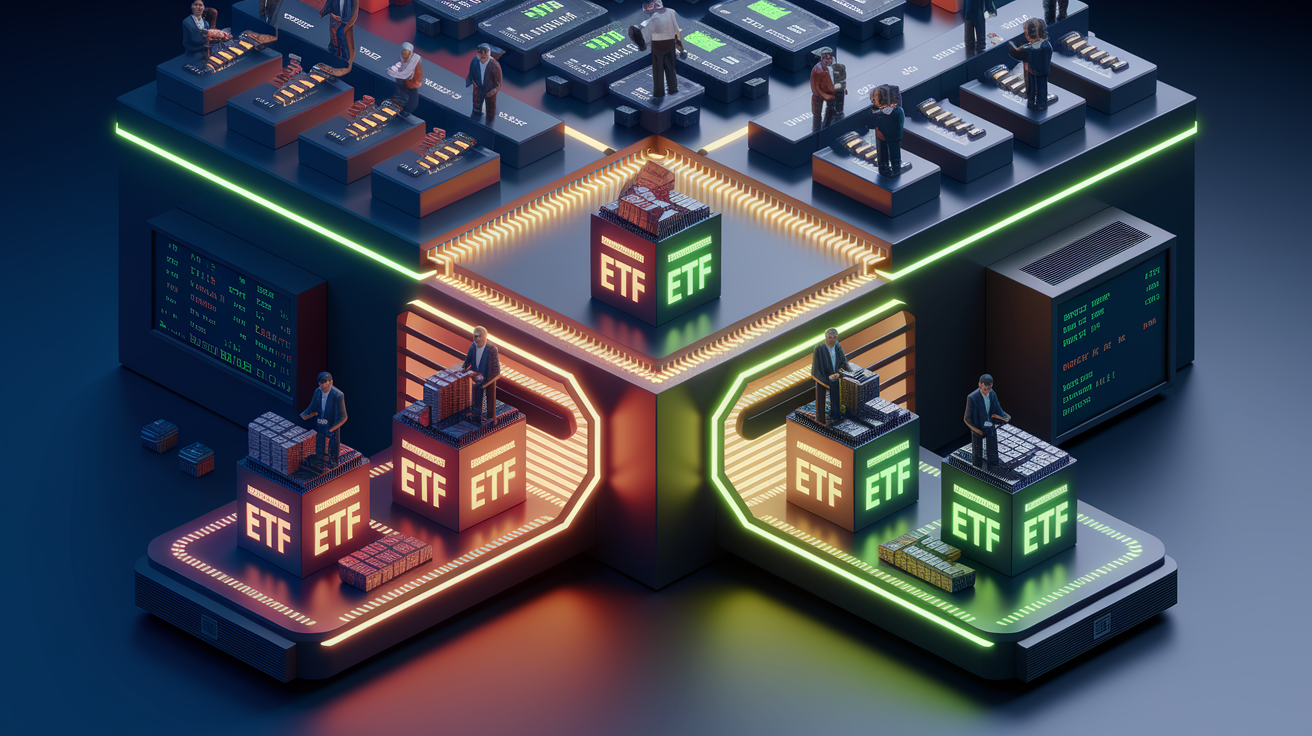
Liquidity in an ETF depends more on the liquidity of the underlying securities than on the ETF’s own trading volume. A fund that holds large, actively traded stocks can easily create and redeem shares even if the ETF itself has modest daily volume. Creation and redemption is the process by which authorized participants (large financial firms) exchange baskets of the underlying securities for ETF shares or vice versa. This mechanism keeps the ETF’s market price close to its net asset value and provides liquidity even when the ETF doesn’t trade heavily on the exchange.
Fact sheets often list average daily trading volume and median bid-ask spread as quick proxies for liquidity. A spread of 0.01 percent to 0.05 percent is typical for popular U.S. equity ETFs. Spreads above 0.20 percent suggest you’ll pay a noticeable cost every time you trade, which makes the fund less suitable for frequent rebalancing or short holding periods. Low volume isn’t automatically a red flag if the underlying holdings are liquid, but it does mean you should use limit orders and avoid trading during the first and last 15 minutes of the market day when spreads widen.
- Bid-ask spread — the immediate cost of entering or exiting your position, expressed as a percentage or dollar amount
- Creation/redemption process — the behind-the-scenes mechanism that maintains liquidity and pricing efficiency by allowing institutional investors to swap baskets of securities for ETF shares
- Average daily volume — the typical number of shares traded per day, useful as a rough liquidity indicator but not the full story if the underlying assets are highly liquid
Comparing an ETF Fact Sheet vs. a Prospectus
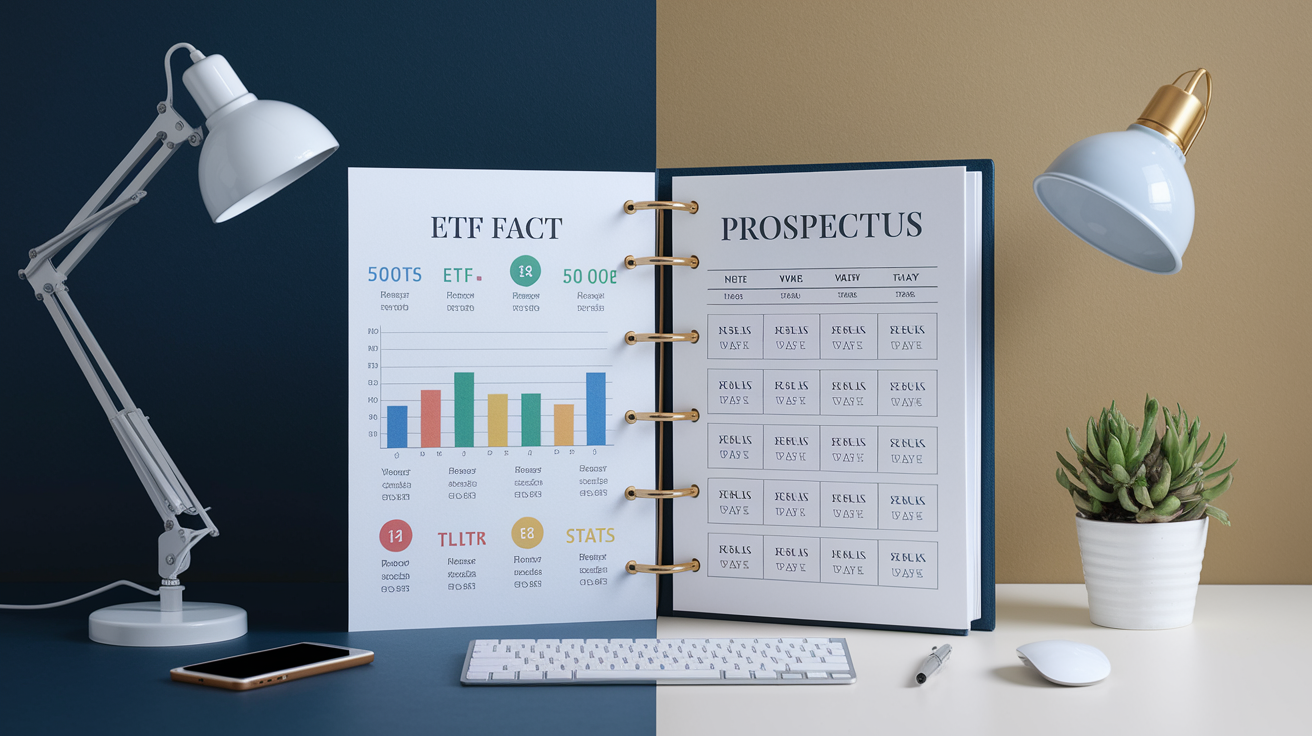
Fact sheets are designed for speed. They condense the fund’s essential information into one or two pages with tables, charts, and bullet points. You can scan a fact sheet in under five minutes and decide whether the ETF deserves a closer look. Prospectuses are legal documents that run 50 to 200 pages and include every required disclosure, detailed fee breakdowns, full risk descriptions, tax treatment, and operational details. You read the fact sheet first to filter candidates, and you read the prospectus when you need to confirm details or investigate something that looked unclear.
Update frequency differs between the two. Fact sheets are refreshed monthly or quarterly, so the holdings, performance, and expense data are current. Prospectuses are updated annually or semi-annually and filed with regulators, which means the information can be several months old by the time you download the latest version. For fast-moving metrics like top holdings or recent performance, rely on the fact sheet. For legal language, fee structure, and risk disclosures, rely on the prospectus.
| Document | What It Includes | Update Frequency |
|---|---|---|
| Fact Sheet | Summary of objective, top holdings, performance, fees, and key statistics | Monthly or quarterly |
| Prospectus | Full legal disclosures, detailed strategy, complete risk factors, fee breakdowns, tax information | Annually or semi-annually |
| Summary Prospectus | Condensed version with key information, designed for faster review before full prospectus | Annually or semi-annually |
| Statement of Additional Information (SAI) | Supplemental details like portfolio manager backgrounds, detailed financial statements, and additional policies | Annually or semi-annually |
Step‑by‑Step Walkthrough: Reading an ETF Prospectus and Fact Sheet

Following a consistent sequence every time you evaluate an ETF saves time and reduces the chance you’ll miss something important. This seven-step process mirrors how experienced investors screen funds and works whether you’re comparing two similar ETFs or researching a new asset class for the first time.
-
Read the objective and confirm it matches your goal — Start with the one-sentence objective at the top of the fact sheet or in the prospectus summary. If you need growth over 20 years, an equity ETF objective fits. Need stable income? A bond or dividend objective fits. Misalignment here means the fund won’t serve the role you need, no matter how good the other metrics look.
-
Identify the strategy and replication method — Check whether the fund uses full replication, sampling, or synthetic replication. Full replication is simplest and most transparent. Sampling works well for large indexes and keeps costs lower. Synthetic replication introduces counterparty risk and complexity. Note the index name and weighting methodology so you understand what drives performance.
-
Review the expense ratio and compare it to peers — Look up the expense ratio on the fact sheet and compare it to similar ETFs tracking the same or a comparable index. For U.S. large-cap equity ETFs, expect 0.03 percent to 0.20 percent. For international or sector ETFs, expect 0.10 percent to 0.50 percent. Higher fees should come with a clear reason, like active management or hard-to-access markets.
-
Examine top holdings and sector allocation — Scan the top 10 holdings and sector breakdown. If one stock is more than 10 percent of the fund, note the concentration risk. If the fund is heavily weighted in a sector you already own elsewhere, you’re doubling up and reducing diversification.
-
Read the risk disclosures and assess fit with your timeline — Skim the risk section in the prospectus or the risk summary on the fact sheet. Match the listed risks to your personal situation. If the fund discloses high volatility and you’re investing money you’ll need in two years, the risk is too high. If the fund lists currency and geopolitical risks and you’re comfortable with international exposure, that’s fine.
-
Check performance and tracking accuracy — Compare the fund’s trailing returns to the benchmark over one, three, and five years. Subtract the expense ratio from the benchmark return and see if the fund’s actual return is close to that target. Large gaps suggest poor tracking or hidden costs.
-
Evaluate liquidity and trading costs — Note the average daily volume and bid-ask spread on the fact sheet. For funds you plan to hold long term, liquidity is less critical, but wide spreads still increase your cost to enter and exit. For funds you might rebalance or trade periodically, tight spreads and high volume are essential.
Quick Checklist for Evaluating an ETF

- Confirm the fund objective aligns with your goal and time horizon
- Verify the benchmark index and weighting methodology match your expectations
- Compare the expense ratio to similar ETFs and ensure it’s competitive
- Review top 10 holdings and sector allocations for concentration or overlap with existing positions
- Check the replication method and understand any counterparty or sampling risks
- Read the risk disclosures and confirm you’re comfortable with volatility and asset-class risks
- Examine trailing returns over multiple periods and compare to the benchmark
- Calculate or note the tracking difference and ensure it’s close to the expense ratio
- Review average daily volume and median bid-ask spread for liquidity and trading cost
- Verify the fact sheet date and prospectus date to ensure data are current
Final Words
Start by scanning the objective, strategy, benchmark, and expense ratio. That quick check tells you what the fund does and how much it costs.
Next, glance at top holdings, risk notes, performance, and liquidity, using the fact sheet for speed and the prospectus for full details. Follow a simple checklist and the 7-step order so you don’t miss anything.
Use this guide to learn how to interpret an etf prospectus and fact sheet step-by-step. Stick with the routine, match the fund to your goals, and you’ll get more confident over time.
FAQ
Q: How to read an ETF prospectus?
A: Reading an ETF prospectus starts by checking the summary for the fund objective, strategy, benchmark, and expense ratio, then review holdings, risks, fees, performance, and liquidity for deeper clarity.
Q: What is the 7% rule in ETF?
A: The 7% rule in ETFs usually means limiting any single ETF position to about 7% of your portfolio to reduce concentration risk; it’s a simple guideline, not a strict law.
Q: What is the 3 5 10 rule for ETFs?
A: The 3 5 10 rule for ETFs is a simple portfolio structure: 3 core funds, up to 5 satellite funds, and roughly 10 total ETFs to keep costs, overlap, and tracking manageable.
Q: What is the 15 * 15 * 30 rule?
A: The 15 * 15 * 30 rule is not a standard ETF guideline; it’s often a specific allocation or timing rule—check the original source and review the prospectus before applying it.