
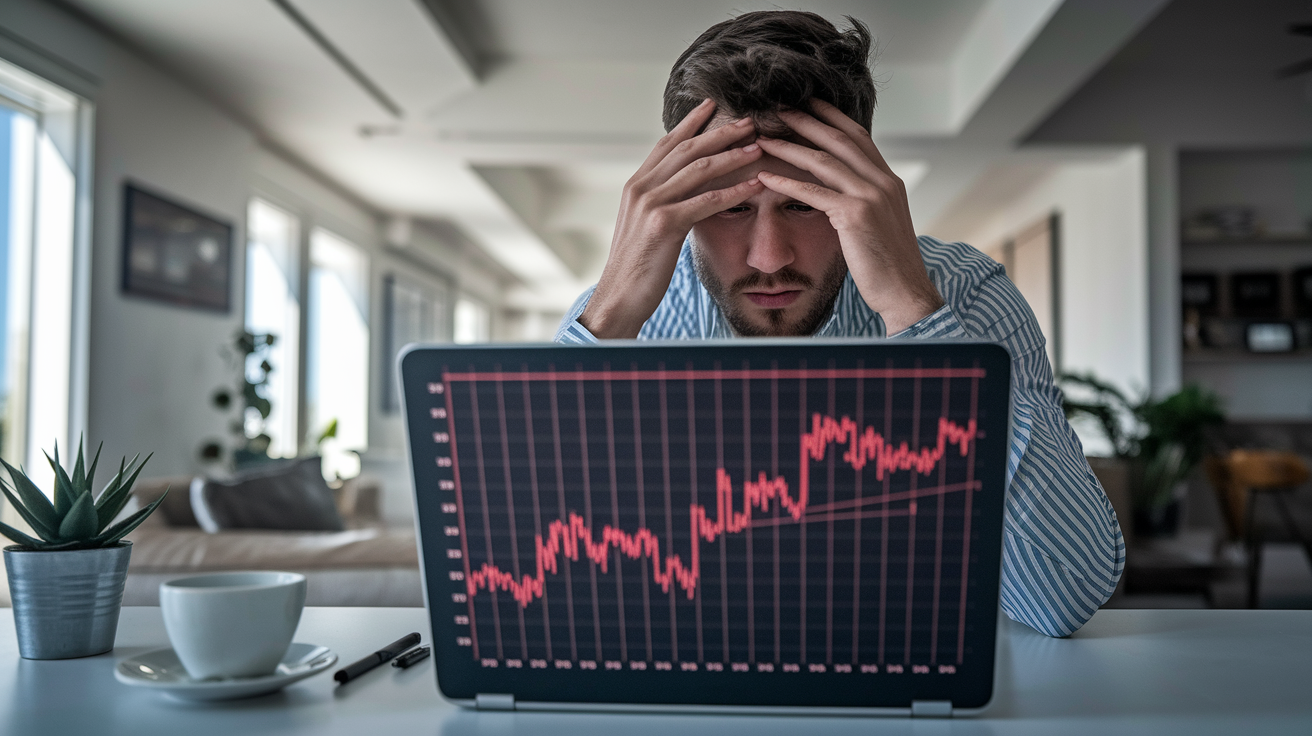
Ever sold in a panic and then watched the market bounce back the next week?
When markets crash, emotions tend to follow a predictable path: shock, fear, panic, despair, reflection, acceptance, and relief.
Knowing that sequence helps you spot where you are in the cycle and gives you a chance to pause before you make a costly move.
This piece will map those stages and show simple steps to stay steady so your long-term plans don’t get derailed.
Overview of Investor Emotions During Market Crashes

When markets fall hard, emotions move through a sequence that’s been documented over and over. Surprise turns into distress, then eventually into something closer to calm. Research on investor behavior during downturns shows the pattern holds up across different crashes, and the worst emotional pain tends to hit right around the lowest prices. Acceptance usually shows up only after the damage feels done.
Knowing this progression helps you spot where you are in the cycle. And that makes it easier to step back before you do something you’ll regret later.
Everyone goes through some version of these feelings. But how intense they get and how long they last depends on your experience, how much you have invested, and how much risk you can actually stomach when things get ugly.
The emotional arc during a crash typically unfolds across seven stages:
- Shock and Disbelief – Your first reaction when prices drop suddenly and contradict what you expected.
- Fear and Anxiety – Growing worry as losses pile up and uncertainty spreads.
- Panic and Capitulation – The overwhelming urge to sell right now, often at the worst possible moment.
- Despair and Regret – The heavy weight after you’ve sold, combined with the sinking feeling that you got the timing wrong.
- Reflection and Reassessment – A gradual shift toward calm evaluation of what happened and why.
- Acceptance and Long-Term Perspective – Getting back to rational planning and detaching from the daily swings.
- Relief and Cautious Optimism – A readiness to re-engage as markets stabilize and recovery signs start appearing.
The stages don’t arrive on a schedule. Some investors cycle through them in days. Others take months. And a few skip certain steps entirely. Recognizing the stage you’re in makes it easier to step back before reacting impulsively, and gives you language to describe what you’re feeling.
Shock and Disbelief

Shock hits when prices drop faster or farther than you expected. One day the market feels steady, the next day you open your account and see a loss that seems too large to be real. The immediate reaction is disbelief. “This must be temporary,” or “Someone made a mistake.” You refresh the page, check multiple sources, and wait for confirmation that the numbers will correct themselves.
This stage is brief but sets the tone for what follows. Shock is strongest when the story you believed (like “tech earnings are strong” or “inflation is under control”) suddenly breaks. The gap between expectation and reality triggers confusion, and most investors freeze rather than act.
During the March 2020 COVID crash, many investors woke up to portfolios down 10 percent or more in a single day. Message boards filled with questions like “Is this real?” and “Will it bounce back tomorrow?” That’s textbook shock, when you know logically that markets can fall, but the speed and size of the move short-circuit your ability to process it calmly.
Fear and Anxiety

Fear takes over once shock wears off and the losses keep growing. Every new headline raises the question: “How much worse will this get?” You start checking prices more often, sometimes multiple times an hour, and each glance confirms that the situation hasn’t improved. Sleep gets harder. Conversations about money feel tense.
Anxiety grows when you realize your plan didn’t account for this scenario. Or when the size of the loss crosses a threshold that feels dangerous. If you need the money soon (for a house, tuition, or retirement), fear spikes because time to recover is short.
Common fear-driven mistakes include:
- Selling part of the portfolio to “lock in what’s left” – A move that feels like control but often guarantees a permanent loss.
- Obsessively watching financial news – Amplifies anxiety without providing actionable clarity.
- Abandoning the original plan mid-stream – Switching strategies under stress usually means buying high and selling low.
- Comparing your losses to others – Magnifies regret and triggers herd behavior instead of individual reasoning.
Fear narrows your focus to the immediate pain and makes long-term recovery feel impossible, even when history shows markets have always eventually climbed back.
Panic and Capitulation

Panic is the breaking point. Fear becomes unbearable, and the only thought left is “Get me out now, at any price.” This stage often arrives near the market bottom, when selling volume spikes, liquidity dries up, and prices fall in chaotic swings. Investors who held through shock and fear finally give up, convinced that holding any longer will lead to total ruin.
Capitulation is marked by a flood of sell orders and a sense of surrender. You stop caring about whether you’re selling at a good price. The goal shifts from preserving value to simply ending the emotional pain. Phrases like “I can’t take this anymore” and “I just want it to stop” dominate investor sentiment during this phase.
Capitulation is dangerous because it locks in maximum loss right before many recoveries begin. The emotional relief of selling feels real in the moment, but it’s often followed quickly by regret when prices stabilize or rebound within days or weeks. Panic removes the ability to think clearly, and decisions made in this stage are almost always the ones investors wish they could undo.
Despair and Regret

After selling, despair sets in. The relief of exiting fades, replaced by a sinking realization: “I sold at the worst possible time.” You watch prices stabilize or even rise slightly, and each uptick feels like proof that you made a mistake. The pain of the loss combines with the pain of poor timing, creating a double emotional hit.
Regret during this stage is heavy because you replay the decision over and over. “Why didn’t I wait one more day?” or “I should have stuck to the plan.” The sense of lost control is strong, and many investors feel embarrassed, especially if they sold after telling others they would stay calm during downturns.
Typical regret patterns include:
- Avoiding account logins – Too painful to see the cash sitting idle while the market recovers.
- Blaming external sources – News anchors, advisors, or “the system” become scapegoats for a personal decision.
- Vowing never to invest again – A protective emotional response that often fades but can delay recovery for months or years.
Despair is isolating because admitting the mistake feels like admitting failure. This stage lasts longest when you avoid reflection and instead let the regret loop without interruption.
Reflection and Reassessment

Reflection begins when the emotional intensity finally drops. You stop obsessing over the loss and start asking calmer questions: “What actually happened?” and “What can I learn from this?” This stage is slower and less dramatic than panic, but it’s where real behavioral change starts.
During reassessment, you review the decisions you made, the triggers that pushed you to act, and the gap between your plan and your actual behavior. Many investors realize they didn’t know their true risk tolerance until it was tested. Others recognize that media consumption, social pressure, or account-checking habits amplified their anxiety beyond what the numbers justified.
Behavioral finance research shows that investors who take time to reflect after a downturn are less likely to repeat the same mistakes in the next cycle. Writing down what you felt at each stage, why you sold (or held), and what you’d do differently builds a personal reference guide for future crashes. Reflection isn’t about blame. It’s about pattern recognition and building self-awareness so the next emotional wave doesn’t catch you off guard the same way.
Acceptance and Long-Term Perspective

Acceptance arrives when you stop fighting what happened and rebuild a rational view of the future. You accept that markets fall, that your emotions overrode your logic, and that the loss (whether realized or unrealized) is now part of your history. This stage feels quieter and steadier than the earlier ones.
Investors in acceptance shift their language from “I lost everything” to “I lost X percent, and here’s what I’ll do next.” The emotional charge fades, replaced by practical planning. You revisit your goals, adjust your risk exposure if needed, and start thinking in years instead of days.
Acceptance doesn’t mean you feel good about the crash. It means you’ve detached enough to move forward without the weight of regret or fear driving every decision. This is the stage where long-term investors reconnect with their original plan, adjust position sizes to match their true risk tolerance, and prepare to re-enter or stay invested through the recovery.
Historical Examples of Emotional Cycles

The 2000 dot-com crash offers a clear map of the emotional cycle. In early 2000, tech stocks were soaring, and euphoria dominated sentiment. When the NASDAQ peaked in March and then fell more than 75 percent over the next two years, shock turned to disbelief (“It’s just a correction”), then fear as companies folded and portfolios evaporated. Panic arrived in waves, with capitulation events in 2001 and again in late 2002. Many investors sold near the bottom, swore off stocks, and missed the entire recovery that followed. Acceptance for that group often took years. Some never returned to equities.
The 2008 financial crisis compressed the emotional cycle into a more intense, shorter window. Shock hit in September 2008 when Lehman Brothers collapsed. Fear spread as credit markets froze and daily headlines warned of systemic collapse. Panic peaked in October and November, with the S&P 500 losing more than 50 percent from its 2007 high by March 2009. Capitulation volume spiked in the final weeks before the bottom. Despair lingered through 2009 even as markets began recovering, and many investors who sold in late 2008 or early 2009 sat in cash through the entire rebound. Reflection and acceptance arrived slowly, often only after the market had already doubled from the lows.
The March 2020 COVID crash was the fastest emotional cycle on record. Shock arrived in late February as infection numbers climbed. Fear turned to panic within two weeks, and the S&P 500 dropped 34 percent in roughly one month. Capitulation hit mid-March, with record selling volume and liquidity stress across asset classes. But the recovery was equally rapid. By summer, markets had erased the losses, and by late 2020, new highs were reached. Investors who sold in March faced immediate regret, and the speed of the turnaround made reflection difficult because there was little time to process the cycle before prices were back above pre-crash levels. Acceptance came quickly for some, but others remained scarred and underinvested even as markets climbed.
Final Words
We mapped the emotional arc you feel in a market crash, from shock and fear to panic, despair, reflection and acceptance, plus clear signs and visual aids to spot each stage.
You also saw common mistakes, practical steps to slow down, and historical examples that show this pattern repeats.
Understanding the emotional stages investors go through in a market crash makes it easier to pause, protect your plan, and recover. Stay steady. This is how long-term progress happens.
FAQ
Q: What happens to investors when the stock market crashes?
A: When the stock market crashes, investors typically face steep paper losses, rising fear, and some may sell in panic; others use dips to buy. Check your plan, avoid emotional moves, and rebalance if needed.
Q: What are the 5 stages of grief in the stock market?
A: The five stages of grief in the stock market are denial, anger, bargaining, depression, and acceptance. Spot your stage, avoid panic selling, and let a long-term strategy guide your next steps.
Q: What Marc Chaikin predicts for 2026?
A: Marc Chaikin’s prediction for 2026 depends on his most recent public comments; I don’t have real-time updates. Check his newsletter or interviews, and treat forecasts as one data point, not a plan.
Q: What was Peter Lynch’s famous quote?
A: Peter Lynch’s famous quote is “Know what you own, and know why you own it.” It means understand your investments, avoid blind following, and hold only what fits your plan.