

Think Vanguard will automatically reinvest your dividends?
It doesn’t. Dividends land in your settlement fund as cash unless you flip the reinvestment setting for each holding.
This guide shows how to enroll in Vanguard’s dividend reinvestment plan, what happens on payable day for funds, ETFs, and stocks, and why reinvesting speeds up compounding (small buys stacking over time).
Read on for the easy steps, the timing and tax tradeoffs, and how to make reinvestment match your goals.
How Vanguard Handles Dividend Reinvestment

Vanguard doesn’t automatically reinvest dividends for you. When you open an account, everything lands in your settlement fund as cash by default. Dividends, capital gains, all of it. If you want those distributions buying more shares instead, you’ll need to turn on reinvestment for each holding yourself. Some brokerages flip that switch for you right out of the gate, but Vanguard doesn’t. Worth checking your settings early so you’re not surprised when the first dividend hits.
Once you enable reinvestment, Vanguard processes the purchase on the payable date. That’s when the company actually sends the money. For mutual funds, your dividends buy additional shares at that day’s closing net asset value. For stocks and ETFs, Vanguard pools reinvestment orders from everyone choosing the same security, buys shares in the open market, then divvies them up proportionally. You get whole shares plus fractional shares rounded to three decimal places.
The reinvestment process is the same whether you own one security or twenty. You can mix settings across your portfolio too. Some holdings reinvest, others pay cash. Here’s what happens behind the scenes:
Timing: Reinvestment happens on the payable date, usually a few days after the record date (the cutoff for who qualifies).
Fractional shares: If your dividend is $47 and the share price is $50, you’ll get 0.940 shares added to your account.
Aggregated purchases: For stocks and ETFs, Vanguard combines all client orders, executes one large market buy, then splits shares back to individual accounts.
Confirmation: No separate trade confirmation gets mailed. The activity shows up on your monthly statement with one line for the dividend amount and another showing the number of shares purchased plus the price per share.
If you change from cash to reinvest or back the other way, the update needs to reach Vanguard at least two business days before the payable date to apply to that distribution. Submit it later and it’s best efforts, but probably won’t kick in until the next cycle.
Eligibility Requirements for Using Vanguard’s DRIP

Most standard Vanguard brokerage accounts can use the dividend reinvestment program. Individual taxable accounts, joint accounts, traditional IRAs, Roth IRAs, SEP-IRAs, 401(k) rollovers. The program’s free. No commissions for eligible securities. You don’t need a minimum balance or a certain number of shares to start reinvesting, though the security itself has to meet Vanguard’s eligibility rules.
Not everything qualifies. Unit Investment Trusts are out. Many foreign equities don’t work. Certain domestic stocks with low average daily trading volume are excluded. Some American Depositary Receipts also don’t support reinvestment. If a security’s caught up in a corporate reorganization or merger, Vanguard may temporarily suspend reinvestment until things settle. Non-Vanguard mutual funds purchased through the FundAccess platform have eligibility determined by each individual fund, so you’ll need to check the fund’s profile page to confirm.
Accounts subject to backup withholding or nonresident alien tax withholding can’t participate at all. If you’re an affiliate or insider of a publicly traded company, Vanguard recommends talking to your legal advisor before enrolling. Reinvestment activity might trigger reporting or trading restrictions under securities law.
Step-by-Step Instructions for Enrolling or Disabling DRIP
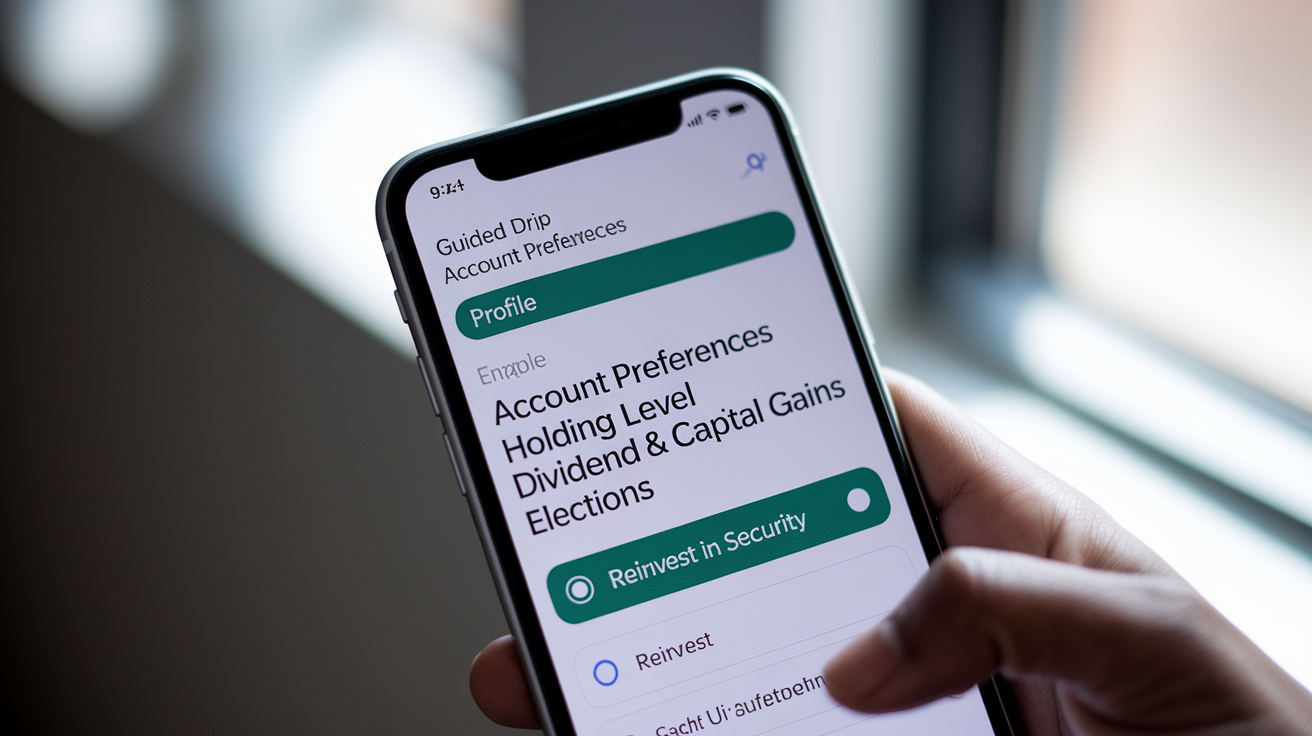
Turning on dividend reinvestment at Vanguard takes about a minute once you know where to look. The setting lives in your account preferences and applies separately to each security you own.
Log in to your Vanguard account at vanguard.com.
Click your Profile icon in the upper right corner of the homepage.
Select “Profile & account settings” from the dropdown. On the mobile app, this option is labeled “Account preferences.”
Choose “Holding level dividend & capital gains elections” from the list of settings.
Review the current election for each security listed. The default is usually “Transfer to settlement fund,” which means cash.
Click the dropdown next to any holding you want to change and select “Reinvest in security.”
Save your changes and confirm the update. Vanguard will display a summary of the new election.
Changes typically take effect within one business day. But you should submit updates at least two business days before a dividend payable date if you want the new setting to apply to that specific distribution. Miss the cutoff and the dividend processes under the old election. Your new preference applies to the next payment. You can check upcoming dividend dates on each security’s detail page or by reviewing the dividend calendar in your account.
DRIP Mechanics for Vanguard Mutual Funds vs. ETFs
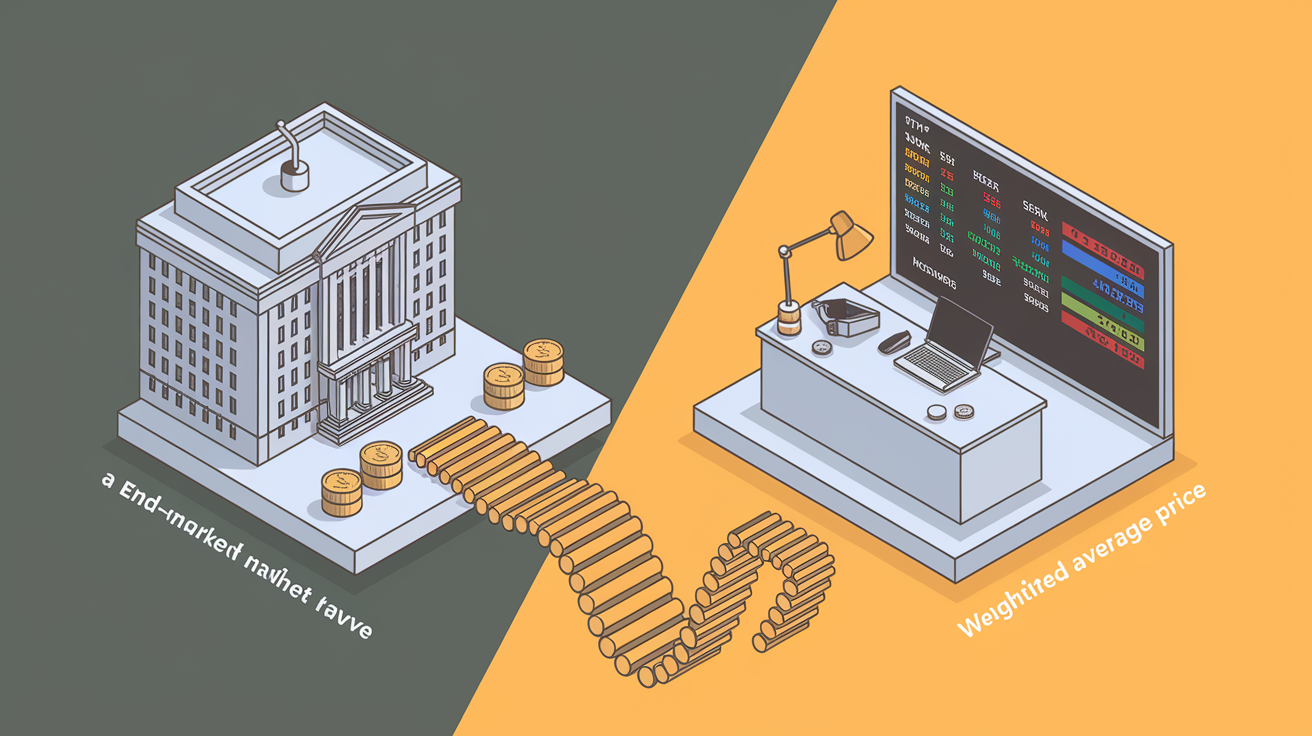
Mutual funds and ETFs both support dividend reinvestment, but the purchase process is different because of how the two products trade. Mutual funds are priced once per day at net asset value after the market closes, typically around 4:00 p.m. Eastern. When a mutual fund pays a dividend, Vanguard sends the reinvestment instruction directly to the fund company. The fund company issues new shares at that day’s NAV. The transaction shows up on your statement with the settlement date and trade date both representing the day the fund company processed it.
ETFs trade throughout the day like stocks. Their market price can move above or below the underlying net asset value. When an ETF pays a dividend, Vanguard collects reinvestment elections from all clients who own that ETF, aggregates the cash, buys shares in the open market at the current price, then allocates the shares back proportionally. The price you pay is the weighted average price Vanguard achieves for the batch order, not the exact price at any single moment.
| Security Type | Reinvestment Method |
|---|---|
| Mutual Funds | Purchased at end-of-day NAV directly from the fund |
| ETFs | Purchased in the open market; shares allocated at weighted average price |
| Stocks | Purchased in the open market; shares allocated at weighted average price |
| Closed-End Funds | Purchased in the open market; shares allocated at weighted average price |
Both methods result in fractional share allocations rounded to three decimal places. If your dividend is $100 and the mutual fund NAV is $43, you’ll receive 2.326 shares. Same $100 dividend on an ETF trading at $43 will also give you around 2.326 shares, though the exact amount depends on the final execution price of Vanguard’s aggregated order.
Fees and Cost Considerations

Vanguard’s dividend reinvestment program carries no transaction fees and no commissions. That applies to mutual funds, ETFs, stocks, and closed-end funds eligible for the program. You’re not charged to turn reinvestment on, to leave it running, or to turn it off later. This makes DRIP a simple way to keep putting money to work without worrying about per-trade costs stacking up over time.
Even though Vanguard doesn’t charge a commission, there are still a few indirect costs to keep in mind when reinvesting ETF and stock dividends.
Bid-ask spread: ETFs and stocks trade with a spread between the buying price and the selling price. When Vanguard executes a reinvestment purchase in the open market, you’re paying the ask price, which can be slightly higher than the midpoint quote you see on a price chart.
Market impact: If Vanguard’s reinvesting dividends for thousands of clients in a less liquid ETF or stock, the aggregated order could nudge the market price up by a few cents, especially on lower volume securities.
Timing risk: The reinvestment happens on the payable date at whatever price the market offers that day. If the stock or ETF is up that morning, your dividend buys fewer shares than it would have the week before.
None of these indirect costs are large enough to make reinvestment a bad deal in most cases. But they do mean the effective price you pay isn’t always the same as the prior day’s closing price. Mutual funds avoid this issue entirely because they trade at NAV with no spread.
Tax Implications of Vanguard’s Dividend Reinvestment Plan

Reinvested dividends are taxable in the year they’re paid, even though you never see the cash hit your settlement fund. The IRS treats a reinvested dividend the same as a dividend you received in cash and then used to buy more shares in a separate transaction. For taxable accounts, that means you’ll owe tax on the distribution when you file your return. You’ll need cash from another source to cover the bill if you’re reinvesting everything.
Each time a dividend is reinvested, it creates a new tax lot with its own cost basis. If you reinvest a $50 dividend on a day when the stock trades at $100, you’ve purchased 0.5 shares with a $100 per share cost basis for that lot. Over time, reinvestment can create dozens or even hundreds of tax lots for a single holding, especially if dividends are paid quarterly or monthly. When you eventually sell, your brokerage calculates the gain or loss for each lot sold. The total gain determines your capital gains tax. Vanguard tracks all this automatically and reports it on your Form 1099-B at tax time.
Retirement accounts like traditional IRAs and Roth IRAs work differently. Dividends paid inside these accounts aren’t taxed in the year they’re received, whether you reinvest them or let them sit as cash. In a Roth IRA, reinvested dividends grow tax-free and can be withdrawn tax-free in retirement if you’re over 59½ and your account has been open at least five years. In a traditional IRA, the dividends and any growth from reinvestment are taxed as ordinary income when you take distributions, but there’s no tax event at the time of reinvestment. That makes DRIP especially straightforward in retirement accounts since you don’t need to track individual lots for tax purposes the same way you do in a taxable account.
Benefits and Drawbacks of Using Vanguard’s DRIP

DRIP can be a helpful tool if your goal is long-term growth and you don’t need the cash right now.
Pros:
Compounding. Reinvested dividends buy more shares, which then generate their own dividends, which buy even more shares. Over decades, this snowball effect can add up.
Automation. You set it once and don’t have to remember to reinvest manually every quarter. The money goes right back to work.
No idle cash. Dividends don’t sit in your settlement fund earning little or no interest. They’re invested immediately at the next payable date.
Fractional shares. You can reinvest every dollar of the dividend, even if it’s not enough to buy a whole share. Nothing’s wasted.
No transaction fees. Vanguard charges zero commissions for reinvestment purchases, so you’re not losing a piece of every dividend to trading costs.
Dollar-cost averaging. Reinvesting on a fixed schedule (every dividend date) means you buy more shares when prices are low and fewer when prices are high, smoothing out your average cost over time.
Cons:
Reduced flexibility. Once the dividend’s reinvested, it’s locked into that security. If you wanted to use the cash to rebalance into a different fund or pay a bill, you’ll need to sell shares.
Tax complexity. Each reinvestment creates a new tax lot. After years of quarterly dividends, selling even a portion of your position can involve dozens of lots and more complicated tax reporting.
Concentration risk. Reinvesting every dividend makes your position in that security grow larger over time. If the stock or fund performs poorly, a bigger position means a bigger loss.
Taxable income without cash. In a taxable account, you owe tax on reinvested dividends but you don’t receive any cash to pay the tax bill. You’ll need money from another source to cover it.
Troubleshooting Dividend Reinvestment Issues

Sometimes dividends don’t reinvest even when you’ve turned on the setting. The most common reason is timing. If you enabled reinvestment less than two business days before the payable date, Vanguard may not have processed the election in time. The dividend gets paid as cash instead. Your setting will apply to the next distribution, so check your statement after the following payment to confirm it’s working.
Another frequent issue is buying shares too close to the record date. You must own the security before the ex-dividend date to qualify for that dividend. If you bought shares on or after the ex-dividend date, you won’t receive the distribution and there’s nothing to reinvest. The dividend goes to the previous owner.
Here are the most common reasons dividends don’t reinvest as expected:
Recent purchase: You bought the security after the ex-dividend date, so you’re not entitled to the current dividend. Wait for the next payment cycle.
Pending account update: If you recently opened your account or transferred securities in, the holdings may not be fully settled in Vanguard’s system. Reinvestment elections can’t process until the transfer’s complete.
Ineligible security: Some stocks, ETFs, and foreign equities don’t support reinvestment due to low trading volume or regulatory restrictions. Check the security’s profile page to see if DRIP is offered.
Corporate action in progress: If the company’s involved in a merger, acquisition, or reorganization, Vanguard may temporarily suspend reinvestment until the event’s finalized. The dividend will be paid in cash and reinvestment will resume once the action completes.
Account restriction: Accounts subject to backup withholding or nonresident alien tax withholding aren’t eligible for the reinvestment program. You’ll need to resolve the tax issue with Vanguard before you can use DRIP.
If none of these apply and dividends still aren’t reinvesting, call Vanguard’s customer service line to review your account settings. They can confirm whether the election is active and flag any backend issues blocking the process.
Final Words
Put the plan in motion: check your account’s Distribution Elections page and toggle reinvestment for each holding. That’s the practical step to take today.
This post covered how Vanguard handles DRIP, who’s eligible, step-by-step enrollment, differences for mutual funds and ETFs, fee and tax notes, pros and cons, and common fixes if something goes wrong.
If steady compounding fits your goals, turning on the vanguard dividend reinvestment plan is a simple, low-effort move. Keep an eye on taxes and lot tracking, and you’ll likely see progress over time.
FAQ
Q: Should I reinvest dividends in Vanguard?
A: Reinvesting dividends in Vanguard can boost long‑term growth by buying more shares automatically. It suits long timers who want compounding, but reduces cash flexibility and still creates taxable income. Match it to your goals.
Q: What is the downside to reinvesting dividends?
A: The downside to reinvesting dividends is less cash on hand, taxable dividends even if reinvested, more tax lots to track, and the risk of buying at high prices during market peaks.
Q: What did Warren Buffett say about Vanguard?
A: Warren Buffett praised Vanguard’s low fees and recommended low‑cost index funds for most investors; he’s said this approach often outperforms active managers over time.
Q: How do I set up dividend reinvestment in Vanguard?
A: To set up dividend reinvestment in Vanguard, log in, open Distribution Elections for the holding, select “Reinvest” instead of the settlement fund, save changes, and confirm it applies on the payable date.