

What if your dividends could buy more shares for you, automatically, so your investment grows without you doing a thing?
A dividend reinvestment plan (DRIP) does exactly that, turning cash payouts into new shares on dividend day instead of sending you a check.
In this post I’ll show simple step-by-step setup choices: how to flip the broker switch, enroll with a company transfer agent, and time purchases around ex-dividend dates, so you can start automatic share growth.
Quick note: reinvested dividends are taxable, so save confirmations and cost basis records.
Step‑By‑Step Setup for a Dividend Reinvestment Plan (DRIP)

A dividend reinvestment plan (DRIP) takes your cash dividends and automatically buys more shares of the same stock or fund. You don’t get a check. You don’t see cash hit your account. The money just goes straight into buying more shares.
Setting this up through your brokerage account is the easiest route. Log in, head to the dividend or account settings page, find the ticker you want, and flip the switch to “reinvest dividends” or “enable automatic reinvestment.” Most major brokers like Vanguard, Fidelity, Schwab, and E*TRADE let you do this for free. Your election usually kicks in within one or two dividend cycles. If the company pays quarterly, your next dividend after you enroll will buy more shares.
You can also enroll directly with the company through their transfer agent, like Computershare, American Stock Transfer, or Broadridge. This path gets a little more complicated. You’ll typically need to own at least one registered share in your own name, not in your broker’s name (what’s called “street name”). That might mean requesting a share transfer from your broker, which can cost a small fee. Then you complete the transfer agent’s enrollment form online or by mail. Processing takes one to four weeks, so if there’s a dividend payment date coming up, plan ahead.
Eligibility comes down to the ex‑dividend date. You have to own shares on or before that date to get the dividend and qualify for reinvestment. The ex‑dividend date usually lands one business day before the record date. Buy shares after the ex‑dividend date and you won’t receive that quarter’s dividend. Nothing will reinvest until the next cycle.
Here’s how to get started:
- Check that the company or fund offers dividend reinvestment. Most publicly traded stocks and a lot of ETFs support DRIPs. Verify on the issuer’s investor relations page or your broker’s platform.
- Decide between broker DRIP and company DRIP. Broker enrollment is faster and usually free. Company enrollment might offer discounts or let you make optional cash purchases, but it can take weeks and may charge fees.
- Meet ownership requirements. For broker DRIPs, just hold the security in your account. For company DRIPs, register at least one share in your name through the transfer agent.
- Complete enrollment. In a brokerage account, toggle the reinvestment setting for each ticker. For a company plan, fill out the form and choose full or partial reinvestment plus any optional cash purchase amounts.
- Confirm activation. Review your next statement or transfer agent confirmation to make sure the first dividend was reinvested. Look for fractional shares or additional whole shares added on the payment date.
- Track your records. Save confirmation emails, transaction histories, and quarterly statements for tax reporting and cost basis tracking.
Understanding Dividend Reinvestment Plan Basics and Mechanics

When a company declares a dividend, it sets a payment date. That’s the day it sends cash to shareholders. With a DRIP active, the cash never hits your account. Instead, the plan administrator (your broker or the company’s transfer agent) uses that cash to buy more shares on or shortly after the payment date. If your dividend is $47 and the stock trades at $50, the plan buys 0.94 shares. These fractional shares sit in your account and earn dividends in the next cycle, compounding your position over time.
Reinvested dividends are still taxable income in the year they’re paid. You never touched the cash, but the IRS doesn’t care. You’ll see them on your 1099‑DIV just as if you’d received a check and manually bought more shares. The accumulated shares increase your cost basis, which matters when you eventually sell. Over decades, consistent reinvestment can magnify returns because each reinvestment buys shares that themselves pay dividends. It’s a snowball effect. A $2,000 investment in a stable dividend payer reinvested over 24 years has historically grown into six figure holdings in examples like Pepsi during the 1980–2004 period.
Five elements drive DRIP performance and compounding strength:
Dividend frequency: Quarterly payers reinvest four times per year. Monthly payers (common among REITs) reinvest twelve times, accelerating compounding.
Dividend stability and growth: Companies that raise payouts annually increase the dollar amount available to reinvest each cycle, buying more shares even if the stock price rises.
Fractional share purchases: DRIPs allocate every cent of your dividend. With manual reinvestment, leftover cash might sit idle.
Long term reinvestment horizon: Compounding requires years to decades. Short holding periods reduce the impact of reinvested dividends.
Rising cost basis: Each reinvestment increases your total cost basis, which lowers taxable capital gains when you sell.
Broker‑Sponsored vs. Company‑Sponsored Dividend Reinvestment Plans
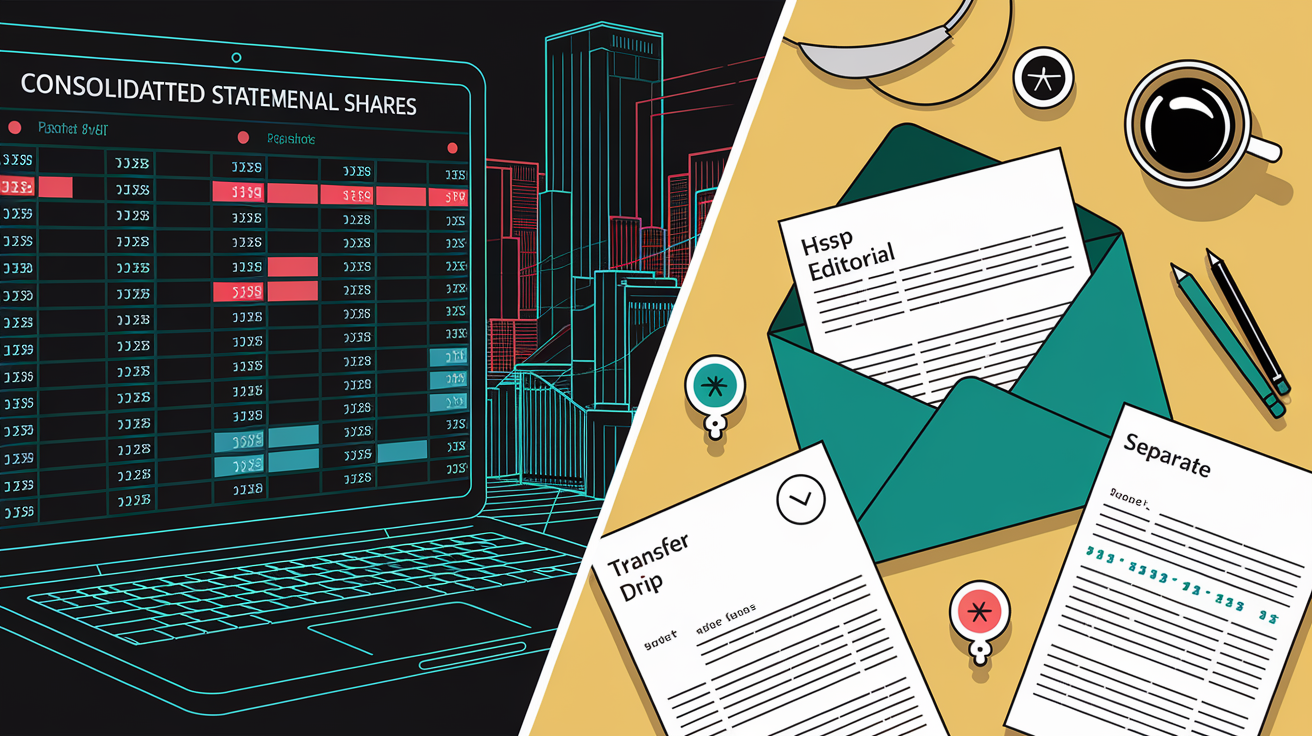
Broker sponsored DRIPs let you reinvest dividends from stocks, ETFs, and mutual funds held in a single brokerage account. You flip a switch in your account settings, and every dividend from every enabled security automatically buys more shares or fund units. Most major brokers charge $0 for automatic reinvestment. Your consolidated monthly or quarterly statement shows all purchases in one place. Fractional share support varies. Fidelity, Schwab, and many others allow fractional purchases. A few brokers round down to whole shares and return leftover cash to your account.
Company sponsored DRIPs operate through the issuer’s transfer agent. You enroll directly with Computershare, AST, Broadridge, or another administrator by filling out a form and sometimes transferring one registered share from your broker. These plans may charge enrollment fees of $0 to $50 (commonly $0 to $25), per purchase fees of $0 to $20, and optional cash purchase minimums of $25 to $100 if you want to add money beyond reinvested dividends. A smaller number of companies still offer share purchase discounts of 1% to 4% through their DRIPs, letting you buy below market price. Discounts are less common today than in the 1990s. Company DRIPs also permit very small optional purchases, like $25 or $50 per transaction. That would’ve triggered high commission percentages if bought through a broker years ago, though commission free trading has narrowed that advantage.
The tradeoff is administrative complexity. Each company DRIP generates separate statements, separate tax forms, and separate cost basis records. If you hold DRIPs in five companies, you manage five sets of paperwork. Selling shares from a company DRIP can take several business days and may incur sale fees. Broker DRIPs consolidate everything, provide faster execution, and integrate cost basis tracking automatically. But they skip purchase discounts and may not support optional cash purchases for individual stocks.
| Plan Type | Key Features | Typical Costs |
|---|---|---|
| Broker DRIP | Consolidated statements; fast enrollment (1–2 cycles); supports many securities; fractional shares common; no discounts | Usually $0 per reinvestment; no enrollment fees |
| Company DRIP | Direct enrollment via transfer agent; may offer 1–4% discounts; optional cash purchases ($25–$100 min); fractional shares; slower processing (1–4 weeks); separate statements per company | Enrollment $0–$50; purchase fees $0–$20; sale fees vary |
Eligibility, Dividend Dates, and Enrollment Requirements

You must own shares on or before the ex‑dividend date to receive that period’s dividend. The ex‑dividend date is set by the exchange and falls one business day before the company’s record date. If you buy shares on the ex‑dividend date or later, the seller keeps the dividend and you wait for the next payment cycle. Buy on June 14 when the ex‑dividend date is June 14, and you won’t receive the June dividend. Buy on June 13, and you will.
Broker DRIPs require only that you hold the security in your account on the ex‑dividend date and that you’ve enabled reinvestment before the payment date. Enrollment is instant or takes effect within one cycle. Toggling the setting a few days before the ex‑dividend date usually works. Company DRIPs have stricter ownership rules. You often must be a shareholder of record, meaning the shares are registered in your name rather than held in “street name” by your broker. Becoming a shareholder of record can require requesting a physical certificate or an electronic direct registration (DRS) transfer. Some brokers charge $25 to $100 to process that. Once you own one registered share, you complete the transfer agent’s enrollment form and choose full or partial reinvestment. The entire process can take one to four weeks. Start well before the next ex‑dividend date if you want the upcoming dividend to reinvest.
Costs, Fees, Minimums, and Discount Opportunities in Reinvestment Plans

Broker DRIPs typically cost $0. Vanguard, Fidelity, Schwab, and E*TRADE don’t charge fees to automatically reinvest dividends. There are no enrollment or maintenance fees. You pay only the standard commission (often $0) if you later sell the shares you accumulated through reinvestment.
Company DRIPs have a wider fee range. Enrollment fees run $0 to $50, with many transfer agents charging $0 to $25 or waiving the fee entirely. Per purchase fees of $0 to $20 apply each time dividends are reinvested or you make an optional cash purchase. If you add $100 through an optional cash purchase and the plan charges a $5 fee, $95 buys shares and $5 goes to the administrator. Sale fees vary but can reach $10 to $25 per transaction plus a small per share charge. Optional cash purchase minimums usually start at $25 to $100, and some plans set maximums of $10,000 to $250,000 per year.
A limited number of companies offer share purchase discounts of 1% to 4% when you buy through their DRIP. A 3% discount means a $100 stock costs you $97, giving you roughly 3% more shares for the same cash. These discounts were more common in the 1980s and 1990s. Today only a small fraction of issuers provide them. The discount often applies only to optional cash purchases, not to reinvested dividends.
Four cost factors to compare before enrolling:
Enrollment and setup fees: $0 for brokers, $0–$50 for company plans.
Per transaction fees: $0 for brokers, $0–$20 per reinvestment or optional purchase for company plans.
Sale and withdrawal fees: Standard broker commission (often $0) vs company DRIP fees of $10–$25 plus per share charges.
Discount opportunities: None at brokers. 1–4% discounts at select company plans, more common on optional cash purchases than on reinvested dividends.
Tax Treatment, 1099‑DIV Reporting, and Recordkeeping for Reinvested Dividends
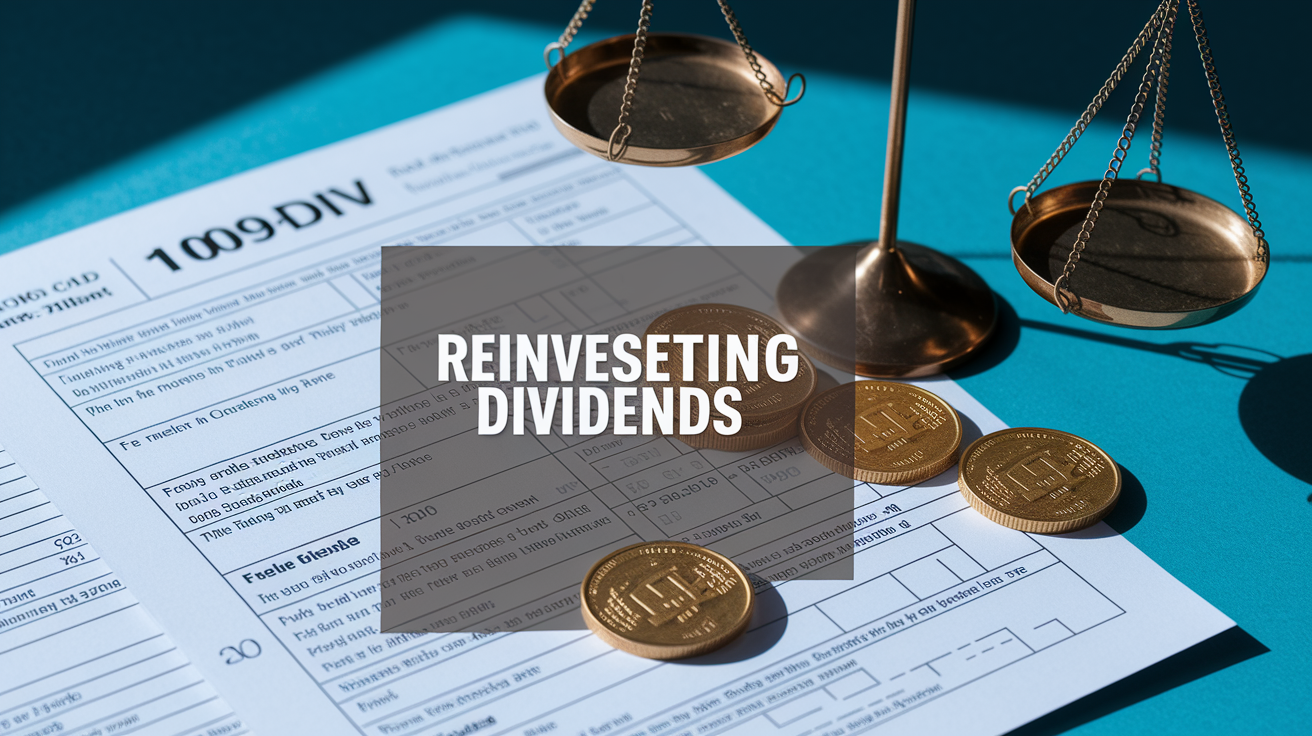
Reinvested dividends are taxable in the year the company pays them. You never received cash, but the IRS treats a reinvested dividend exactly like a cash dividend that you immediately used to buy more shares. Your broker or the company’s transfer agent will report the total dividend amount on Form 1099‑DIV, which you receive by January 31 of the following year.
Qualified dividends are those paid by U.S. corporations and certain foreign companies on shares held more than 60 days during the 121 day period around the ex‑dividend date. They’re taxed at preferential rates of 0%, 15%, or 20% depending on your taxable income. Nonqualified or ordinary dividends are taxed at your ordinary income rate. The 1099‑DIV separates qualified and ordinary amounts in boxes 1a and 1b. Reinvested dividends appear in box 1a or 1b just like cash payouts. There’s no special box or exemption for reinvestment.
Each reinvestment creates a new tax lot. Reinvest $50 on March 15 at $25 per share, and you acquire 2 shares with a cost basis of $25 each and a purchase date of March 15. Three months later, another $50 reinvestment at $30 per share creates a second lot of 1.6667 shares at $30 each. When you sell, you must report which lots you sold and calculate gain or loss for each. Brokers that offer automatic cost basis tracking (most U.S. brokers since 2011 for equities) handle this for you and report it on Form 1099‑B. Company DRIPs and transfer agents often provide annual statements and export tools, but you’re responsible for maintaining detailed records and reconciling tax lots if the agent doesn’t report basis to the IRS.
Essential documents to save for accurate tax reporting:
1099‑DIV forms from each broker or transfer agent, showing total dividends and qualified vs ordinary split.
DRIP transaction confirmations listing the date, number of shares (including fractional), and price per share for each reinvestment.
Annual account statements summarizing all purchases, sales, and ending share counts.
Cost basis summaries provided by brokers or exported from transfer agent portals, showing every tax lot’s purchase date and basis.
Optional cash purchase receipts if you add money beyond reinvested dividends, as these create additional lots and increase total basis.
Monitoring, Managing, and Adjusting Your DRIP Over Time

Check your brokerage or transfer agent statement after every dividend payment to confirm the reinvestment executed correctly. Look for the new share count, often a fractional amount like 0.237 shares added. Verify the purchase price matches the stock’s trading range on the payment date. Broker platforms update within one to two business days. Transfer agents may take up to a week to post transactions and mail or email confirmations.
Dividend reinvestment can lead to concentration risk if one stock grows faster than others in your portfolio. A position that started at 10% of your portfolio might drift to 25% after years of price appreciation and reinvested dividends. Set a concentration threshold. No single stock above 15% or 20% of total assets, for example. Rebalance annually or semiannually by selling shares, pausing reinvestment, or redirecting new contributions to underweight positions. Some investors use partial reinvestment, choosing to reinvest 50% or 75% of dividends and take the rest in cash for rebalancing or spending. Many broker platforms and some company DRIPs support this.
Four ongoing management actions to maintain a healthy DRIP strategy:
Review quarterly statements to track share accumulation, confirm reinvestment execution, and spot any processing errors or unexpected fees.
Monitor position size relative to your target allocation. Pause or disable reinvestment on positions approaching your concentration limit.
Adjust reinvestment elections if your income needs change. Switch from full reinvestment to partial or cash only if you need the dividends for spending.
Evaluate dividend health annually by checking payout ratios, earnings trends, and dividend growth history. Consider stopping reinvestment or selling if a company cuts its dividend or shows financial stress.
Advantages and Drawbacks of Dividend Reinvestment Plans

DRIPs simplify long term compounding by removing the need to manually reinvest every quarterly payout. Automatic reinvestment ensures every dollar goes to work immediately, buying fractional shares that themselves pay dividends in the next cycle. This creates a snowball effect over decades. Early reinvestments grow into meaningful positions without any action on your part. DRIPs also enable dollar cost averaging because you buy shares at different prices throughout the year, smoothing out market volatility and reducing the risk of investing a lump sum at a market peak.
The tax treatment and administrative overhead can complicate DRIPs. Reinvested dividends generate taxable income each year even though you receive no cash, which can create a tax bill you must cover from other sources. Each reinvestment spawns a new tax lot. After years of quarterly or monthly reinvestments you may have dozens or hundreds of lots to track when you sell. Company DRIPs multiply the recordkeeping burden if you enroll in multiple plans, each with separate statements, separate 1099‑DIVs, and separate cost basis exports. Transfer agent processing delays of several days can also expose you to price movement between the dividend payment date and the actual purchase date, though the impact is usually small.
Six advantages of dividend reinvestment plans:
Automatic compounding without manual transactions or decision fatigue.
Fractional share purchases ensure no dividend cash sits idle.
Low or zero transaction costs, especially through broker DRIPs.
Dollar cost averaging smooths entry prices across multiple purchase dates.
Optional cash purchases (company DRIPs) let you add small amounts regularly, sometimes at discounted prices.
Long term wealth building through consistent reinvestment in stable dividend growers.
Six disadvantages and risks:
Reinvested dividends are taxable as ordinary or qualified income in the year paid, creating tax liability without cash inflow.
Concentration risk if one position grows too large relative to your portfolio.
Increased recordkeeping complexity due to multiple tax lots and separate statements (especially company DRIPs).
Transfer agent delays of one to four weeks for enrollment and several days for sales, reducing liquidity.
Fees for company DRIPs (enrollment, purchase, sale) that can erode returns on small accounts.
No tax deferral. Dividends are taxed immediately even though reinvested, unlike growth inside a traditional IRA where taxation is deferred until withdrawal.
Examples of DRIP Providers and Common Dividend Stocks Offering Reinvestment
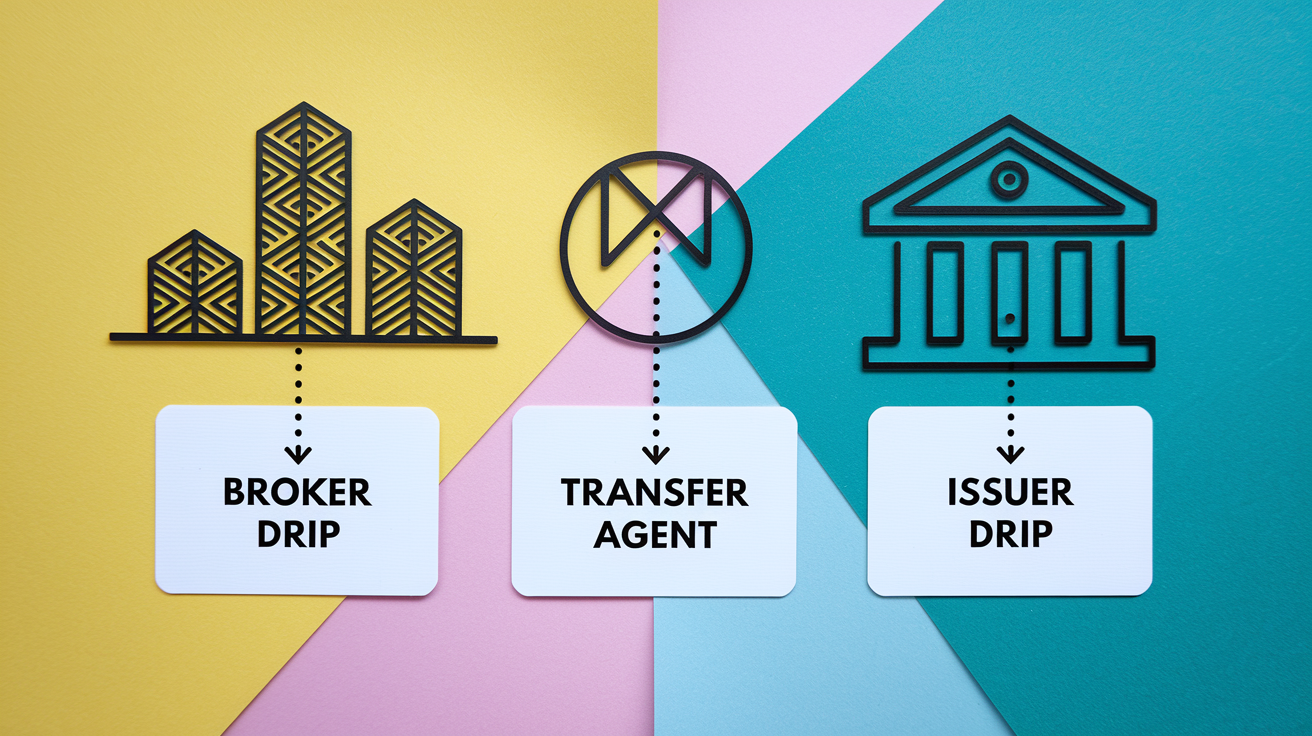
Most online brokers that offer stock trading also support dividend reinvestment at no additional cost. Vanguard, Fidelity, Schwab, and E*TRADE all provide automatic reinvestment settings for individual stocks, ETFs, and mutual funds. You enable the feature once per security, and it remains active until you turn it off. These brokers consolidate all DRIP activity on a single statement and automatically track cost basis for tax reporting.
Transfer agents administer company sponsored DRIPs on behalf of issuers. Computershare is the largest, managing plans for hundreds of U.S. and international companies. American Stock Transfer (AST) and Broadridge also run direct purchase and reinvestment programs for dozens of well known dividend payers. Each transfer agent operates a web portal where you can enroll, view statements, make optional cash purchases, and request sales. Popular dividend stocks with long DRIP histories include Coca‑Cola (KO), Procter & Gamble (PG), Johnson & Johnson (JNJ), ExxonMobil (XOM), and Realty Income (O), a monthly dividend REIT.
| Provider | Type | Notes |
|---|---|---|
| Vanguard, Fidelity, Schwab, E*TRADE | Broker DRIP | Free automatic reinvestment; consolidated statements; fractional shares; fast enrollment |
| Computershare | Transfer agent | Largest administrator; manages DRIPs for hundreds of issuers; online portal for enrollment and optional purchases |
| American Stock Transfer (AST) | Transfer agent | Administers plans for mid and large cap dividend payers; separate statements per plan |
| Broadridge | Transfer agent | Runs direct purchase and DRIP programs; enrollment online or by mail |
| Coca‑Cola (KO), Procter & Gamble (PG), Johnson & Johnson (JNJ), ExxonMobil (XOM), Realty Income (O) | Issuer examples | Long dividend payment histories; direct enrollment available via transfer agents; some offer optional cash purchases |
Strategies to Maximize Long‑Term Returns with Dividend Reinvestment

The simplest way to boost DRIP performance is to enroll inside a tax advantaged account. A traditional IRA, Roth IRA, or 401(k) if your plan allows individual stock selection. Reinvested dividends in these accounts aren’t taxed in the year paid. In a traditional IRA, taxation is deferred until you withdraw money in retirement. In a Roth IRA, qualified withdrawals are tax free. This eliminates the annual tax drag that reduces compounding in taxable accounts. A $1,000 dividend reinvested in a Roth grows without any tax cost, whereas the same dividend in a taxable account might generate $150 to $370 in federal tax (depending on your bracket and whether the dividend is qualified), leaving you with less cash to cover the liability unless you sell shares or use outside funds.
Pair automatic reinvestment with optional cash purchases to accelerate share accumulation. Many company DRIPs accept additional investments of $25 to $100 per month with low or no transaction fees. Some brokers let you set up automatic transfers that buy shares on a fixed schedule. Adding $50 or $100 per month on top of reinvested dividends compounds faster than reinvestment alone, especially in the early years when your position is small and dividends are modest. Focus on dividend growth stocks rather than the highest yielding names. Companies that raise payouts annually provide more dollars to reinvest over time and tend to be more financially stable, reducing the risk of a dividend cut that would interrupt your compounding plan.
Rebalance at preset intervals to prevent overconcentration. Set a calendar reminder every six or twelve months to review your portfolio and compare each position’s weight to your target allocation. If a stock has grown from 8% to 18% of your portfolio through price gains and reinvested dividends, consider selling shares, pausing reinvestment, or taking dividends in cash until other positions catch up. Rebalancing forces you to trim winners and add to laggards. It can feel uncomfortable but historically improves risk adjusted returns by maintaining diversification.
Five actionable strategies to maximize DRIP results over decades:
Use tax advantaged accounts (IRA, Roth IRA, 401(k)) to eliminate or defer taxes on reinvested dividends and maximize compounding.
Combine reinvestment with small, regular optional cash purchases ($25–$200 per month) to build positions faster and take advantage of dollar cost averaging.
Select dividend growth stocks with 10+ year track records of annual payout increases rather than chasing the highest current yield, which often signals elevated risk.
Rebalance semiannually or annually to control concentration. Pause reinvestment or take partial cash when a position exceeds 15–20% of your portfolio.
Track cost basis meticulously from day one. Save every transaction confirmation and use broker tools or spreadsheets to maintain accurate lot records for future tax reporting and smarter sale decisions.
Final Words
You now have a simple playbook: step-by-step enrollment, the broker vs company routes, timing around the ex-dividend date, and the tax and recordkeeping basics. Set it up, then let small reinvestments add up over time.
Remember to pick the low-fee path that fits your needs, check statements quarterly, and rebalance if one holding grows too large.
If you want a quick next step, open your account settings and enable reinvest dividends. It’s the easiest way to start learning how to dividend reinvestment plan and see compounding at work.
FAQ
Q: What is the best way to reinvest dividends?
A: The best way to reinvest dividends is to use an automatic DRIP via your broker or a company transfer agent so dividends buy more shares quickly, often as fractional shares, while watching fees and taxes.
Q: How much to make $1000 a month in dividends?
A: To make $1,000 a month in dividends you need $12,000 a year; divide that by your expected yield — for example, at 4% yield you’d need about $300,000, at 3% about $400,000.
Q: Is a dividend reinvestment plan a good idea?
A: A dividend reinvestment plan is a good idea if you want long-term compounding and don’t need current income; consider taxability, recordkeeping, and concentration risk before enrolling.
Q: What is the 25% dividend rule?
A: The 25% dividend rule is an informal guideline suggesting no single stock should provide more than 25% of your dividend income, which helps limit concentration risk and income volatility.