

Think $500 is too small to open a serious brokerage account?
It isn’t.
You can start with brokers that require no minimums so every dollar goes to work instead of disappearing to fees.
This post shows the top no-minimum brokers for $500 starters, Fidelity, Robinhood, and Webull, and gives a simple plan to split your first $500 into low-cost ETFs or fractional shares.
By the end you’ll know which account fits your goals and one practical step to take this week.
Top No-Minimum Brokerage Accounts Ideal for Starting with $500

Three brokers top the list if you’re starting with around $500: Fidelity, Robinhood, and Webull. None of them require a minimum to open. None charge commissions on stocks or ETFs. Your whole $500 goes straight to work.
That matters when you’re starting small. Every dollar counts, and you can’t afford to lose 2 or 3 percent before you even buy your first share.
Fidelity’s the full-service pick. You get access to over 7,000 stocks and ETFs, phone support whenever you need it, a big educational library, and zero minimums. Best choice if you want a traditional brokerage with solid research tools and room to open an IRA or buy mutual funds later. Robinhood’s the mobile-first option. Supports fractional shares, so you can buy into expensive stocks with a dollar. You also get 20+ popular cryptos, no commissions. Webull’s somewhere in between. Free options trading, 40+ cryptos, learning resources built in, decent mobile and desktop apps. The desktop side can feel overwhelming if you’re brand new.
Here are five things that make a broker worth using when you’ve got $500:
Zero account minimum so you can start with exactly what you have.
Zero commissions on stock and ETF trades so buying and selling doesn’t chip away at your balance.
Fractional shares or cheap ETFs so you can diversify without waiting to save more.
Educational stuff that actually helps so you learn instead of guessing or copying tips from Twitter.
Clean mobile app so you can check in and make trades without wading through features you don’t need yet.
Pick Fidelity if you want stability and strong support. Pick Robinhood if you care most about simple mobile and fractional shares. Pick Webull if you want free options and built-in education without losing mobile usability.
Comparing No-Minimum Broker Features for Small Starting Balances
When you’re working with $500, differences come down to what you can trade, what hidden costs pop up, and what tools keep you consistent. Commission-free stock and ETF trading is standard now. But account fees, what you can buy, and how complicated the platform feels vary enough to matter.
The table below shows what you should compare before opening an account.
| Broker | Account Minimum | Trading Fees | Notable Features |
|---|---|---|---|
| Fidelity | $0 | $0 stocks/ETFs; $0.65 per options contract | 7,000+ stocks/ETFs, 24/7 support, IRAs, mutual funds, ZERO funds with no expense ratio |
| Robinhood | $0 | $0 stocks/ETFs/options/crypto; optional Gold $5/mo | Fractional shares, 20+ cryptos, IRA available, simple mobile UI |
| Webull | $0 | $0 stocks/ETFs/options | 40+ cryptos, free options trading, built-in education, complex desktop platform |
For a $500 investor, this means pick Fidelity if you want IRAs, mutual funds, or a ton of educational content with support anytime. Choose Robinhood if you want the easiest path to fractional shares and a dead-simple mobile experience. Go with Webull if you’re planning to learn options or want more cryptos without paying commissions.
Skip platforms with monthly fees unless the features genuinely help you stay consistent. A $5 monthly fee on $500 is 1 percent per month before you invest anything.
Brokerage Accounts with Low Minimums That Still Work for $500 Investors
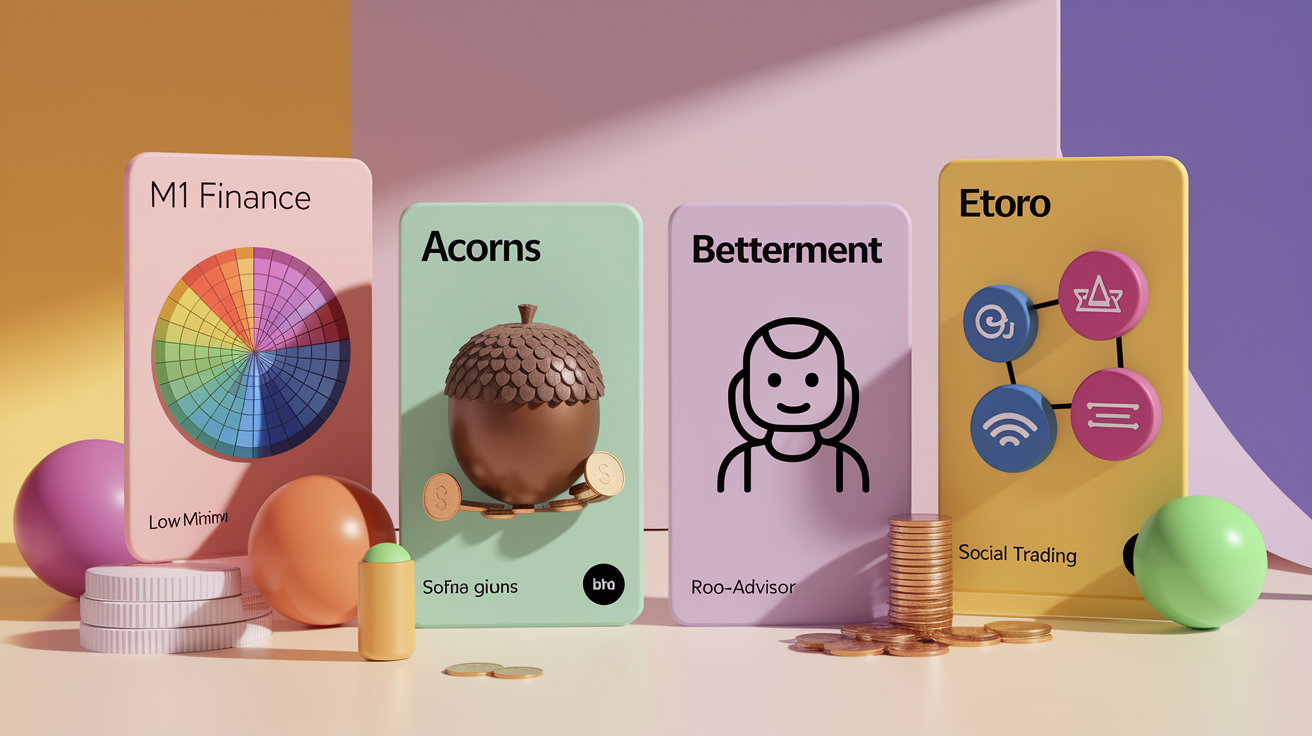
Not every good broker starts at zero. A few platforms need small minimums, anywhere from $5 to $100, but they offer automated features or tools that can help a $500 starter build a diversified portfolio without constant effort. These make sense when you value automation or goal planning more than full control over every trade.
M1 Finance
M1 Finance needs $100 to start and charges $3 monthly after the first three months if you use premium features. The platform centers on “Pies,” which let you build a custom asset mix and automatically rebalance over time. You can invest in stocks, ETFs, options, and crypto. The platform maintains your target percentages through recurring deposits and automatic adjustments. Good if you want to set a long-term plan once and let the system handle buying and rebalancing.
Acorns
Acorns starts at $5 and focuses on micro-investing through round-ups. The app rounds up your purchases and invests spare change. Monthly fees run $3 to $5, which bites hard on a small balance. But it’s simple and handles rebalancing and dividend reinvestment automatically. Acorns only offers ETFs, no individual stocks or bonds. Works best if you want fully hands-off and don’t mind paying monthly for automation.
Betterment
Betterment needs $10 and charges 0.25 percent annually for its digital robo-advisor service. The platform builds and manages a diversified ETF portfolio, rebalances automatically, reinvests dividends, and uses tax-loss harvesting when it applies. Betterment also has goal planning tools that help you map contributions to timelines, like saving for a house or building an emergency fund. The Premium tier requires $100,000 and adds access to advisors, but the $10 digital tier is plenty for a $500 starter.
eToro
eToro sets the minimum at $10 and focuses on social and copy trading alongside regular brokerage stuff. You can trade stocks, ETFs, options, and over 50 cryptos, but crypto trades cost a flat 1 percent. The platform doesn’t offer IRAs, and other fees may show up depending on what you do. eToro works if you want exposure to alternative assets and like the idea of copying trades from experienced investors while you learn.
The tradeoff with low-minimum accounts is simple. You get automation, goal tools, or social features. But you give up either full asset selection (Acorns, Betterment) or you take on monthly fees or management costs that can cut returns on small balances. For a $500 starter, a $0-minimum self-directed broker usually delivers better value unless you genuinely need the automation or structure these platforms provide.
How to Allocate Your First $500 Using a No-Minimum Brokerage
Investing $500 is about building a foundation, not chasing quick wins. Your goal is spreading risk across a few assets, starting the habit of recurring deposits, and avoiding overtrading. Best approach: use fractional shares or low-cost ETFs to build instant diversification, then set up automatic monthly contributions so your portfolio grows even when you’re not thinking about it.
Here’s a simple six-step process for setting up a $500 portfolio:
- Open a no-minimum brokerage (Fidelity, Robinhood, or Webull) and link your bank for transfers.
- Decide your mix. A beginner-friendly starting point: 60 to 70 percent stocks (U.S. stock ETF or fractional shares in a broad index) and 30 to 40 percent bonds or cash reserves (bond ETF or money market fund).
- Use fractional shares if you want individual high-priced stocks, or pick a no-minimum, no-expense-ratio fund like Fidelity’s ZERO funds to get instant diversification without per-fund minimums.
- Place your initial trades to match your target, leaving a small cash buffer (around $25 to $50) for flexibility or future opportunities.
- Set up a recurring monthly transfer of whatever you can afford consistently. Even $25 or $50 per month. Configure automatic investing so new deposits buy into your chosen mix without manual trades.
- Turn on dividend reinvestment (DRIP) so any dividends or interest automatically buy more shares instead of sitting idle.
| Portfolio Type | Percentage Breakdown | Suitable Broker |
|---|---|---|
| Conservative (stocks + bonds) | 60% stock ETF, 40% bond ETF | Fidelity, Betterment |
| Balanced (stocks + bonds + cash) | 70% stock ETF, 20% bond ETF, 10% cash/money market | Fidelity, M1 Finance |
| Growth-focused (stocks only) | 100% diversified stock ETF or fractional shares in 3–5 stocks | Robinhood, Webull |
Your $500 won’t grow into life-changing money overnight. Trying to force big returns by chasing hot stocks or trading frequently will likely shrink your balance instead. Start with a simple, diversified mix, add to it regularly, and focus on building the habit of consistent investing rather than timing the market or finding the next big winner.
Account Opening Requirements for Brokers with No Minimums
Opening a brokerage account online takes about 10 to 15 minutes if you’ve got your info ready. Brokers collect your legal name, date of birth, Social Security number, email, and mailing address. Most also ask for employment status, annual income, net worth, trading objectives, and some measure of your investment experience. These questions help the broker meet regulatory requirements and figure out whether features like margin or options trading fit your account.
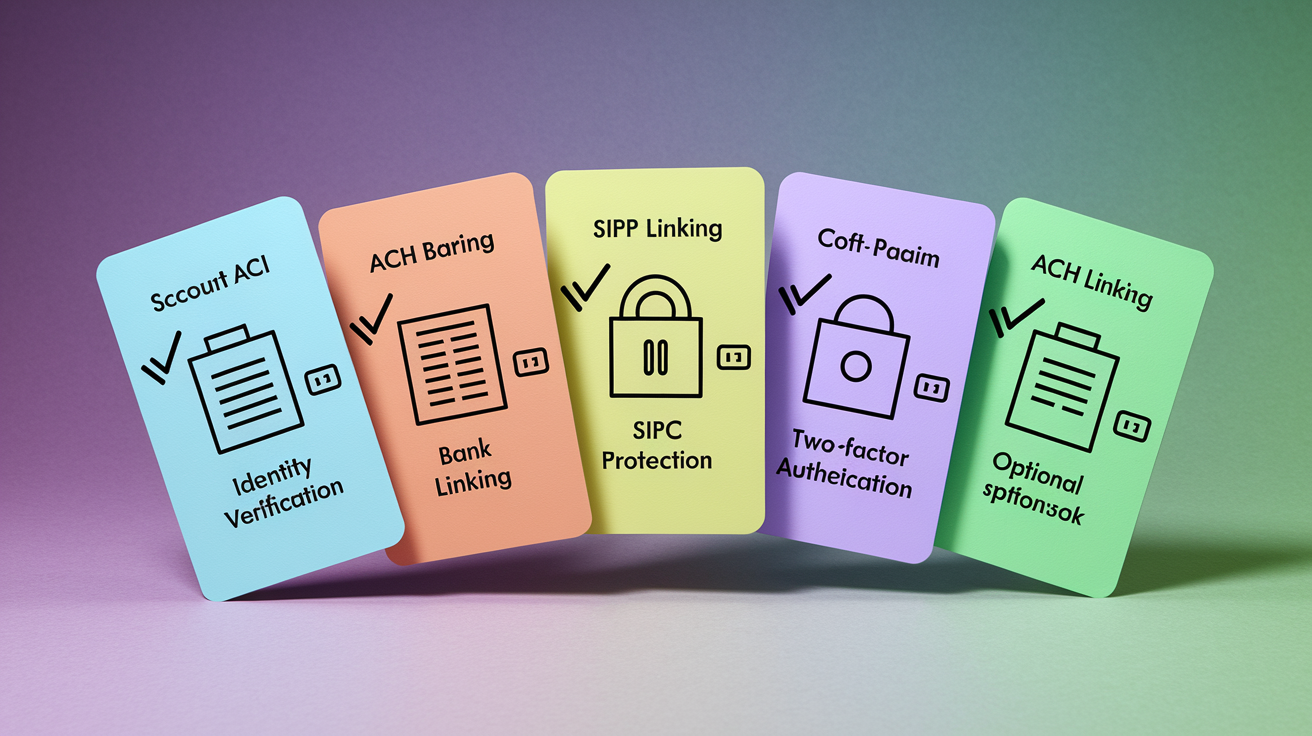
After you submit, the broker verifies your identity, usually by checking your name and Social Security number against government databases. You’ll link a bank account using routing and account numbers so you can transfer money via ACH. Most platforms also require two-factor authentication (2FA) for security, usually through a text code or authenticator app.
Here are five common account-opening steps and things to watch:
Identity verification can take a few minutes or up to one business day if the automated check flags something and needs manual review.
ACH bank linking is instant at most brokers, but your first transfer may be held for up to five business days while the deposit clears.
SIPC protection covers your brokerage account up to $500,000 in securities (including up to $250,000 in cash) if the broker fails. But SIPC doesn’t protect against market losses or bad investment decisions.
Two-factor authentication adds a second step (usually a text code) when you log in, which protects your account if someone gets your password.
Margin and options approval is optional and needs extra questions about your experience and risk tolerance. You can skip these features entirely when starting with $500.
Common delays happen when bank info doesn’t match exactly (check that your legal name on the bank account matches your brokerage application), when identity verification needs manual review (usually fixed in one business day), or when you try to trade before your first ACH deposit fully clears. Open your account a few days before you want to invest so any verification or transfer delays don’t hold you up.
Hidden Fees and Costs to Watch When Starting with Only $500

Zero-commission trading doesn’t mean zero fees. Several brokers advertise free stock and ETF trades but charge monthly subscription fees, management fees, or transaction fees on other products. When your balance is $500, even a small recurring cost can quietly cut your returns by several percentage points per year.
Five most common fees that hurt small accounts:
Monthly subscription fees like Acorns at $3 to $5 per month or M1 Finance at $3 per month after the first three months. On a $500 balance, $3 per month equals 7.2 percent annually before any investment returns.
Annual management fees like Betterment’s 0.25 percent fee, which is much lower than a flat monthly charge but still takes $1.25 per year on a $500 account and scales as your balance grows.
Crypto trading fees like eToro’s flat 1 percent on crypto buys and sells, meaning a $100 crypto purchase costs you $1 each way.
Per-contract options fees like Fidelity’s $0.65 per contract, which adds up quickly if you trade options frequently with a small account.
Penny-stock commissions like TD Ameritrade’s $6.95 per trade, which can wipe out a meaningful chunk of a small trade if you experiment with ultra-low-priced stocks.
Monthly fees are the most dangerous for small balances because they charge you whether the market goes up, down, or sideways. A $5 monthly fee on a $500 account is 12 percent per year in fees alone. If your investment returns 8 percent in a year, you net negative 4 percent after fees. Annual percentage fees are gentler at small balances but grow as your account does, so a 0.25 percent annual fee that costs $1.25 today will cost $25 annually once your balance hits $10,000.
Stick with $0-minimum, zero-commission brokers. Skip platforms with monthly fees unless the automation or tools genuinely save you time or mistakes worth more than the fee. Pay attention to what you’re actually trading, because commission-free stocks and ETFs don’t mean commission-free options, crypto, or penny stocks.
Beginner-Friendly Tools That Help $500 Investors Build Consistency
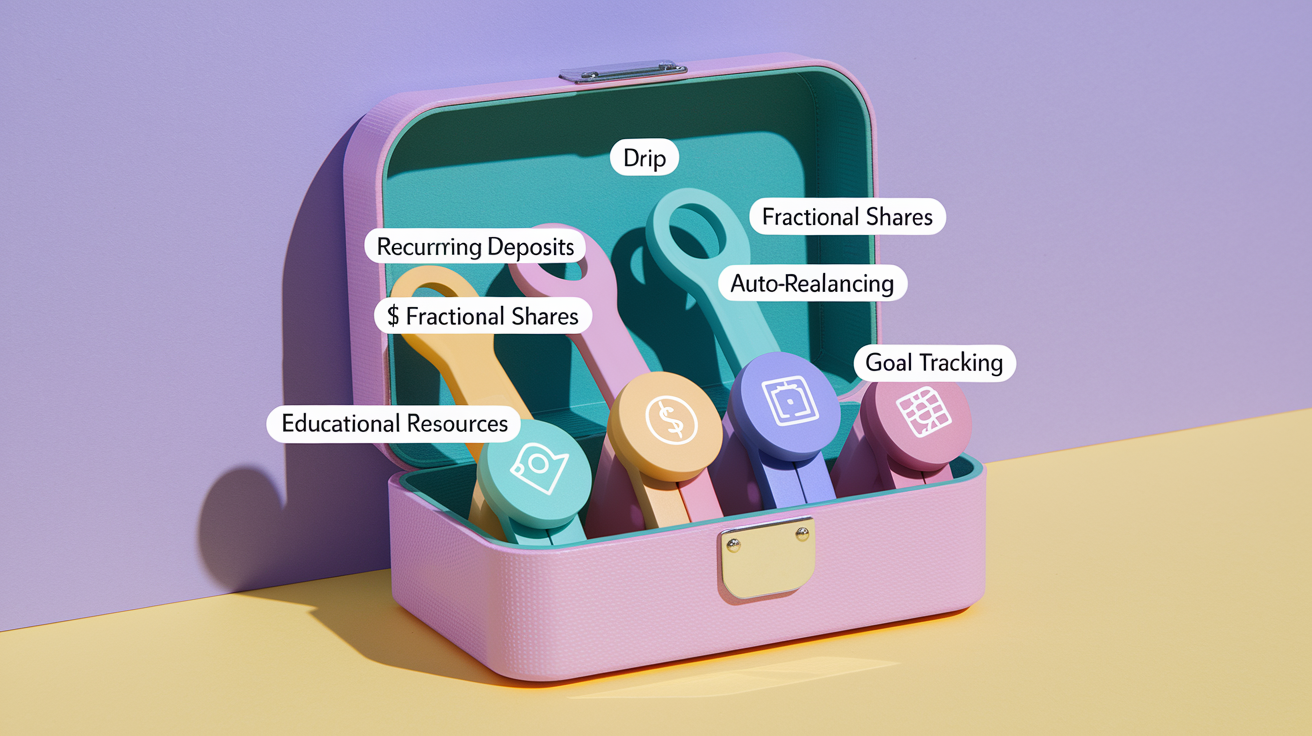
Best tools for small-balance investors are the ones that automate good habits and remove the temptation to overtrade. Recurring investment plans let you set a monthly deposit and forget about it. Dividend reinvestment plans (DRIPs) automatically buy more shares with any dividends instead of letting cash sit idle. Goal planning tools help you map contributions to a timeline, so you know whether you’re on track without obsessing over daily price swings.
Here are six tools across the top no-minimum brokers that help beginners stay consistent:
Recurring deposits (available at Fidelity, Robinhood, Webull, M1 Finance, Acorns, Betterment) let you schedule automatic monthly or weekly transfers from your bank so you keep adding to your portfolio even when you’re busy.
Automatic dividend reinvestment (DRIP) (Fidelity, M1 Finance, Betterment) takes any dividends paid by your stocks or ETFs and immediately buys more shares, so your money compounds instead of piling up as uninvested cash.
Fractional share investing (Robinhood, Fidelity) lets you buy a portion of an expensive stock, so you can own part of a $500 share even if you only have $50 to invest.
Auto-rebalancing (M1 Finance, Betterment, Acorns) automatically adjusts your portfolio back to your target when your stocks and bonds drift, so you don’t have to calculate and execute rebalancing trades manually.
Educational libraries and video courses (Fidelity, Webull) offer step-by-step lessons on portfolio construction, risk, and market basics without charging for premium courses or locking content behind a paywall.
Goal tracking and progress dashboards (Betterment, Acorns) show how your balance is growing relative to a target amount and timeline, so you can adjust contributions or timelines when life changes.
Simple tools beat advanced analytics when you’re starting out. Fancy charting software, real-time Level 2 data, and options-strategy simulators are useful once you’ve got experience and a bigger account. But they’re distractions when your focus should be on building the habit of consistent contributions and avoiding panic decisions during market drops. A clean mobile app with one-click recurring deposits and automatic dividend reinvestment will do more for your long-term wealth than a desktop platform with 50 chart indicators.
Risk and Rules New Investors Must Know with Small Accounts

Two major rules affect small accounts in the U.S.: the Pattern Day Trader (PDT) rule and margin account minimums. The PDT rule requires you to maintain at least $25,000 in account equity if you execute four or more day trades (buying and selling the same security on the same day) within five business days, and those trades represent more than 6 percent of your total trades during that period. If you fall under the $25,000 threshold and trigger the rule, your broker will restrict your account to closing trades only until you either add funds or wait for the restriction period to pass.
Margin accounts offer leverage, typically 2:1 for balances under $25,000 and up to 4:1 for balances above that threshold. Leverage means you can borrow money from the broker to buy more shares than your cash balance allows. But it also magnifies losses. If your $500 account uses 2:1 margin to control $1,000 worth of stock and the stock drops 25 percent, you lose $250. That’s half your original capital. Margin also incurs interest charges on the borrowed amount, further eating into returns on a small account.
Four risks every $500 investor should understand:
Leverage risk. Borrowing to invest can double your gains or double your losses. Interest on margin loans cuts your net return even when trades go well.
Options risk. Options contracts can expire worthless. Small accounts lack the cushion to absorb multiple losing trades without a big percentage drop in total balance.
Liquidity risk. Low-priced or thinly traded stocks can be hard to sell quickly at your target price, trapping capital when you need it.
Volatility risk. Individual stocks and sector ETFs can swing 10 to 20 percent in a week. A $500 account has no room for a large drawdown without forcing you to sell at a loss.
Practical advice for a $500 account: skip margin entirely, avoid frequent day trading that risks PDT restrictions, and use position sizing that limits any single trade to 10 to 20 percent of your total balance. If you want to learn options or trade individual stocks, start with paper trading or tiny position sizes (one share or one contract) to practice without risking meaningful capital. Your goal at this stage is building good habits and avoiding mistakes that wipe out your account before it has a chance to compound.
Final Words
In the action, you saw three $0-min brokers, Fidelity, Robinhood, and Webull, and why each works well for someone starting with $500. They offer $0 stock and ETF commissions and useful extras like fractional shares, 24/7 support, and crypto or options access.
We compared features, covered low-min robo options (M1, Acorns, Betterment, eToro), gave a simple $500 allocation plan, and flagged account setup steps and hidden fees to watch.
Use this guide to pick one of the best brokerage accounts with no minimums for $500 starters, set a basic recurring plan, and start building steadily with low risk in mind.
FAQ
Q: Can I open a brokerage account with $500?
A: You can open a brokerage account with $500. Many brokers have $0 minimums (Fidelity, Robinhood, Webull). Use fractional shares or ETFs, link your bank, and set small recurring deposits to grow the account.
Q: What is the best beginner friendly brokerage?
A: The best beginner friendly brokerage depends on your needs. Fidelity offers strong support and research; Robinhood is simple with fractional shares; Webull has more crypto and tools. All three offer $0 stock/ETF commissions.
Q: What should I invest $500 in right now?
A: Invest $500 right now in a priority order: build emergency savings, pay high-interest debt, or buy low-cost broad-market ETFs or fractional shares for long-term growth.
Q: What’s the best way to invest $500 a month?
A: The best way to invest $500 a month is to set automatic transfers into low-cost index ETFs or a robo-advisor, use dollar-cost averaging, and rebalance yearly to build consistency and lower timing risk.