
Can $500 really start your long-term investing success?
Yes, and the best way for beginners is a simple, low-cost plan you can stick with.
Put the $500 into low-cost index ETFs (pieces of many companies) inside a Roth IRA when you qualify, or a taxable account if you need flexibility, or use a robo advisor to build and rebalance the mix.
Fractional shares let you spread that $500 across funds instead of betting on one stock.
Time and steady contributions matter more than trying to pick winners, and markets will swing.
A Clear Path to the Best Way to Invest $500 for Long-Term Beginners
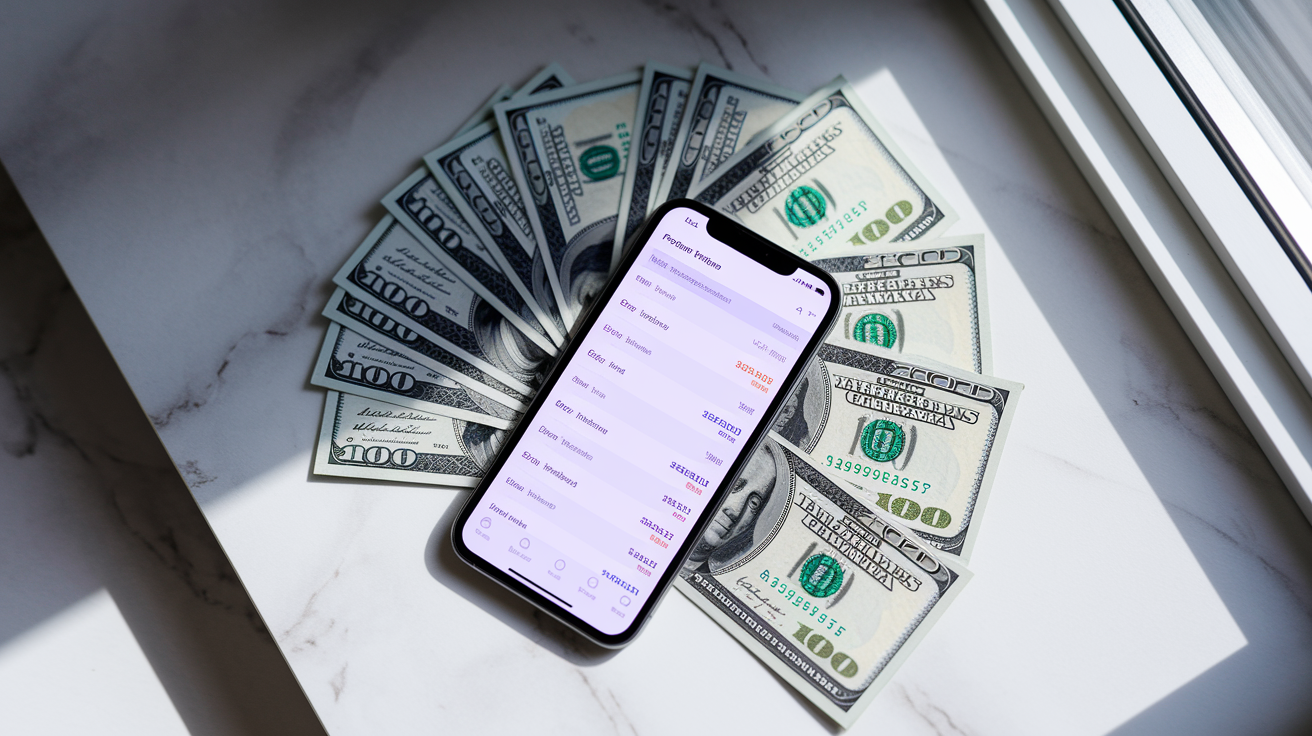
$500 opens most brokerage accounts, buys fractional shares of diversified funds, and seeds a Roth IRA. Modern platforms let you start with small amounts because they support fractional investing. You own part of a share instead of needing hundreds of dollars for a full one. A total market ETF might cost around $200 per share, but with fractional shares you can spread your full $500 across multiple holdings.
Many brokers now have zero account minimums, zero trading commissions, and immediate access to thousands of low cost ETFs with expense ratios as low as 0.03 percent. If you want tax free growth, a Roth IRA can hold that same $500 and grow without taxes on qualified withdrawals decades later.
The simplest long term approach for beginners with $500? Pick one or two low cost index ETFs inside a tax advantaged account. Index ETFs give you instant diversification across hundreds or thousands of stocks, so you’re not betting everything on one company. Robo advisors are another hands off option that builds a diversified portfolio based on your timeline and risk tolerance, then automatically rebalances it. The typical robo advisor fee runs around 0.25 percent of your account balance per year.
A Roth IRA pairs well with both strategies because your gains grow tax free and you can withdraw your original contributions anytime without penalty or taxes. Earnings have rules, though. If you’re already saving for retirement through a 401(k) match or need more flexibility, a taxable brokerage account works and has no contribution limits.
Keeping your money invested for at least five years reduces the chance of locking in a loss during a bad market year. Over longer periods, compound returns stack. $500 invested at a 10 percent annual return for 30 years could grow to around $10,000 before inflation. That’s about 20 times your starting amount. Add $100 per month to that initial $500 at the same 10 percent return, and the balance could reach roughly $238,000 over 30 years.
The key is time and consistency, not the size of your first deposit. Markets will fluctuate. But history shows that patient investors who stay invested through downturns tend to recover and grow.
Here’s how to start with $500:
-
Choose your account type. Pick a Roth IRA if you want tax free growth and meet income limits. Or a taxable brokerage account if you need complete flexibility without contribution or withdrawal rules.
-
Select a platform. Open an account at a broker with zero commissions, fractional shares, and low cost ETFs. Think Fidelity, Schwab, Vanguard, Robinhood, or a robo advisor like Betterment. The setup typically takes under 15 minutes online with your ID, Social Security number, and bank details.
-
Transfer your $500. Link your checking or savings account and deposit the money. Most platforms allow instant transfers or ACH that settles in 1 to 3 business days.
-
Buy a low cost ETF or activate your robo advisor. If you picked a hands on broker, search for a total market stock ETF with an expense ratio around 0.03 percent and place a market order for $500 worth of fractional shares. If you chose a robo advisor, answer the risk questionnaire and let it build the portfolio automatically.
-
Automate monthly contributions. Set up a recurring transfer of $10, $50, or $100 each month to keep building your balance without thinking about it. Small, consistent additions compound faster than a single deposit.
Choosing the Right Investment Account for Your $500

A Roth IRA and a traditional IRA both offer tax advantages, but they differ in when you pay taxes. With a Roth IRA, you contribute money you’ve already paid taxes on, then all qualified withdrawals in retirement are tax free. You can also pull out your contributions at any time without penalty or taxes, which gives you some flexibility if you need the cash before retirement.
A traditional IRA may let you deduct contributions from your taxable income now, lowering this year’s tax bill. But you’ll pay ordinary income tax on withdrawals later. If you take money out before age 59½, you usually face a 10 percent penalty on top of taxes unless you qualify for an exception. Most online brokers let you open either IRA type in under 15 minutes by filling out a short form and linking a bank account.
If you’re already contributing to a workplace 401(k) and capturing your employer match, or if your goal isn’t retirement, a taxable brokerage account may be the better choice. Taxable accounts have no contribution limits, no age restrictions, and no early withdrawal penalties. You can buy and sell whenever you want, and you only pay taxes on realized gains and dividends.
The downside? You lose the tax shelter. But you gain complete flexibility. If you think you might need some of the $500 within a few years, the taxable account avoids locking you into retirement plan rules.
| Account Type | Pros | Cons |
|---|---|---|
| Roth IRA | Tax free qualified withdrawals; can withdraw contributions anytime; long term growth shelter | Income limits apply; $7,000 annual contribution limit (2024, under age 50); earnings penalties if withdrawn early |
| Taxable Brokerage | No contribution limits; no withdrawal penalties; complete flexibility | Taxed on dividends and capital gains each year; no tax free growth |
| Traditional IRA | Potential tax deduction on contributions; tax deferred growth | Ordinary income tax on withdrawals; 10% penalty if withdrawn before 59½; required minimum distributions at 73 |
Low Cost Investment Vehicles Ideal for Long Term Beginners with $500

Low cost index ETFs are the most practical choice for a $500 beginner portfolio. An ETF is a basket of stocks or bonds that trades on an exchange like a single stock. A total market ETF might hold shares of 3,000 U.S. companies, giving you instant diversification for the price of one trade.
Expense ratios for broad market ETFs commonly run between 0.00 percent and 0.08 percent per year. You’re paying only a few cents per $100 invested. Most major brokers now offer commission free trading on ETFs, so you can buy and sell without paying a transaction fee. With fractional shares enabled, your full $500 can be split across multiple ETFs even if each share costs more than $500. That solves the old problem of needing thousands of dollars to build a diversified portfolio.
Target date funds are another beginner friendly option that automatically adjusts your stock to bond mix as you approach a goal year, usually retirement. They start aggressive and gradually shift to more conservative allocations. The rebalancing happens inside the fund, so you don’t have to do anything. Target date funds are often structured as mutual funds, and some require minimum investments of $1,000 or more, though a few brokers offer ETF versions with no minimums.
If your platform supports a target date fund with a low minimum and expense ratio under 0.20 percent, it’s a simple set it and forget it choice for $500.
Mutual funds and ETFs are similar but have key differences that matter for small accounts. Mutual funds price once per day after the market closes, and many require minimums of $1,000 to $3,000 for certain share classes. ETFs trade throughout the day like stocks and typically have no purchase minimums beyond the share price, which fractional investing eliminates.
When you sell an ETF, you may realize a taxable gain, but you control the timing. Mutual funds can distribute capital gains to all shareholders even if you didn’t sell, creating an unexpected tax bill. For a $500 starter, ETFs offer more flexibility, lower minimums, and better tax efficiency.
Fractional shares let you spread your $500 across multiple holdings without the math headache. If one ETF share costs $150 and another costs $200, you could buy $250 worth of each, owning partial shares of both. Before fractional shares became common, $500 might have bought you two or three full shares of a single expensive stock, leaving you concentrated in one company. Now you can own pieces of a total market fund, an international fund, and a bond fund all at once, building a balanced portfolio from your first deposit.
Understanding How Diversification Works When You Only Have $500

Diversification means spreading your money across different investments so that one bad performer doesn’t sink your entire account. Buy a single stock and that company stumbles? You could lose a big chunk of your $500. Own a fund holding 500 companies? One or two failures barely register.
Long term investors diversify to smooth volatility and reduce the chance of a permanent loss. Markets will still fluctuate, but you avoid the concentrated risk of betting everything on one sector or one stock. Over years and decades, diversified portfolios tend to recover from downturns and compound steadily.
ETFs solve the diversification challenge for small investors by bundling hundreds or thousands of securities into one ticker. A broad U.S. stock market ETF gives you exposure to large companies, mid size companies, and small companies across every major industry. An international ETF adds companies outside the U.S. A bond ETF provides fixed income exposure that typically moves differently than stocks, which can cushion your account when stocks drop.
With $500 and fractional shares, you can own slices of all three types in one trade session, building a globally diversified portfolio on your first day.
Bonds and bond funds add stability by balancing stock risk. Bonds pay regular interest and return your principal at maturity, which makes them less volatile than stocks. When stock prices fall, bond prices often hold steady or rise, smoothing your overall returns. For a beginner with $500 and a long timeline, a small bond allocation is optional. But adding 10 to 20 percent bonds can reduce emotional stress during market drops. Short term bond ETFs are a simple choice because they have low interest rate risk and expense ratios often under 0.10 percent.
Here are three simple $500 allocation examples:
Aggressive (100 percent stocks): Invest the full $500 in a total U.S. stock market ETF. This maximizes growth potential and suits investors with a 10 plus year timeline who can handle short term swings.
Moderate (80 percent stocks, 20 percent bonds): Put $400 into a total stock market ETF and $100 into a short term bond ETF. This mix reduces volatility slightly while keeping most of your money working in stocks for long term growth.
Conservative (60 percent stocks, 40 percent bonds): Allocate $300 to a stock ETF and $200 to a bond ETF. This lowers risk and suits investors closer to needing the money or with lower tolerance for big drops, though it also lowers expected long term returns.
Long Term Growth: Compound Interest and Time Horizon Basics

Compound interest is the process where your gains start earning their own gains. If your $500 grows by 10 percent in year one, you have $550. In year two, that 10 percent applies to the new $550, giving you $605. Each year the base grows, so the dollar gains get larger even if the percentage stays the same.
The longer you leave money invested, the more dramatic compounding becomes. That’s why starting early matters more than starting with a large amount.
Stock market returns vary year to year, but long term historical averages for diversified portfolios sit around 6 to 7 percent after inflation, or roughly 10 percent before inflation. Conservative planning often uses a 6 to 7 percent nominal annual return. Your actual results will bounce around. Some years negative and some years well above 10 percent. But time smooths those swings.
A five year minimum holding period reduces the chance you’ll need to sell during a downturn. Ten years is safer, and 20 or 30 years gives compounding real room to work.
Here are three quick real world compound examples using $500:
Lump sum, 30 years: $500 invested at 10 percent annual return for 30 years grows to around $10,000. Roughly 20 times your starting balance.
Lump sum, 10 years: $500 at 7 percent annual return for 10 years grows to about $985. Nearly doubles.
Lump sum plus monthly contributions: $500 initial deposit plus $100 per month at 10 percent annual return for 30 years grows to approximately $238,000, showing how small recurring additions multiply the outcome.
Dollar Cost Averaging and Automating Your Investing

Dollar cost averaging means investing a fixed amount on a regular schedule, buying more shares when prices are low and fewer shares when prices are high. This removes the pressure to time the market and reduces the emotional weight of watching daily price swings.
If you invest $100 every month regardless of market conditions, some months you’ll buy at a discount and some months at a premium. Over time the average price tends to smooth out. For beginners, dollar cost averaging is safer and simpler than trying to predict the best entry point.
Routine contributions build discipline and turn investing into a habit rather than a one time event. Even small amounts matter. Adding $10 or $50 per month to your initial $500 steadily increases your balance and accelerates compounding. The consistency often matters more than the size of each deposit.
Automation removes the temptation to skip months or spend the money elsewhere, and it keeps your strategy on track during market volatility when emotions might push you to stop.
Here’s the step by step automation setup:
-
Link your bank account to your brokerage or robo advisor. Most platforms let you connect checking or savings accounts through a secure portal that verifies small test deposits.
-
Set a recurring transfer amount and frequency. Choose a monthly amount you can afford even during a tight budget month, like $10, $25, or $100. Pick a date that aligns with your paycheck schedule.
-
Enable automatic investing if your platform offers it. Some brokers and all robo advisors can automatically buy your chosen ETF or rebalance your portfolio whenever new money arrives, so you never hold uninvested cash.
-
Review and adjust annually. Once a year, check that your recurring amount still fits your budget and that your allocation matches your goals. Increase contributions when you get a raise or pay off debt.
Evaluating Fees and Expenses Before Investing $500

Expense ratios are the annual fees charged by funds, expressed as a percentage of your investment. A 0.03 percent expense ratio means you pay three cents per year for every $100 you invest. Broad market ETFs often charge between 0.00 percent and 0.08 percent, which barely dents your returns.
A 0.50 percent expense ratio might sound small. Over 30 years it can reduce your final balance by thousands of dollars because the fee compounds against you. Always compare expense ratios when choosing between similar funds, and favor the lowest cost option that gives you the diversification you want.
Robo advisors add a management fee on top of the fund expense ratios, typically 0.25 percent to 0.50 percent of assets under management per year. On a $500 balance, a 0.25 percent fee costs $1.25 annually, which is affordable for the convenience of automated rebalancing and tax loss harvesting.
If you’re comfortable picking your own ETFs and rebalancing once a year, the DIY approach saves that fee and puts more money toward compounding. The tradeoff is effort versus automation. For beginners who value simplicity, robo advisor fees are reasonable. For beginners who want to learn and save every dollar, self directed ETF investing wins.
Avoiding hidden costs means watching for fund minimums, bid ask spreads, and trading frequency. Some mutual funds require $1,000 or $3,000 to buy in, which locks out $500 investors unless you use an ETF version. The bid ask spread is the difference between the price someone will pay for a share and the price someone will sell it for. Liquid ETFs have tight spreads, a few cents. But obscure funds can have wider spreads that nibble at your returns.
Trading too often, even with zero commissions, can trigger short term capital gains taxes in taxable accounts and rack up small spread costs. Buy your ETFs, hold them, and rebalance once or twice a year to keep costs low.
Managing Risk and Volatility with a Small Starting Amount Like $500

Stock prices bounce around, and drops of 10 to 20 percent in a year are common. A 50 percent crash happened in 2008, and a 30 percent drop happened in early 2020 before markets recovered. If you invest $500 and the market falls 20 percent in month two, your balance drops to $400. That feels bad, but it’s temporary if you hold long enough.
Historical data shows that holding periods of five years or more reduce the chance of ending with a loss. Ten years makes losses even less likely. Volatility is the price you pay for higher long term returns, and patience is the main tool for managing it.
Emotional mistakes hurt returns more than market drops. Panic selling locks in losses and forces you to buy back in at higher prices later. Chasing hot stocks or sectors after they’ve already surged often means buying high and selling low when the trend reverses. Trying to time the market by jumping in and out usually costs you the best rebound days, which tend to happen right after the worst crashes.
The simplest strategy? Pick a diversified portfolio, stick with it, and ignore the daily noise.
Here are four common risks beginners must manage:
Panic selling during downturns: Markets recover over time, but only if you stay invested. Selling after a drop means you miss the rebound and guarantee a loss.
Overconcentration in one stock or sector: Putting all $500 into a single company or industry exposes you to company specific risk. Diversification spreads that risk across hundreds of holdings.
Trying to time entry and exit points: Even professionals struggle to predict short term moves. Dollar cost averaging and long holding periods remove the guesswork.
Ignoring fees and expenses: High expense ratios and management fees compound against you every year, shrinking your final balance by more than you expect.
When Investing $500 Isn’t the Right Move (Emergency Funds, Debt & Short Term Needs)

If you don’t have at least three months of living expenses saved in cash, your $500 belongs in a high yield savings account before it goes into the market. An emergency fund covers unexpected car repairs, medical bills, or job loss without forcing you to sell investments at a bad time.
High yield online savings accounts currently offer annual percentage yields around 3 to 4 percent, and your money stays liquid with no withdrawal penalties. Big bank savings accounts often pay near 0 percent, so shop around for better rates. Once you have a basic cushion, then start investing.
If you carry credit card debt with interest rates above 15 or 20 percent, paying that off delivers a guaranteed return higher than any investment. A $500 payment toward a 20 percent APR balance saves you $100 per year in interest, which beats the stock market’s long term average.
Investing while carrying high interest debt means you’re paying more in interest than you earn in returns, which moves you backward. Pay off the expensive debt first, then redirect that monthly payment into your brokerage account.
If you’ll need the cash within the next two to three years, the stock market is too risky. Short term goals like a down payment, tuition, or a car purchase are better matched with safer, liquid options:
High yield savings account: 3 to 4 percent APY, no penalties, FDIC insured up to $250,000.
Money market account: Similar rates to high yield savings, often with check writing privileges and FDIC insurance.
Short term bond fund or ETF: Slightly higher potential return than savings accounts, low volatility, small risk of temporary loss if interest rates spike, better for two to three year timelines.
Simple Platform Options for Investing $500 as a Beginner

Fidelity, Schwab, and Vanguard are the three largest traditional brokers offering zero commission trades on stocks and ETFs. All three have no account minimums, fractional shares, and large selections of low cost index funds.
Fidelity offers four zero expense ratio index mutual funds that are easy for beginners to understand. Schwab’s broad market ETFs charge around 0.03 percent and cover U.S. stocks, international stocks, and bonds. Vanguard pioneered low cost index investing and has the most established reputation for investor friendly pricing, though some mutual fund minimums start at $1,000 or $3,000 for certain share classes.
All three let you open an account online in under 15 minutes and offer mobile apps for managing your portfolio.
Robinhood and Webull are app based brokers built for mobile first users. Both offer zero commissions, fractional shares, and simple interfaces that make buying ETFs or stocks feel like online shopping. Robinhood has no account minimum and supports recurring investments, so you can automate monthly contributions.
Webull offers extended trading hours and more detailed charting tools, which beginners usually don’t need but can explore later. The downside is limited research tools and customer support compared to the big three. But for a straightforward buy and hold $500 strategy either app works fine.
Robo advisors like Betterment and Wealthfront build and manage a diversified portfolio for you based on a short questionnaire about your goals and risk tolerance. They automatically rebalance your account, reinvest dividends, and harvest tax losses in taxable accounts to reduce your tax bill.
The typical management fee is 0.25 percent per year, so on $500 you pay $1.25 annually. Some robo advisors offer free tiers for accounts under a certain balance or charge slightly higher fees for premium features like human advisor access. If you want a completely hands off experience and are willing to pay a small fee for automation, robo advisors are the simplest path.
When choosing a platform, check four things: trading commissions (should be zero for stocks and ETFs), fractional share support (lets you invest the full $500), access to low cost ETFs (expense ratios under 0.10 percent), and automation features (recurring transfers and automatic investing). Most major brokers now meet all four criteria, so the decision often comes down to interface preference and whether you want human support or pure self service.
What to Do After You Invest Your First $500
Once your $500 is invested, the main tasks are rebalancing, tracking, and contributing. Rebalancing means adjusting your portfolio back to your target allocation once or twice per year. If you started with 80 percent stocks and 20 percent bonds, and stocks perform well, you might drift to 85 percent stocks and 15 percent bonds.
Selling a small amount of stocks and buying bonds brings you back to 80/20, which locks in some gains and keeps your risk level consistent. Many robo advisors rebalance automatically, and some brokers offer rebalancing tools. If you own just one or two ETFs, rebalancing is simple and takes a few minutes.
Portfolio tracking helps you stay disciplined without obsessing over daily swings. Check your account once per quarter or once per month to confirm contributions are happening and your allocation hasn’t drifted too far. Avoid checking daily because short term volatility can trigger emotional decisions.
Most platforms show your total return, asset allocation, and account balance on a single dashboard. If your balance is growing and your contributions are consistent, you’re on track. If something looks off, like a missing deposit or an unexpected fee, investigate and adjust.
Three simple maintenance habits keep your long term plan running smoothly:
Increase contributions annually: When you get a raise, pay off a loan, or cut an expense, redirect some of that cash into your monthly investment transfer. Even an extra $10 or $20 per month compounds over decades.
Rebalance once per year: Pick a calendar date (like your birthday or January 1) to review your allocation and rebalance if any asset class has drifted more than 5 percentage points from your target.
Avoid unnecessary trading: Resist the urge to sell during market drops or chase trending stocks. Buy and hold strategies outperform active trading for most investors, especially beginners who lack experience timing the market.
Final Words
Hit the key steps: choose the right account, fund it with $500, buy a low-cost index ETF or set up a robo-advisor, and automate regular contributions.
We showed why $500 is enough (fractional shares, low-min ETFs, Roth IRA), how to spread risk with ETFs and bonds, and why fees and a 5+ year horizon matter. Expect ups and downs; that’s normal.
If you follow these simple steps, you’ll be using the best way to invest $500 for long-term beginners: low-cost, diversified funds plus habit-building automation. It’s small, but it can grow.
FAQ
Q: What is the best investment you can make with $500?
A: The best investment you can make with $500 is often a low-cost broad-market index ETF or funding a Roth IRA with that ETF. It gives instant diversification, low fees, and you can automate monthly contributions.
Q: What creates 90% of millionaires?
A: What creates 90% of millionaires is long-term saving and investing, plus owning or running a business and living below your means. Focus on steady saving, regular investing in broad funds, and reinvesting returns.
Q: Is $500 enough to start investing?
A: Yes, $500 is enough to start investing. Use fractional shares, low-minimum ETFs, or open a Roth IRA; make sure you have an emergency cushion and pay off high-interest debt first.
Q: How to turn 500 dollars into more?
A: Turning $500 into more starts by investing it in low-cost, diversified funds and adding regular contributions. Choose index ETFs, a robo-advisor, or a Roth IRA and keep a 5+ year horizon.