

Want to make every dividend check work harder without checking your account daily?
Dividend reinvestment plans in the UK automatically turn cash payouts into more shares, letting compounding do the heavy lifting.
But they’re not magic, registrar and broker plans charge fees, and you still pay the same tax on dividends whether you reinvest or take cash.
This post explains how UK DRIPs work, where to set them up, the costs and tax rules, and a simple way to decide if automatic reinvestment helps your long term savings.
How Dividend Reinvestment Plans Operate in the UK

A dividend reinvestment plan in the UK automatically converts cash dividends into additional shares of the same company. Instead of receiving quarterly or half-yearly dividend payments as cash, the plan buys more shares on your behalf, usually within two business days of the dividend landing. Most UK DRIPs route purchases through the open market, buying existing shares at whatever the current price is rather than issuing new stock directly from the company. This market purchase setup is different from many US DRIPs, where companies often issue fresh shares at a discount.
UK dividend reinvestment typically runs through share registrars like Equiniti, Link Group, and Computershare. They handle the paperwork, settlement, and record keeping for participating companies. When you enroll in a registrar DRIP, the registrar collects your dividend, pools it with other participants’ dividends, buys shares in bulk, and allocates fractional or whole shares to each investor’s account. Some registrars round fractions down and return small cash balances. Others credit partial shares. The registrar charges a dealing fee for each reinvestment, and you’ll also pay 0.5 percent stamp duty reserve tax on the new shares, just like any UK share purchase.
Key features of UK DRIPs:
Registrar operation Share registrars run the plans on behalf of FTSE listed companies rather than the companies managing reinvestment directly.
Market purchase Dividends buy existing shares on the London Stock Exchange at market price, not discounted new issues.
Dealing fees Each reinvestment typically carries a flat purchase fee, often between £1 and £3, plus stamp duty where applicable.
Fractional shares Many registrars credit partial shares, letting you use every penny of dividend. A few registrars return leftover cash below one full share.
Settlement timing Reinvestment usually completes within two business days of the dividend payment date, matching standard UK share settlement rules.
US and UK DRIPs are structured differently. American plans often let companies issue shares directly at 0 to 5 percent below market price and waive fees, aiming to raise capital cheaply. UK plans buy shares on the open market and pass dealing costs to investors. This means UK DRIPs rarely offer a discount and always carry transaction fees and stamp duty. Cost awareness matters when deciding whether to reinvest small dividend amounts or accumulate cash for a manual lump sum purchase.
Where UK Investors Can Access DRIPs

You can set up dividend reinvestment in two main ways: through a share registrar for individual company plans or via a stockbroker’s automatic reinvestment service. Registrar DRIPs require you to hold shares on the company’s register rather than in a broker nominee account, and you enroll directly with the registrar by completing a mandate form. Once you’re enrolled, every dividend from that holding is automatically reinvested. Registrar plans are available for many FTSE 100 and FTSE 250 companies, but coverage varies. You’ll need to check each company’s investor relations page or contact the registrar to confirm eligibility and fees.
Most UK brokers now offer built in dividend reinvestment across all eligible holdings in your account. Platforms like Hargreaves Lansdown, AJ Bell, Interactive Investor, and Freetrade let you toggle automatic reinvestment on or off for each stock, investment trust, or ETF you own. Broker reinvestment works inside ISAs, SIPPs, trading accounts, and junior ISAs. Many platforms support fractional shares, so even a £5 dividend can buy a slice of an expensive stock. This approach is simpler than registrar DRIPs because you manage all reinvestment settings in one place. You keep your shares in a nominee structure, which makes selling and transferring easier.
Major UK broker and platform requirements for dividend reinvestment:
Minimum dividend amount Typically £1 to £10 per reinvestment. Dividends below the threshold are paid as cash.
Supported currencies Most platforms reinvest only GBP dividends automatically. Foreign currency dividends are paid as cash and require manual conversion.
Per holding toggle You can choose which shares to reinvest and which to take as cash, giving control over where compounding happens.
Fractional share availability Platforms that support fractions let you invest the full dividend. Others round down and leave small cash balances.
Broker reinvestment is more flexible for diversified portfolios. Registrar DRIPs suit investors who hold paper certificates or prefer direct ownership of a single stock, but managing multiple registrar plans gets cumbersome fast. For most UK investors building a mixed portfolio inside an ISA or SIPP, broker based automatic reinvestment is the practical choice.
Fees and Costs of Dividend Reinvestment in the UK

Broker dividend reinvestment typically carries a flat fee of £1 to £2 per reinvestment per holding. If you hold five dividend paying stocks and all pay in the same quarter, you might pay £5 to £10 in total fees that quarter. Some brokers charge no reinvestment fee for premium account holders or waive fees entirely on certain wrapper types like SIPPs. A few platforms levy percentage based fees instead, taking 0.1 to 0.5 percent of the reinvested amount. That can add up when dividends are large. Always check your platform’s fee schedule before enabling reinvestment, because frequent small dividends can rack up charges faster than one annual lump sum purchase.
Registrar DRIPs often charge higher per transaction costs. A typical registrar dealing fee is £2.50 to £3.50 per reinvestment, and you also pay 0.5 percent stamp duty reserve tax on the value of shares purchased. On a £50 dividend, stamp duty adds 25p, and the dealing fee brings the total cost to around £3. That £3 represents 6 percent of your dividend, eating into the compounding benefit. For small dividends, this fee drag can outweigh the convenience of automatic reinvestment. Manual accumulation and a single annual purchase might be more cost effective.
Over decades, reinvestment fees compound negatively just as returns compound positively. If you reinvest £100 in dividends quarterly and pay £1.50 each time, you spend £6 a year in fees. Across 20 years, those fees and the growth you miss on that money can cost hundreds of pounds. When dividends are small or the yield is low, consider collecting cash until you have enough to justify a single purchase. When dividends are large or you use a fee free broker plan, automatic reinvestment makes more sense. Match the method to the dividend size and your platform’s cost structure.
Tax Treatment of DRIPs in the UK

Dividends reinvested through a DRIP are taxed exactly the same as dividends taken as cash. The UK tax year in which you receive the dividend determines when you pay tax, regardless of whether you spend the cash or reinvest it. For 2026/27, the dividend allowance is £500, meaning the first £500 of dividend income across all your non tax sheltered accounts is tax free. Any dividends above that threshold are taxed at your marginal rate: 10.75 percent for basic rate taxpayers, 35.75 percent for higher rate taxpayers, and 39.35 percent for additional rate taxpayers from April 2026.
Reinvesting a dividend doesn’t delay or reduce the tax bill. If you receive £1,000 in dividends in a trading account and reinvest all of it, you still owe tax on the £500 above the allowance. A basic rate taxpayer would pay £53.75 on that £500, and that tax is due even though the cash was used to buy more shares. You need to fund the tax payment from other income or savings. That’s a key reason many UK investors prefer to take dividends as cash in taxable accounts and reinvest only inside tax wrappers.
Where UK dividend tax applies:
Trading accounts and general investment accounts Dividends above the £500 allowance are taxed at dividend tax rates. Reinvestment doesn’t shelter income.
ISAs and SIPPs Dividends are completely tax free inside these wrappers, and reinvesting them doesn’t create any tax liability at all.
Cost basis tracking Reinvested dividends increase your cost basis in the shares, reducing capital gains tax when you eventually sell. But you need to track each reinvestment to calculate the correct gain.
DRIPs Within ISAs and SIPPs

Almost every major UK broker allows automatic dividend reinvestment inside Stocks and Shares ISAs and self invested personal pensions. When you enable reinvestment in an ISA, dividends buy more shares without triggering any UK income tax, and the new shares remain inside the ISA wrapper, so future dividends and capital gains stay tax free. Reinvested dividends don’t count toward your annual ISA subscription limit. If you contribute the full £20,000 allowance and later reinvest £800 in dividends, your total ISA value grows beyond £20,000 without penalty, because only new cash contributions count against the limit.
SIPP dividend reinvestment works the same way. Dividends paid by shares or funds inside your pension are free of UK income tax, and reinvesting them compounds that benefit over decades. Because SIPPs are built for long term growth and you can’t withdraw before age 55 (rising to 57 in 2028), automatic reinvestment fits the pension timeline well. Many SIPP providers charge no reinvestment fee or include it in a flat annual administration charge, making SIPPs a cost effective home for dividend compounding.
| Account Type | DRIP Eligibility | Tax Treatment |
|---|---|---|
| Stocks & Shares ISA | Yes, most brokers support it | Dividends and reinvestment are tax free. No income tax or CGT inside the wrapper |
| Self Invested Personal Pension (SIPP) | Yes, most brokers support it | Dividends are tax free. Reinvestment adds to tax free growth until withdrawal |
| General Trading Account | Yes, but dividends are taxable | Dividends above £500 allowance are taxed. Reinvestment doesn’t defer tax |
| Junior ISA | Yes, where offered by the platform | Dividends and reinvestment are tax free. £9,000 annual contribution limit (doesn’t include reinvested dividends) |
Benefits of Using DRIPs in the UK

Automatic dividend reinvestment turns every payout into more shares, and those new shares generate their own dividends, creating a compounding snowball. Over 10 or 20 years, that snowball effect can add thousands of pounds to your portfolio without you lifting a finger. Reinvestment is especially powerful inside ISAs and SIPPs, where tax free compounding lets every penny of dividend buy more growth.
Five reasons UK DRIPs work:
Compounding returns Each reinvested dividend earns future dividends, speeding up growth over decades without additional contributions.
Discipline and automation Reinvestment happens automatically, removing the temptation to spend dividends and keeping you invested during market dips.
Fractional shares Many platforms let dividends buy fractions of expensive stocks, so even a £10 dividend from a FTSE 100 holding can purchase part of another share you couldn’t afford in full.
Lower dealing frequency Instead of five or ten manual purchases a year, reinvestment handles it all, saving time and reducing the risk of mistimed trades.
Cost averaging Dividends are reinvested at whatever price shows up on the payment date, smoothing your average purchase price across market cycles.
Reinvestment suits long term investors who don’t need dividend income to cover living expenses. If your goal is wealth accumulation over 15 to 30 years and you have other income sources, letting dividends compound inside an ISA or SIPP is one of the simplest ways to grow your portfolio. It’s not clever or flashy. It’s just consistent. And consistency tends to win over time.
Drawbacks and Limitations of UK DRIPs

Automatic reinvestment removes your ability to time purchases. Every dividend is converted to shares on a fixed date, regardless of whether the stock is expensive, cheap, or crashing. If a company’s share price has doubled and the valuation looks stretched, your dividend still buys more of it, potentially locking in poor returns. Manual reinvestment lets you redirect cash to undervalued holdings or different sectors, giving you more control over portfolio balance and risk.
Fees can quietly eat away returns, especially when dividends are small. A £1.50 fee on a £25 dividend is 6 percent gone before compounding even starts. Across multiple holdings and years, those fees add up. Stamp duty on UK share purchases adds another 0.5 percent on registrar DRIPs, and you pay it every time a dividend is reinvested. For investors receiving frequent small dividends, the cumulative cost of reinvestment can exceed the benefit of compounding. It’s smarter to accumulate cash and buy manually once or twice a year when you have enough to justify the dealing charge.
Reinvestment also locks you into the same stock. If a company cuts its dividend, underperforms, or faces trouble, your dividends keep buying more shares in a weakening business rather than being available to move into stronger opportunities.
DRIPs vs Manual Reinvestment in the UK
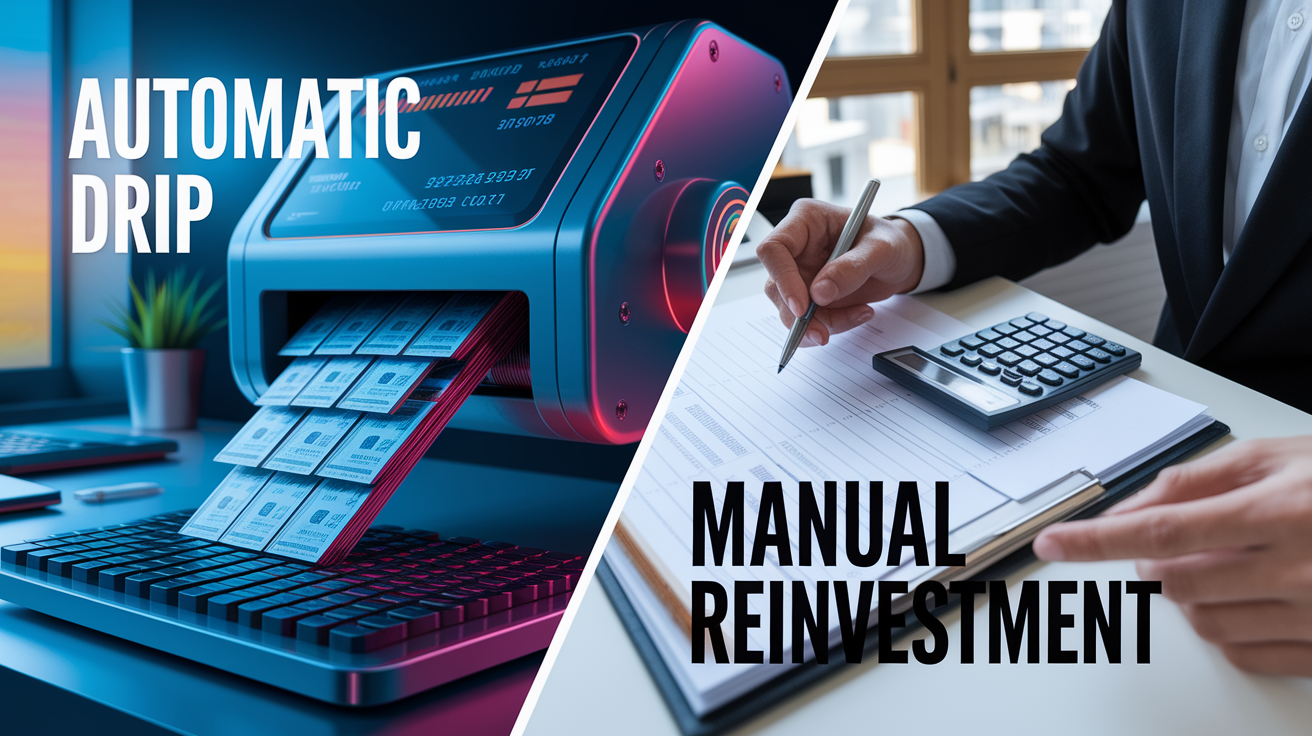
Automatic reinvestment is simple and requires no ongoing decisions. You enable it once, and every dividend is converted to shares without further input. This suits investors who want to remove emotion and timing risk from the equation and who hold diversified portfolios inside tax wrappers where fees are low or zero.
Manual reinvestment gives you flexibility and control. You collect dividends as cash, wait until you have a meaningful amount, and then decide where to deploy it. If one holding has run up in price and another is down, you can rebalance by buying the cheaper stock. If a new opportunity appears or you want to add a different sector, the cash is ready. Manual reinvestment also avoids paying multiple small dealing fees and lets you time purchases during market dips or around earnings reports. The tradeoff is that it requires discipline, because cash sitting in your account can tempt you to spend it or wait too long for the “perfect” entry point that never comes.
| Method | Key Characteristics |
|---|---|
| Automatic DRIP | Dividends reinvest on payment date. No timing control. Per reinvestment fee applies. Suits hands off, long term compounding inside ISAs/SIPPs |
| Manual Reinvestment | Dividends paid as cash. Investor chooses when and where to reinvest. Allows rebalancing and diversification. Requires discipline and active decisions |
| Hybrid Approach | Automatic reinvestment for core holdings. Cash collection for smaller positions or tactical opportunities. Balances convenience and flexibility |
| Cost Consideration | Automatic incurs fees per dividend per holding. Manual incurs one dealing fee per chosen purchase. Total cost depends on dividend frequency and size |
Step by Step Guide to Setting Up a DRIP in the UK

Setting up dividend reinvestment on a UK broker platform takes a few minutes and varies slightly by provider, but the core steps are the same. Most brokers let you enable reinvestment at the account level or per individual holding, and the setting applies to future dividends only, leaving any cash already in your account untouched.
Log in to your broker platform (desktop or mobile app) and head to your account dashboard or portfolio view.
Select the account where you want to enable reinvestment, like your ISA, SIPP, or trading account. Reinvestment settings are usually per account, so repeat the process if you hold multiple wrappers.
Find the dividend reinvestment menu, often labeled “Dividend Reinvestment,” “Auto Invest,” or “Manage Dividends” under account settings or portfolio management.
Choose whether to reinvest all eligible dividends or select specific holdings. If you want control, pick individual stocks, trusts, or ETFs from a list and toggle reinvestment on for each.
Review the fee schedule displayed on the settings page. Confirm the per reinvestment charge and any minimum dividend amount required before reinvestment kicks in.
Save your selections. The platform will apply your preferences to the next dividend payment for each chosen holding, typically processing the reinvestment within two business days of the dividend hitting your account.
Check your transaction history and holdings after the first reinvestment to confirm new shares or fractions have been credited and the correct fee was deducted.
Most platforms send email or app notifications when reinvestment occurs, showing the number of shares purchased and the price. Keep these records for tax purposes, because each reinvestment increases your cost basis and will affect capital gains calculations when you sell. If you change your mind, you can disable reinvestment anytime before the next dividend is paid, and future payouts will arrive as cash instead.
Final Words
You now know how dividend reinvestment works in the UK: most plans run through registrars or brokers and use your cash dividends to buy more shares.
We covered where to find them, the common fees and tax rules, how ISAs and SIPPs change things, plus the pros and cons. You also saw the difference between automatic DRIPs and manual reinvestment and a simple 7-step setup.
If you want to act this week, check your account settings, compare fees, and enable reinvestment if it fits. A dividend reinvestment plan uk can help compound returns over time, and steady steps make progress.
FAQ
Q: Do I pay tax on dividends if I reinvest them in the UK? / How to avoid paying tax on dividends in the UK?
A: You do pay tax on dividends in the UK even if you reinvest them; reinvesting does not remove tax. To avoid tax, hold shares inside an ISA or SIPP or stay within your dividend allowance.
Q: What is the 25% dividend rule?
A: The 25% dividend rule usually refers to a threshold in certain tax or company rules where 25% triggers different treatment, so check the original rule text or ask a tax adviser for your situation.
Q: Is a dividend reinvestment plan a good idea?
A: A dividend reinvestment plan can be a good idea for automatic, steady growth and compounding. Tradeoffs include fees, less timing control, and taxable dividends unless used inside an ISA or SIPP.