

What if you could quit trading time for money and have your investments pay your bills?
Financial independence means your passive income covers your living costs, and investing is the engine that makes that possible.
This post lays out the practical, no-nonsense steps you can take: track spending, raise your savings rate, invest in low-cost index funds and bonds, add real estate where it makes sense, and use tax-advantaged accounts.
Follow these core principles and you’ll see how small habits and steady compounding can get you there, without gambling or burnout.
Core Principles of Financial Independence Through Investing

Financial independence means your passive income covers all your living expenses. Forever. You stop trading hours for a paycheck and start living off cash flow from stocks, bonds, or rental properties instead. The FIRE movement puts investing front and center because capital deployed into growth assets multiplies while you sleep, shop, or travel.
The basic target? Multiply your annual expenses by a number that lets you withdraw modest amounts without draining the principal. How fast you get there depends on two things: how much you save each year and what returns your investments earn. A higher savings rate shrinks the target (your expenses are lower) and fills the pool faster. Steady returns compound the balance every year.
Five habits that define a FIRE approach to investing:
- Track every dollar so you know your true annual cost of living.
- Build a high savings rate by earning more or spending less (both is better).
- Invest consistently in a diversified mix of stocks, bonds, and other assets.
- Use tax-advantaged accounts (401k, IRA) to keep more of your gains.
- Stick to the plan when markets wobble or friends say you’re missing out.
Building an Investment Strategy for Financial Independence

Index funds and ETFs are the backbone of most FI portfolios. You get instant diversification across hundreds or thousands of companies, fees under 0.10 percent per year, and almost zero research or maintenance. A basic three-fund portfolio (U.S. stocks, international stocks, bonds) covers global growth and income with minimal effort. Dividend stocks add predictable income. Companies that pay regular dividends tend to be mature and stable, and you can reinvest the cash to compound faster or use it to cover expenses once you reach independence.
Bonds smooth the ride. When stock prices drop, high-quality bonds usually hold value or even rise. That gives you something to sell for cash without locking in equity losses. They also produce interest income you can spend or reinvest. A younger investor might hold 10 to 20 percent bonds, while someone close to FI or already retired might shift to 30 or 40 percent for extra stability. Real estate rounds out the mix by offering rental income, inflation protection, and returns that don’t always move with the stock market.
Diversification is the structural principle. Spread money across asset types so no single investment or market event wrecks your plan.
| Asset Type | Primary Role | Expected Benefits |
|---|---|---|
| Index Funds | Core growth engine | Low fees, broad diversification, long-term capital appreciation |
| Dividend Stocks | Recurring income | Predictable cash flow, reinvestment opportunity, mature-company stability |
| Bonds | Stability and income | Lower volatility, interest payments, portfolio cushion during stock declines |
| Real Estate | Inflation hedge and rental income | Tangible asset, non-correlated returns, passive cash flow from tenants |
Savings Rate, Compounding, and Time to Reach Independence

Your savings rate (the percentage of after-tax income you invest each month) is the most powerful lever you control. Raising it from 10 percent to 25 percent can cut more than a decade off your journey to financial independence. That happens for two reasons. You need a smaller nest egg because your expenses are lower, and you fill that nest egg faster because more money flows into investments every month. Save 10 percent and spend 90 percent? You need nine years of expenses saved for every year of work. Save 25 percent and spend 75 percent? Only three years of expenses per year of work.
Compound interest is the other engine. Money invested at an average real return of 5 to 7 percent per year doubles roughly every 10 to 14 years without you lifting a finger. Early contributions have the longest runway to grow, so starting today (even with a small amount) beats waiting for the perfect moment. The math is clear. The more you save and the earlier you start, the faster time and compounding do the heavy lifting.
Four ways to raise your savings rate and speed up your timeline:
- Cut one recurring expense every month. Subscriptions, dining out, premium cable.
- Boost income through a raise, job change, or side hustle. Even an extra $500 per month adds up fast.
- Avoid lifestyle inflation when you get a raise. Bank the difference instead of upgrading your apartment or car.
- Automate contributions so the money moves to your investment account before you see it in checking.
Tax-Advantaged Investing for Faster Financial Independence
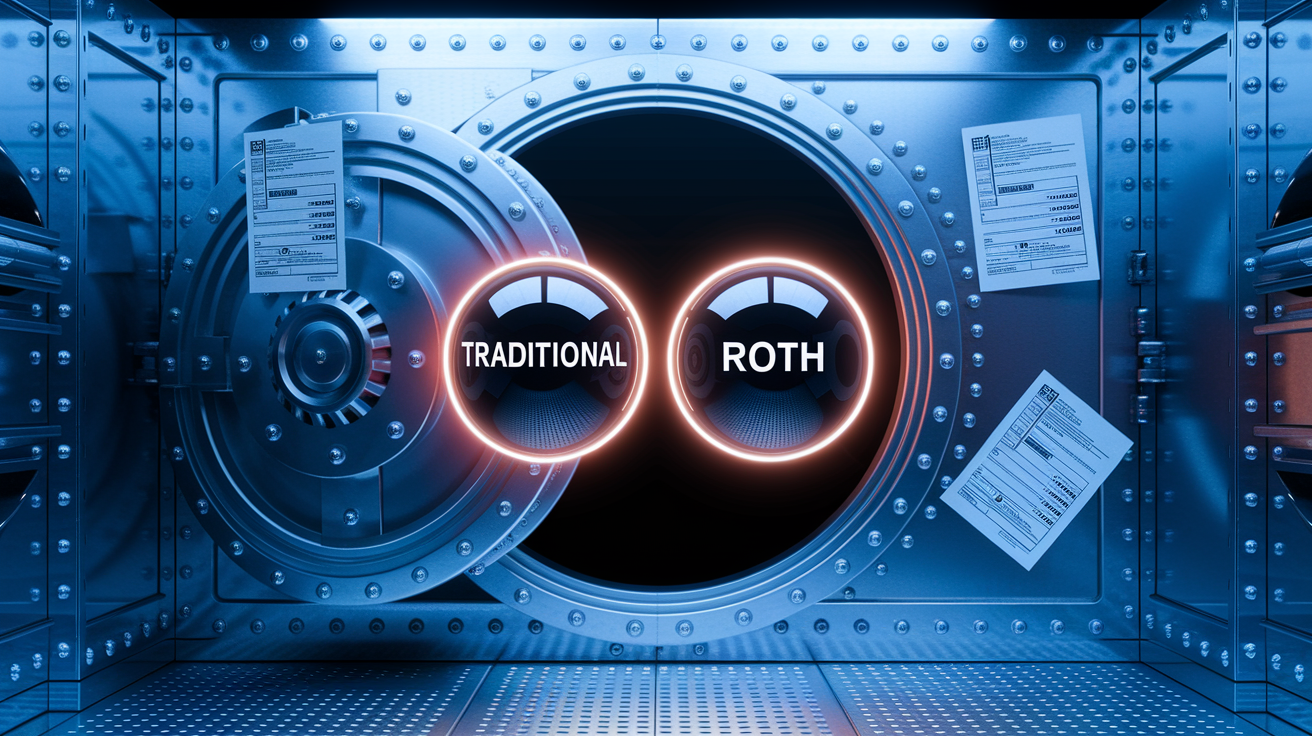
Retirement accounts like a 401k or traditional IRA let you deduct contributions from your taxable income today. You keep more money working in the market instead of sending it to the government. A Roth IRA flips the deal. You pay tax on contributions now, but all future growth and withdrawals are tax-free. For someone pursuing FI, the Roth is especially useful because you can access contributions (not earnings) penalty-free before age 59½, and you won’t owe tax on decades of compounding when you start spending the money.
Max out tax-advantaged space first. In 2026 you can contribute up to $23,000 to a 401k and $7,000 to an IRA (limits may adjust for inflation). If your employer offers a match, contribute at least enough to grab the free money. It’s an instant 50 to 100 percent return. Once you’ve filled those buckets, move extra savings into a taxable brokerage account. Inside that account, favor index funds and ETFs that generate minimal taxable events. They don’t pay out much in dividends or capital gains each year, so your tax bill stays low while the portfolio grows.
Long-term capital gains (on investments held more than a year) are taxed at 0, 15, or 20 percent depending on your income. Much lower than ordinary income rates that can hit 37 percent. By holding investments long enough to qualify for the lower rate and harvesting losses strategically to offset gains, you keep significantly more of your returns. Every percentage point you save on taxes is another percentage point compounding toward financial independence.
Real Estate’s Role in Financial Independence Investing

Real estate produces recurring passive income (rent checks) and has historically appreciated in value over multi-decade periods. That makes it a favorite asset for FIRE seekers who want cash flow they can count on. Direct rental properties offer the highest potential returns but require active management. Finding tenants, fixing leaks, handling evictions. If you’re willing to learn landlording or hire a property manager, a single-family home or small multi-unit building in a growing market can generate enough monthly rent to cover a meaningful slice of your living expenses.
REITs (Real Estate Investment Trusts) and real estate funds give you real estate exposure without the repair calls. A REIT is a company that owns income-producing properties (apartments, warehouses, office buildings) and passes most of the rental profit to shareholders as dividends. You buy shares on a stock exchange just like any other stock, and you can sell whenever you want. Platforms like Fundrise bundle investor money into diversified portfolios of residential and industrial properties, often focused on Sunbelt markets with strong population and job growth. Fundrise manages more than $3 billion in assets and offers quarterly liquidity windows, so you’re not locked in forever but you also can’t panic-sell on a bad day.
Four ways to add real estate to your FI plan:
- Buy a rental property in a market with strong tenant demand and positive cash flow after mortgage, taxes, insurance, and maintenance.
- Invest in a diversified REIT index fund for instant exposure to hundreds of properties with daily liquidity.
- Use a real estate crowdfunding platform (like Fundrise) to access institutional-quality deals with lower minimums and quarterly withdrawal windows.
- Consider house-hacking. Live in one unit of a duplex or triplex and rent out the others to cover your mortgage while building equity.
Managing Risks and Market Volatility on the Path to FI

Inflation quietly erodes purchasing power. If your portfolio grows 6 percent but inflation runs 3 percent, your real return is only 3 percent. Over 30 years, ignoring inflation can leave you short by hundreds of thousands of dollars. Sequence-of-returns risk is even more dangerous for early retirees. If the market crashes right after you quit your job and you start selling shares to pay bills, you lock in losses and shrink the portfolio permanently. Less capital remains to recover when prices rebound. Unexpected expenses (a medical crisis, a new roof, a surprise tax bill) can force you to withdraw more than planned, compounding the damage.
The best defense? A mix of cash reserves, broad diversification, and flexible withdrawal plans. Keep 12 to 24 months of living expenses in a high-yield savings account or short-term bond fund so you never have to sell stocks at the worst moment. Spread investments across U.S. and international stocks, bonds, and real estate so no single market meltdown wipes you out. If the market drops hard in your first year of FI, cut discretionary spending temporarily and lean on your cash buffer until prices stabilize.
| Risk | Description | Mitigation |
|---|---|---|
| Inflation | Rising prices reduce what each dollar buys over time | Invest in assets that grow faster than inflation (stocks, real estate); plan for 2–3% annual cost increases |
| Sequence of Returns | Market crash early in retirement permanently shrinks portfolio | Hold 1–2 years of expenses in cash or bonds; reduce withdrawals during severe downturns |
| Unexpected Expenses | Healthcare, home repairs, family emergencies exceed budget | Build an emergency fund separate from investment accounts; estimate high for healthcare and housing |
Withdrawal Strategies for Sustainable Financial Independence

The 4 percent rule says you can withdraw 4 percent of your portfolio in year one, then adjust that dollar amount each year for inflation, and the money should last at least 30 years based on historical market data. If you have $750,000 invested and spend $30,000 per year, you’re at exactly 4 percent. Multiply your annual expenses by 25 to find your FI number. $30,000 times 25 equals $750,000. The rule assumes a balanced portfolio (roughly 60 percent stocks, 40 percent bonds) and a mix of good years and terrible years that average out to sustainable growth.
Conservative FIRE practitioners use 3 to 3.5 percent instead, especially if they’re retiring in their thirties or forties and need the money to last 50 or 60 years. A 3.5 percent withdrawal rate means multiplying annual expenses by roughly 29 instead of 25, so that $30,000 annual budget now requires about $860,000. The tradeoff is a longer accumulation phase but much higher confidence the portfolio won’t run dry. Inflation adjustments are built into the rule. If you withdraw $30,000 in year one and inflation is 3 percent, you take $30,900 in year two to maintain the same purchasing power.
Bucketing strategies add a layer of protection. Divide your portfolio into three buckets. Cash and short-term bonds for years 1 to 3, intermediate bonds and dividend stocks for years 4 to 10, and growth stocks for year 11 and beyond. You spend from bucket one while buckets two and three grow untouched. Every year or two, refill bucket one by moving money from bucket two, and refill bucket two from bucket three. This way you never sell growth stocks at a loss during a crash. You ride it out with the cash and bonds you set aside in advance.
Levels of Financial Independence and Lifestyle Choices

Lean FI
Lean FI targets a lower annual income replacement, typically around $40,000 per year. To generate that sustainably at a 2.5 to 5 percent yield, you’ll need between $800,000 and $1.6 million in invested assets. For context, the federal poverty line for a family of four sits near $25,000 per year, so Lean FI offers breathing room above subsistence but requires tight budgeting and lifestyle tradeoffs. Common strategies? Relocating to a low-cost-of-living area (rural Midwest, small Southern towns, or abroad), downsizing to a small paid-off home or RV, delaying or limiting children, and taking on part-time work or side gigs to supplement investment income. One real example: a couple retired in 2012 on roughly $80,000 nominal passive income (about $40,000 after accounting for San Francisco’s high costs) after negotiating severance that covered five to six years of expenses.
Lean FI works best for people who genuinely enjoy a simpler life and don’t mind saying no to expensive vacations, new cars, or dining out frequently. The psychological cost can be higher anxiety about running out of money and a tendency to obsess over every market dip. If that stress outweighs the freedom, this tier might not be the right fit.
Regular FI
Regular FI aims to replicate the median U.S. household income, around $60,000 to $68,000 per year. A comfortable middle-class lifestyle without extravagance. At a 2.5 to 5 percent sustainable withdrawal rate, you’ll need approximately $1.36 million to $2.72 million in investable assets. A simpler (but less inflation-protected) rule of thumb is to save 20 times your annual expenses if you’re planning a shorter horizon. 20 years times $60,000 equals $1.2 million, though this assumes you’ll draw down principal and leaves no buffer for market volatility or longer-than-expected life.
Most FIRE seekers land in this tier. They maximize pre-tax retirement accounts, save 20 to 50 percent of after-tax income, and invest consistently in diversified index funds and real estate. The lifestyle supports home ownership, occasional travel, hobbies, and raising a family without constant penny-pinching, while still avoiding luxury spending that inflates the required nest egg.
Fat FI
Fat FI is for individuals targeting $200,000 to $250,000 per year (or $300,000+ for a couple) who want financial independence without lifestyle compromise. Private schools, international travel, nice cars, and a paid-off home in a desirable city. Reaching this level requires $5 million to $10 million per individual at a 2.5 to 5 percent yield, or $6 million to $12 million for a couple. One investor reported hitting approximately $220,000 in annualized passive income during the first half of 2017, later reduced by about $60,000 after selling a rental property, and currently lives on around $265,000 per year for a family of four in San Francisco.
Fat FI investors often own significant equity in private businesses, rental properties, or high-dividend portfolios. Geographic arbitrage matters less because the goal is to live wherever you want without financial constraint. The tradeoff is a much longer accumulation phase (often 15 to 25 years of aggressive saving and investing) but the payoff is complete lifestyle freedom and a large safety margin against market downturns, inflation, and unexpected life events.
Practical Action Steps to Start Financial Independence Investing

Track every dollar you spend for at least one month, then use that data to calculate your true annual cost of living. Add up rent, groceries, insurance, utilities, subscriptions, transportation, and discretionary purchases. Multiply the monthly average by 12 and round up slightly to account for irregular expenses like car repairs or holiday gifts. This number becomes the foundation for your FI target and shows exactly where you can cut without guessing.
Eliminate high-interest debt before investing aggressively. Credit card balances at 18 or 24 percent APR cost you more than your investments will likely earn, so pay those off first using the debt snowball (smallest balance first for quick wins) or debt stacking (highest rate first for maximum math efficiency). If you have student loans above 6 or 7 percent, explore refinancing through platforms like Credible to lower the rate and free up cash flow for investment contributions.
Six actions to take this week:
- Link all your bank, credit card, and investment accounts to a tracking tool (like Empower or Mint) so you see your full financial picture in one place.
- Open a Roth IRA and a taxable brokerage account if you don’t already have them, and set up automatic monthly transfers from checking.
- Increase your 401k contribution by at least 1 percent (or enough to capture the full employer match) starting next paycheck.
- Consolidate old 401k accounts from previous jobs into a single IRA to reduce fees and simplify management. Run a fee analyzer to identify hidden costs eating your returns.
- Start one new income stream this month. Sell unused items on eBay or Poshmark, pick up a freelance gig on Fiverr, or offer babysitting through Sittercity.
- Schedule an annual money review on your calendar (same date every year) to check progress, rebalance your portfolio, and adjust your savings rate or spending as needed.
Final Words
Put the core principles to work: define passive income goals, set a savings rate, and pick a simple mix of index funds, dividend stocks, bonds, and real estate.
Use tax-advantaged accounts, automate contributions, and keep a cash buffer for surprises. Revisit your allocation, withdrawal plan, and lifestyle choices as you progress.
These steps make financial independence investing practical and repeatable. Start small, stay consistent. Your plan can grow over time, and there’s reason to feel confident about making steady progress.
FAQ
Q: What is the $1,000 a month rule?
A: The $1,000 a month rule is a simple guideline some people use to target $1,000 in monthly passive income or savings to cover basic costs; adjust it for your local cost of living and goals.
Q: What is the happiest age to retire?
A: The happiest age to retire varies, but studies often find peak retirement satisfaction in the early 60s to mid 70s; pick timing that fits your health, finances, and sense of purpose.
Q: What percentage of Americans have $100,000 in their savings?
A: The share with $100,000 in savings is a minority—roughly one in four to one in three households (about 25–33%), depending on age groups and whether retirement accounts are counted.
Q: How to invest for financial independence?
A: To invest for financial independence, prioritize a higher savings rate, use tax-advantaged accounts, build a low-cost mix of index funds and income assets, automate contributions, and match allocation to your timeline and risk comfort.