

Is the S&P 500’s dividend yield near 1.2 percent leaving your portfolio light on income?
If you want steadier cash, high-dividend mutual funds offer a simple way to boost payouts without picking individual stocks.
This post reviews six top funds, from low-cost Vanguard index options to higher-yield active choices like Federated Hermes, so you can compare yields, fees, and distribution timing.
Read on to find the straightforward, low-fuss plan that fits your income goal and tax situation.
Best High‑Dividend Mutual Funds Right Now

As of mid-2026, the S&P 500’s dividend yield sits near 1.2 percent. That’s close to a 20-year low. If you’re hunting for income, high-dividend mutual funds give you a practical way to generate more cash flow. Here are six funds that deliver above-average yields without blowing up your cost structure or taking reckless bets.
Vanguard High Dividend Yield Index Fund (VHDYX)
30-day SEC yield: 2.4% | Expense ratio: 0.08% | Minimum: $3,000 | AUM: $92.3 billion | Quarterly distributions | Around 560 stocks spread across financials (19.4%), industrials (13.8%), and healthcare (12.9%).
Vanguard High Dividend Yield ETF (VYM)
30-day SEC yield: 2.4% | Expense ratio: 0.06% | Minimum: One share (~$150) | Same underlying portfolio as VHDYX but it trades like a stock and costs a bit less each year.
Federated Hermes Strategic Value Dividend Fund (SVAAX)
Weighted average yield: 4.1% | Expense ratio: 0.81% | Minimum: $1,500 | AUM: $9.4 billion | Monthly distributions | Actively managed, about 45 stocks, heavy tilt toward financials (18.1%), energy (16.7%), and utilities (15.7%).
Vanguard Equity Income Fund (VEIPX)
30-day SEC yield: 2.1% | Expense ratio: 0.26% (Investor shares) | Minimum: $3,000 | AUM: $65.8 billion | Quarterly distributions | More than 200 holdings, focusing on U.S. companies with consistent dividend records.
T. Rowe Price Dividend Growth Fund (PRDGX)
Expense ratio: 0.64% | Minimum: $2,500 | AUM: $22.7 billion | Over 90 holdings | This one’s built for companies that can grow dividends rather than max out current yield. Technology (22.6%) and financials (19.3%) get big allocations here.
BlackRock Equity Dividend Fund (MDDVX)
Yield: 2.3% | Expense ratio: 0.71% | Minimum: $1,000 | AUM: $19.3 billion | Quarterly distributions | Over 80 large-cap U.S. value stocks picked for dividend growth and lower volatility.
These funds work if you want steady monthly or quarterly income but don’t feel like babysitting individual stocks. The Vanguard index funds keep costs low and spread risk across hundreds of names. The active funds charge more but aim to pick stronger dividend growers or higher-yielding positions. Need immediate income above 3 percent? Federated Hermes delivers. Want a simple, low-cost starter? VHDYX or VYM gets you there.
How High‑Dividend Mutual Funds Work

High-dividend mutual funds pool investor money to buy portfolios of dividend-paying stocks. Each time a company in the portfolio pays a dividend, the fund collects it. Then the fund bundles those payouts and distributes them to shareholders, usually monthly or quarterly. You can grab the cash or reinvest automatically to buy more shares. Over time, that reinvestment compounds if dividends keep flowing and share prices climb.
These funds try to balance two goals: generate income today and grow your principal over the long run. A solid dividend fund picks companies that pay steady dividends now and have room to raise them later. That combo helps you keep pace with inflation without chasing the highest-risk names.
Core mechanics worth knowing:
- Dividend capture – The fund manager buys shares before the ex-dividend date to collect payouts, then holds or sells based on strategy.
- Distribution schedule – Some pay monthly (easier for budgeting), others quarterly (more common for equity-income funds).
- Reinvestment options – Most funds let you reinvest dividends at net asset value with no trading fee, which compounds your position faster.
- Portfolio composition – High-dividend funds often overweight utilities, financials, energy, and consumer staples. Those industries pay more reliable dividends than tech or growth sectors.
Comparing High‑Dividend Funds vs. Dividend ETFs

Both mutual funds and ETFs can deliver dividend income. The main difference? Structure and cost.
| Vehicle Type | Fees | Tax Efficiency | Management Style |
|---|---|---|---|
| Dividend Mutual Fund | 0.08%–0.81% typical | Lower (more taxable events) | Active or passive |
| Dividend ETF | 0.06%–0.50% typical | Higher (in-kind redemptions) | Mostly passive |
| Example Mutual Fund | VHDYX: 0.08% | Standard capital-gains distributions | Passive index tracking |
| Example ETF | VYM: 0.06% | Fewer taxable events | Passive index tracking |
ETFs trade throughout the day like stocks and usually cost a bit less per year. They also generate fewer taxable capital-gains distributions because of how they handle investor redemptions. Mutual funds trade once per day at net asset value and often include automatic reinvestment plans that feel simpler for set-and-forget investors.
If you’re holding the fund in a taxable account and want to minimize taxes, the ETF edge matters. If you’re investing inside an IRA or 401(k), the tax difference disappears. Then it’s just about costs, minimums, and whether you want intra-day trading or end-of-day pricing.
Risk Factors to Consider

Higher yield doesn’t mean safer income. Dividend funds can lose value when the market drops, and dividends get cut when companies hit trouble.
Sector concentration is the first thing to check. Many high-dividend funds load up on financials, utilities, and energy because those industries pay more. If one of those sectors hits a rough patch, your fund can drop faster than the broad market. Federated Hermes Strategic Value holds 18.1 percent in financials, 16.7 percent in energy, and 15.7 percent in utilities. That’s nearly half the portfolio in three sectors.
Interest-rate sensitivity is another risk. When rates rise, income-focused stocks often fall because bonds and cash suddenly look more attractive. Utilities and REITs are especially vulnerable. If the Federal Reserve raises rates to fight inflation, funds heavy in those sectors can see double-digit declines even if dividends stay steady.
Payout sustainability matters more than the current yield number. A fund offering a 6 percent yield might look tempting, but if the companies inside it are paying out 80 or 90 percent of earnings as dividends, there’s no room for a bad quarter. When earnings drop, dividends get cut and the share price follows.
Check the fund’s payout ratio and free-cash-flow coverage in the latest shareholder report. A healthy dividend fund should show companies paying 50 to 70 percent of earnings, leaving a cushion for reinvestment and bad years.
Tax Considerations for Dividend Mutual Funds
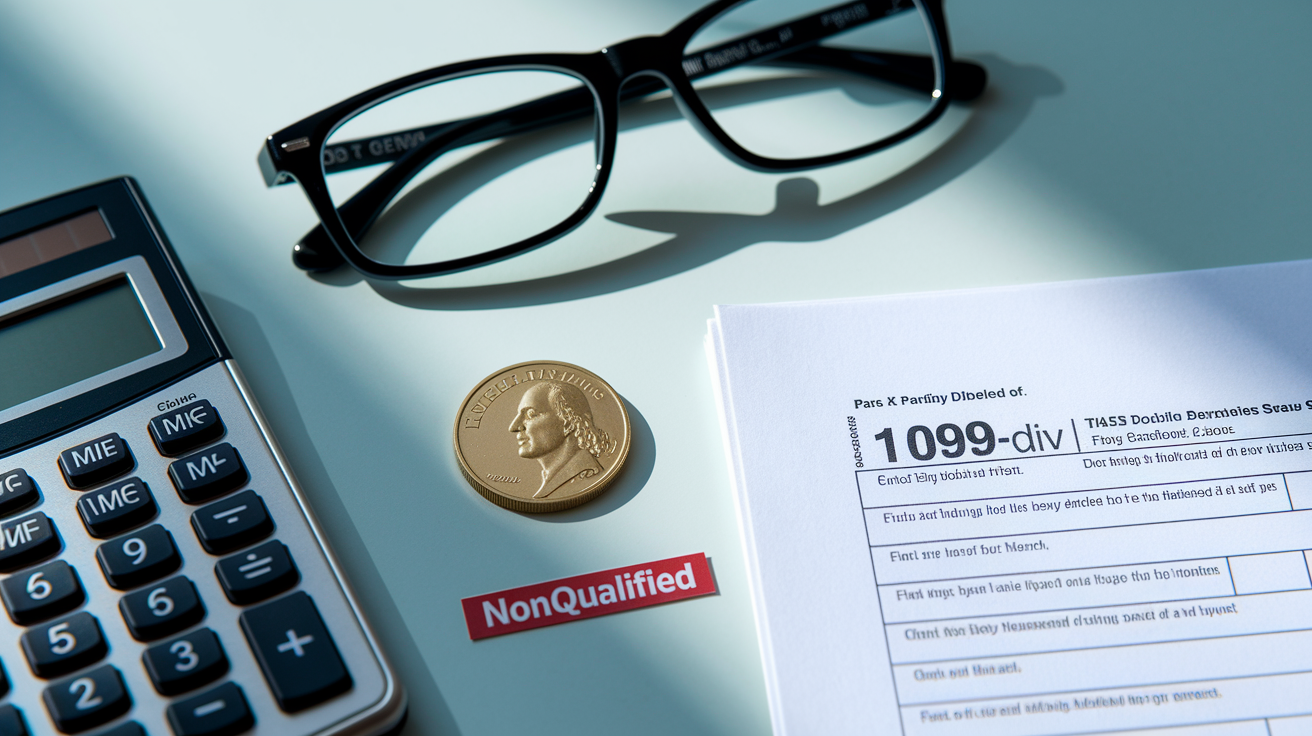
Dividend income is taxable. How much you pay depends on whether the IRS classifies the dividends as qualified or nonqualified.
Qualified dividends come from U.S. corporations or qualifying foreign companies held for a minimum period. They’re taxed at long-term capital-gains rates: 0 percent, 15 percent, or 20 percent, depending on your taxable income. Nonqualified dividends, also called ordinary dividends, are taxed at your regular income-tax rate, which can hit 37 percent. Most equity dividend funds distribute a mix. Check the fund’s tax-characterization breakdown in the annual report or on your 1099-DIV to see the split.
Portfolio turnover increases your tax bill in taxable accounts. When a mutual fund sells holdings for a profit, it must distribute those capital gains to shareholders by year-end. Active funds that trade frequently can trigger unexpected tax bills even in years when you didn’t sell any shares yourself. Passive index funds like VHDYX turn over less and generate fewer taxable events.
Key tax treatments to track:
- Qualified dividend rates – 0%, 15%, or 20% based on 2024–2026 federal brackets (verify current rates each year).
- Return of capital – Some distributions are classified as return of capital and reduce your cost basis instead of triggering immediate tax. You owe tax later when you sell shares.
- Tax-advantaged accounts – Holding high-dividend funds in an IRA, Roth IRA, or 401(k) shelters dividend income from annual taxes. This is the simplest way to avoid the qualified-versus-nonqualified decision entirely.
How to Choose the Right High‑Dividend Mutual Fund
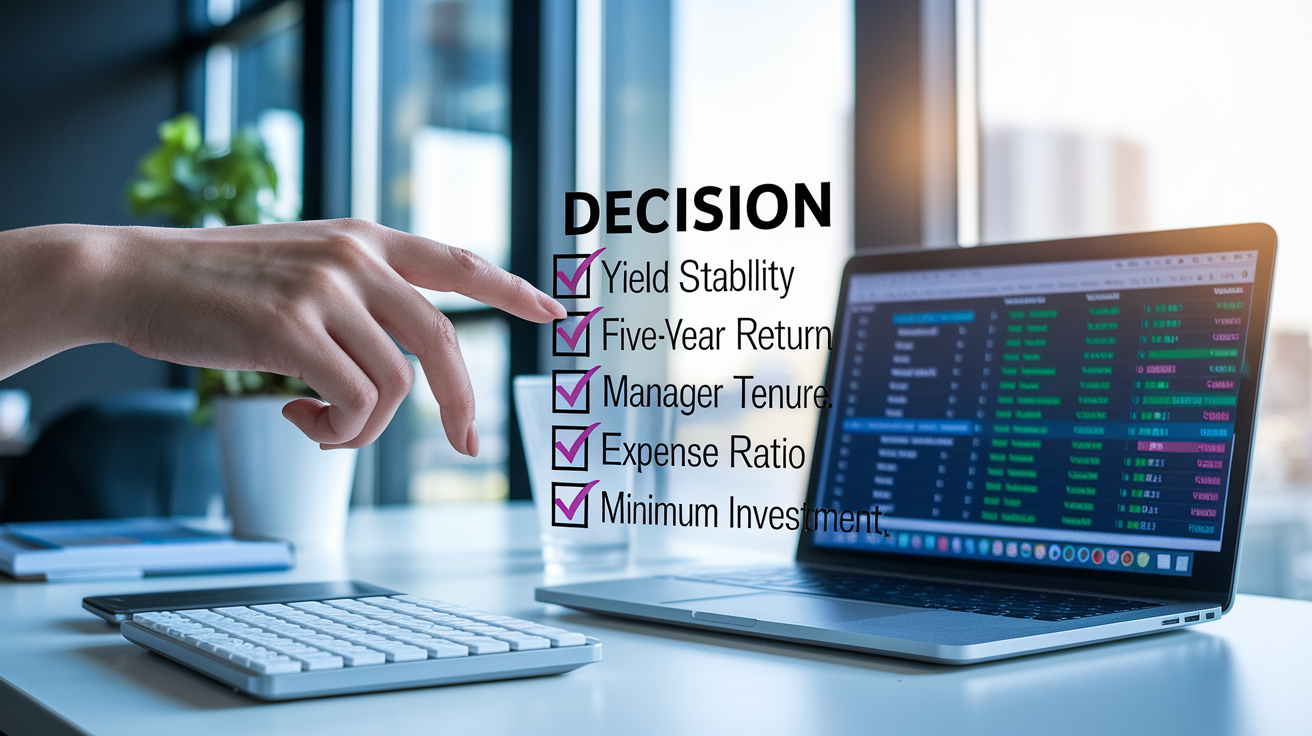
Start with your income goal and time horizon. If you need cash flow this year to cover living expenses, prioritize funds with yields above 3 percent and monthly or quarterly distributions. If you’re building wealth for retirement in 10 or 20 years, a dividend-growth fund with a lower current yield but rising payouts might deliver more total return.
Five key criteria to check before you buy:
- Yield stability – Look at the fund’s distribution history over the past five years. Steady or rising payouts signal a sustainable strategy.
- Five-year annualized return – Total return matters more than yield alone. A 4 percent yield with 7 percent annualized growth beats a 6 percent yield with 2 percent growth.
- Manager tenure – For active funds, check how long the lead manager has been running the strategy. Three to five years minimum shows experience through different market cycles.
- Expense ratio – Every 0.10 percent you pay in fees is 0.10 percent less income in your pocket. Index funds below 0.15 percent are ideal, active funds below 0.75 percent are reasonable.
- Minimum investment – Confirm you can meet the initial deposit and that future contributions fit your budget. Some funds offer lower minimums for IRAs.
Match the fund to your tax situation and risk tolerance. If you’re in a high tax bracket and investing in a taxable account, lean toward funds with a history of qualified dividends and low turnover, or use the ETF version to cut taxable events. If you can’t handle a 15 or 20 percent drop during a bad year, avoid funds with heavy sector concentration or yields above 5 percent. Those often come with more volatility.
A balanced approach might be splitting between a low-cost index fund for stability and a smaller position in an active fund targeting dividend growth.
Final Words
We jumped straight into a practical list of top funds with SEC yields, 5-year returns, expense ratios under 1%, and minimums for names like VHDYX and VYM.
Next we explained how dividend mutual funds pay income, compared them to dividend ETFs, and flagged key risks and tax points to watch.
Finally, you got a short checklist for choosing a fund and a simple next step: pick one fund, set a small monthly transfer, and keep checking annually. High dividend mutual funds can offer steady income if they match your goals.
FAQ
Q: What are the highest paying dividend mutual funds?
A: The highest paying dividend mutual funds are usually those focused on high‑yield sectors (utilities, energy, REITs, preferreds). Check current SEC yields, expense ratios, and payout sustainability before choosing one.
Q: How much money do I need to earn $1,000 a month or $100,000 a year in dividends?
A: To earn $1,000 a month or $100,000 a year in dividends, divide the annual target by your expected yield. For example, at 4% you need about $300,000 for $1,000/month and $2.5 million for $100,000/year.
Q: What ETF has a 12% yield?
A: No mainstream ETF reliably yields 12%; such high yields usually mean higher risk from specialty, covered‑call, or leveraged funds. Check holdings, fees, payout durability, and tax treatment before buying.