

What if headlines matter more than the market drop itself?
When news outlets use urgent language, repeated alerts, red tickers, and dramatic images during a crash, they don’t just report facts.
They stir fear.
That fear feeds loss aversion, availability bias, and herd behavior, turning cautious investors into sellers overnight.
Social platforms speed this up with viral posts and real time pressure.
Thesis: media coverage often amplifies panic in crashes, and understanding those patterns is the first step to making steady choices instead of panic moves.
Immediate Impact of News Reporting on Investor Reactions

When headlines scream “Market in Free Fall” or “Billions Wiped Out Overnight,” something shifts inside most investors. The tone and intensity of news coverage during a crash doesn’t just inform decisions. It drives them. Emotionally charged language, urgent framing, and repeated negative updates create a sense of immediate danger that triggers panic selling. Investors who might otherwise ride out volatility start questioning their plans when every alert, ticker, and push notification reinforces the message that something catastrophic is happening right now.
This reaction isn’t just individual. It’s collective. Herd behavior strengthens fast when uncertainty spikes and media coverage is everywhere. One person sells, then another, then the person reading about those sales does the same. Sentiment contagion spreads through markets like a wave, especially when volatility is already high. The result? Rapid, coordinated shifts in investor confidence that can amplify the very downturn the news is reporting on.
Several specific media patterns make these reactions worse. Repetition of alarming data points: the same percentage drop or dollar loss figure runs on loop across channels, making the event feel more severe than it is. Visual framing: red tickers, countdown clocks, and charts with steep downward angles heighten emotional arousal and perceived urgency. Dramatic language: words like “plunge,” “collapse,” “bloodbath,” and “panic” activate fear responses faster than neutral descriptions of the same price moves. Expert fear signals: when commentators express worry or uncertainty on air, viewers interpret that as confirmation that immediate action is necessary.
Psychological Foundations Behind Investor Reactions

Three core biases explain why media coverage hits so hard during crashes. Loss aversion, the tendency to feel losses more intensely than equivalent gains, becomes stronger when markets are falling and headlines are negative. An investor who might feel pleased about a 10 percent gain will feel much worse about a 10 percent loss. That asymmetry gets worse when every news update reinforces the loss narrative. Confirmation bias kicks in next. Once fear takes hold, investors start actively seeking out negative news that supports their worry, ignoring any data or commentary that suggests stability or recovery.
Availability bias ties it all together. When recent headlines are alarming and vivid, those stories dominate memory and judgment. An investor sees “Dow Drops 800 Points” three times in an hour and starts to believe that catastrophic losses are common, predictable, and likely to continue, even if historical data shows that sharp single‑day drops are rare. The brain treats what’s recent and emotionally charged as more probable than what actually happened over decades.
When real‑time news flow meets these biases, the effect multiplies. Each new alert reactivates loss aversion, each negative headline feeds confirmation bias, and each repeated story strengthens availability bias. The result is a mental environment where selling feels rational, even when the long‑term plan says to hold or rebalance.
Mechanisms Through Which Media Shapes Market Perception

News outlets don’t just report crashes. They frame them. Framing is the choice of which facts to emphasize, which comparisons to make, and which emotional tone to use. A headline that says “Market Falls 5 Percent in Worst Day Since 2020” feels very different from “Market Pulls Back After Record Highs,” even if both describe the same event. The first frame suggests crisis and historical comparison, the second suggests normal correction. During crashes, negative framing dominates because it captures attention and drives viewership. And that repetition shapes how investors perceive the severity and duration of the downturn.
Information cascades happen when people rely on others’ reactions instead of independent analysis. Media coverage accelerates these cascades by constantly showing what other investors, analysts, and institutions are doing. When a news segment reports that mutual funds are reducing equity exposure or that retail investors are moving to cash, viewers interpret those actions as signals that something is fundamentally wrong. They follow the crowd, not because they have new information about company earnings or economic fundamentals, but because the coverage made the crowd’s behavior visible and seemingly rational.
Sentiment indicators, measures that track investor mood and outlook, often move in sync with headline tone during crises. When coverage is relentlessly negative, sentiment sours faster and deeper than the underlying economic data would predict. This feedback loop (negative headlines drive negative sentiment, which drives more selling, which generates more negative headlines) can push markets lower independent of changes in actual business conditions. Media doesn’t just reflect market perception during a crash. It actively constructs it through repetition, expert commentary, data selection, and emotional framing.
Historical Case Studies of Media Influence During Market Downturns
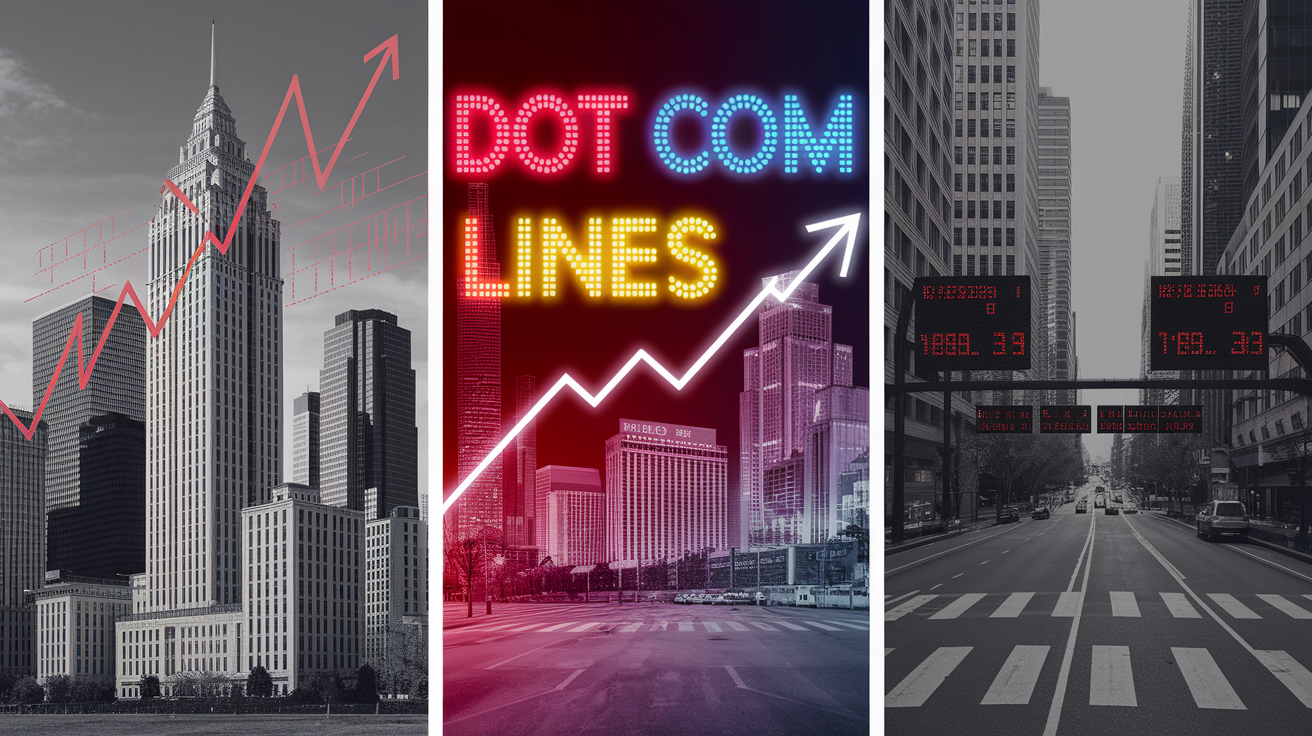
2008 Financial Crisis
Media coverage during the 2008 financial crisis amplified fear around bank failures and credit freezes in ways that accelerated investor panic. Daily headlines focused on which major institution might collapse next, how much wealth had been destroyed, and whether the entire financial system was on the edge of failure. News segments ran constant updates on falling home prices, rising unemployment, and government emergency measures, all framed as evidence of an unprecedented catastrophe. Investors who might have held diversified portfolios through normal volatility instead sold broadly, moving to cash or government bonds. Why? The relentless coverage made staying in equities feel reckless. Sentiment indicators hit historic lows not just because fundamentals were weak, but because the tone and intensity of reporting convinced millions that worse was always ahead.
Dot‑Com Collapse
In the late 1990s, media coverage celebrated technology stocks as the future of wealth creation. They profiled young entrepreneurs, highlighted triple‑digit returns, and repeated the narrative that old valuation rules no longer applied. When sentiment shifted in 2000, the same outlets pivoted to failure stories, business closures, and warnings about speculative excess. The whiplash was extreme. Investors who bought near the top (often influenced by positive media hype) then sold near the bottom as negative coverage dominated. The media didn’t cause the dot‑com bubble, but the intensity and one‑sided nature of both the boom and bust coverage magnified both the speculative run‑up and the panic‑driven collapse that followed.
COVID‑19 Crash
The COVID‑19 market crash in March 2020 happened faster than almost any downturn in history. Media coverage moved just as quickly. Headlines shifted from cautious monitoring to full crisis mode within days, driven by images of lockdowns, hospital overload, and economic shutdowns. News outlets ran live updates on case counts, death tolls, and market losses simultaneously, creating a feedback loop where health fear and financial fear reinforced each other. Investors sold in massive waves. Sentiment indicators collapsed. What made this case distinct was the role of social media. Viral posts, real‑time commentary, and unverified information spread faster than traditional news could fact‑check, intensifying emotional reactions and accelerating herd behavior. When coverage eventually shifted to stimulus measures and reopening plans, sentiment and prices recovered almost as fast, illustrating how tightly media framing and investor perception were linked throughout the entire event.
Influence of Social Media and Real‑Time Platforms

Social media platforms like Twitter, Reddit, and financial forums don’t just amplify traditional media. They accelerate sentiment contagion in ways that were impossible a generation ago. A viral post about a stock crash, a bank run, or a policy failure can reach millions of users in minutes, often before official news outlets have verified the information. Investors scrolling through feeds see panic in real time, watch others announce they’re selling, and feel pressure to act immediately or risk being left behind. The speed is the key difference. Where traditional news might take hours to build a narrative, social platforms can shift sentiment in the time it takes to refresh a screen.
Emotional intensity is higher on social platforms because the format rewards strong reactions. Posts that express fear, outrage, or urgency get more engagement, more shares, and more visibility. During high‑volatility periods, unverified rumors and half‑true claims spread faster than corrections, creating an information environment where perception moves ahead of reality. Investors who rely heavily on social feeds during crashes are more likely to make impulsive decisions based on incomplete or emotionally charged information. The crowd’s reaction feels more real and immediate than any long‑term analysis.
The result? A feedback loop that runs faster and hotter than anything traditional media could produce. Viral posts trigger selling, those sales generate new posts and screenshots, which trigger more selling, all within the same trading session. Platforms designed for rapid interaction and social validation end up functioning as sentiment amplifiers during exactly the moments when calm, evidence‑based decision making matters most.
Strategies for Maintaining Rationality During Media‑Driven Market Stress

Investors can build defenses against media‑induced panic by using structured decision frameworks that separate emotion from action. These approaches don’t eliminate fear. They just prevent fear from dictating trades.
Set a mandatory waiting period before any major portfolio change. Commit to a 24 or 72 hour cooling‑off rule that gives time for the initial emotional spike to fade and for clearer thinking to return.
Use pre‑defined rebalancing rules instead of reactive trades. Decide in advance when and how you’ll adjust allocations (for example, quarterly reviews or threshold‑based rebalancing), so market noise doesn’t trigger one‑off decisions.
Limit media consumption during volatile periods. Check portfolio performance and major news once per day or less, not every hour, to reduce the cumulative emotional impact of repeated negative updates.
Focus on fundamentals and long‑term data, not headlines. Ask whether the news changes the underlying earning power, business model, or long‑term growth prospects of your holdings, not just whether it feels scary.
Maintain a written investment plan with clear goals and risk tolerance. When panic hits, refer back to the plan you made during calm periods to remind yourself what you’re investing for and what level of volatility you decided you could handle.
These techniques work because they interrupt the automatic reaction cycle that media coverage triggers. By adding friction, structure, and time between the headline and the trade, investors give themselves space to evaluate whether the fear matches the actual risk or whether it’s just noise amplified by repetition and emotional framing. Long‑term fundamentals, diversification, and disciplined rebalancing have historically mattered more than perfect timing or headline‑driven exits. Structured rules help investors act on that knowledge even when every alert is screaming otherwise.
Final Words
in the action, we showed how headlines and tone can speed panic, the psychology that makes people follow the crowd, the ways media frames markets, case studies from past crashes, social platforms’ role, and practical steps to stay steady.
Use simple rules: limit news checks, set automatic transfers, pick a target mix, rebalance on schedule, and write a pre-commitment plan.
Understanding how media coverage affects investor psychology in crashes helps you see the noise and stick to a steady plan. You can do this.
FAQ
Q: How does news reporting immediately affect investor behavior during market crashes?
A: News reporting immediately affects investor behavior by speeding up fear-based selling, prompting people to copy others, and spreading negative sentiment quickly, which can deepen price drops and reduce confidence.
Q: What specific media patterns heighten panic selling?
A: Specific media patterns heighten panic selling when outlets use emotional language, repeat crisis headlines, focus on volatility numbers, and publish expert warnings without context, all of which amplify fear and herd moves.
Q: Which psychological biases make investors vulnerable to media-driven stress?
A: Psychological biases make investors vulnerable because loss aversion (stronger pain from losses), confirmation bias (seeking bad news), and availability bias (overweighting recent headlines) push people toward emotional decisions.
Q: How do media framing and repetition shape market perception?
A: Media framing and repetition shape market perception by making problems seem larger, setting the story investors use to judge risk, and creating information cascades where people copy actions instead of checking facts.
Q: How does social media amplify traditional news effects on markets?
A: Social media amplifies traditional news effects by moving news faster, letting posts go viral before verification, increasing emotional tone, and creating rapid sentiment swings that often precede price moves.
Q: What historical examples show media influence during market downturns?
A: Historical examples show media influence in 2008, where bank failure fears were magnified; the dot-com collapse, where hype flipped to panic; and March 2020 COVID-19 headlines that raised global risk aversion.
Q: What practical steps can investors take to stay rational during media-driven market stress?
A: Practical steps include set trading rules, pre-commit to regular investing, check fundamentals not headlines, limit news checks, and keep a written plan to avoid impulse selling.