

What if chasing big gains isn’t the best way to pay your bills?
Income investing focuses on assets that pay cash, like dividends, bond interest, and real estate distributions, so you get regular checks instead of waiting for prices to jump.
This post shows a simple plan to build reliable cash flow by mixing dividend stocks, bonds, REITs, and income funds and matching that mix to your timeline and risk.
You’ll learn how to spot steady payers, use bond ladders and funds, and avoid high yield traps that can eat your principal.
Building a Practical Income Investing Foundation

Income investing is buying stuff that pays you while you own it. Dividends from stocks, interest from bonds, distributions from real estate trusts. You’re not waiting around for the price to jump. The cash shows up on schedule, and you get to choose whether you spend it or plow it back in.
Dividends are slices of company profit handed to shareholders. Interest payments come from bonds where you’ve loaned money to a government or corporation. REIT distributions flow from rent collected on commercial or residential property. Each one reacts differently when markets get weird, so mixing them smooths things out. When stocks slash dividends in a recession, bond coupons keep landing. When rates climb and bond prices tank, dividend stocks might hold steady.
Your asset mix decides how much cash you collect and how much risk you’re carrying. A portfolio stuffed with only high‑yield bonds chases income but swings hard and can default. Mix in Treasuries, investment‑grade corporates, dividend equities, and REITs, and you’ve spread the risk while building fallback sources when one piece stumbles. Match your mix to your timeline. Short‑term income needs? Lean on safer bonds and money markets. Longer horizons let you add dividend growers and higher‑yielding instruments that can ride out volatility.
Six core pieces anchor most income‑focused portfolios:
- Dividend‑paying stocks: companies that distribute a chunk of earnings every quarter. Yields vary all over the map and payments aren’t guaranteed.
- Investment‑grade corporate bonds: issued by creditworthy companies. Less jumpy than stocks and offer higher yields than Treasuries, usually 1 to 2 percentage points more.
- U.S. Treasury securities: backed by the federal government. Lowest default risk, exempt from state income tax. Yields run lower than comparable corporates.
- Municipal bonds: often federally tax‑exempt and sometimes state‑exempt for in‑state buyers. Lower nominal yields but competitive after‑tax returns for higher earners.
- Real estate investment trusts (REITs): required to pay out 90 percent of taxable income as dividends. Give you exposure to property sectors without buying buildings directly.
- Income‑focused ETFs and mutual funds: bundle many of these assets together. Simplify diversification and deliver regular distributions with less work.
Dividend‑Focused Strategies for Sustainable Income

Dividend stocks work when the company behind them earns enough to share. That payment is discretionary. Boards can cut, pause, or raise it at any meeting. A high yield today might signal trouble if the company’s bleeding cash and can’t sustain the payout. A modest yield backed by steady earnings and conservative debt often proves more reliable over decades.
Start by checking the payout ratio, the percentage of earnings paid as dividends. A ratio above 80 percent leaves little room for error. Below 60 percent gives the company cushion to weather a bad quarter and still mail the check. Then review the track record. Companies labeled “dividend aristocrats” have raised their dividend every year for at least 25 consecutive years. That consistency beats a single quarter’s high yield.
How to Evaluate Dividend Stability
Payout ratios tell you how much earnings coverage exists. If a company earns two dollars and pays one dollar in dividends, the 50 percent ratio is comfortable. If it earns one dollar and pays ninety cents, a small earnings dip can force a cut. Dividend coverage goes deeper. Look at free cash flow, cash left after capital spending, rather than accounting earnings. Companies can report a profit on paper but run short on actual cash to fund the dividend.
Earnings consistency over multiple years shows the business model holds up through cycles. A retailer that reported profits in 2019, losses in 2020, break‑even in 2021, then profits again is riskier than a utility that posted steady gains every year. Management quality surfaces in how boards communicate dividend policy and allocate capital. A CEO who prioritizes buybacks over dividends, or who loads the balance sheet with debt to fund a payout, raises red flags.
- Yield reliability: stable or growing payments over at least five years, with no cuts or suspensions during downturns.
- Cash‑flow strength: free cash flow consistently exceeds the total dividend obligation by a comfortable margin.
- Balance‑sheet health: low or manageable debt‑to‑equity ratio so interest expenses don’t crowd out dividends.
- Sector resilience: industries with recurring revenue like utilities and consumer staples often support steadier dividends than cyclical sectors like autos or discretionary retail.
Bond Income Strategies and Yield Management

Bonds pay interest at regular intervals and return your principal at maturity. The income is contractual as long as the issuer doesn’t default. Yields, safety, and tax treatment vary widely depending on who issues the bond and how the market prices it.
Comparing Bond Types for Income
Investment‑grade corporate bonds come from companies with strong credit ratings, BBB– or higher by Standard & Poor’s, Baa3 or higher by Moody’s. They typically yield about 1 to 2 percentage points more than U.S. Treasuries of the same maturity because you’re accepting a small risk the company might struggle. Price volatility is lower than stocks but higher than government debt.
Treasury bonds are backed by the full faith and credit of the United States. The federal government has never defaulted, so the credit risk is effectively zero. That safety costs you yield. Treasuries pay less than investment‑grade corporates of similar maturity. Interest is federally taxable but exempt from state income tax, which helps in high‑tax states.
Municipal bonds are issued by cities, counties, states, and local agencies. The interest is usually exempt from federal income tax and, if you live in the issuing state, often exempt from state tax too. That tax advantage means a 3 percent muni yield can match or beat a 4 percent taxable bond for someone in a high bracket. Always compare the taxable‑equivalent yield before buying.
High‑yield bonds, also called junk bonds, come from issuers with lower credit ratings, BB+ or below. They offer higher coupons to compensate for greater default risk. Price swings can be as large as stocks, especially during recessions when defaults spike and investors dump anything risky.
Building a Bond Ladder for Steady Cash Flow
A bond ladder spreads your money across bonds that mature in different years. One bond matures each year, giving you cash to reinvest at current rates or to spend. This smooths out interest‑rate risk. You’re never locked into one rate for the entire portfolio.
Here’s a simple five‑year ladder with ten thousand dollars. Buy five individual bonds at two thousand dollars each. Bond one matures in year one, bond two in year two, and so on through year five. When bond one matures, reinvest the two thousand into a new five‑year bond to keep the ladder rolling. If rates have risen, the new bond pays more. If rates fell, you still have four other bonds locking in the old, higher rates.
You can also take the maturing proceeds and use them for living expenses instead of reinvesting. The ladder still delivers predictable cash every year. Illustrated yields in examples are hypothetical and don’t reflect current market rates.
| Bond Type | Key Income Feature |
|---|---|
| Investment‑Grade Corporate | Higher yield than Treasuries; moderate credit risk; lower volatility than stocks |
| U.S. Treasury | Lowest default risk; state tax‑exempt interest; yields 1 to 2 percentage points below comparable corporates |
| Municipal | Federally tax‑exempt income; often state‑exempt for residents; lower nominal yields but competitive after‑tax returns |
| High‑Yield (Junk) | Higher coupons; greater price volatility similar to equities; elevated default risk |
| Floating‑Rate Notes | Coupon adjusts with short‑term rates like SOFR; reduces duration risk in rising‑rate environments |
Using Income ETFs and Mutual Funds for Diversification

Income‑focused ETFs and mutual funds bundle dozens or hundreds of dividend stocks, bonds, REITs, or preferred shares into one ticker. You buy one share of the fund and instantly own a slice of every holding inside. The fund collects all the dividends and interest, then pays you a regular distribution. Monthly, quarterly, or annually depending on the product.
Funds simplify the work. You don’t have to screen fifty dividend stocks or buy twenty individual bonds. Professional managers or index rules handle the selection and rebalancing. The trade‑off is the expense ratio, an annual fee taken from the fund’s assets. A fund with a 0.50 percent expense ratio on a 4 percent yield nets you 3.50 percent after fees. Lower‑cost index funds often charge 0.10 percent or less, preserving more income.
Distribution schedules vary by fund. Some equity‑income ETFs pay quarterly to match the typical dividend calendar. Bond funds and REIT funds often distribute monthly because the underlying interest and rent payments arrive monthly. Reinvesting those distributions automatically, through a brokerage DRIP feature or the fund’s own plan, compounds your position without you writing a new check.
- Instant diversification: one fund can hold hundreds of securities, spreading risk across issuers, sectors, and maturities.
- Professional oversight: active managers adjust holdings. Passive index funds follow rules‑based strategies that remove emotion.
- Lower operational burden: no need to track dozens of ex‑dividend dates, bond calls, or maturity schedules yourself.
- Liquidity: ETFs trade on exchanges all day. Mutual funds price once at market close. Both offer easier exit than selling individual bonds or thinly traded preferreds.
- Automatic reinvestment: many funds and brokers let you reinvest distributions into more shares, compounding returns over time without manual transfers.
Evaluating Risk and Protecting Income Stability
Income strategies carry distinct risks that can disrupt cash flow or erode principal. Interest‑rate risk hits bonds hardest. When rates rise, bond prices fall because newer issues pay higher coupons and older bonds become less attractive. A ten‑year Treasury bought at par can lose 10 or 15 percent of its market value if rates jump one percentage point, even though the coupon payments keep coming.
Inflation risk quietly erodes purchasing power. A bond paying 3 percent nominal interest delivers negative real returns if inflation runs at 4 percent. Dividend stocks offer some protection because companies can raise payouts over time, but not all do. Credit risk surfaces when an issuer, corporate bond, high‑yield bond, or even a dividend‑paying company, runs into financial trouble and cuts payments or defaults entirely.
Equity‑linked income like dividend stocks, REITs, and preferred shares swings with market sentiment and company performance. A dividend stock can drop 20 percent in a bear market even if the dividend stays intact. Concentration risk grows when you load up on one sector, utilities for dividends or REITs for property income, and that sector hits regulatory headwinds or a cycle downturn. Diversification across asset types, issuers, and maturities reduces single‑point failures but doesn’t eliminate loss.
| Risk Type | Impact on Income | Mitigation Approach |
|---|---|---|
| Interest‑Rate Risk | Bond prices fall when rates rise; older bonds pay below‑market coupons | Use bond ladders, floating‑rate notes, or shorter maturities to reduce duration exposure |
| Credit Risk | Issuer defaults or cuts payments; high‑yield bonds and lower‑rated corporates most vulnerable | Diversify across issuers and credit ratings; favor investment‑grade over junk unless compensated for risk |
| Inflation Risk | Fixed payments lose purchasing power; real returns turn negative when inflation exceeds yield | Add inflation‑linked bonds like TIPS, dividend‑growth stocks, or real assets like REITs that adjust income over time |
| Concentration Risk | Sector downturn or single‑issuer trouble wipes out large portion of income | Spread holdings across sectors, geographies, and asset classes; limit any single position to a small percentage |
Tax‑Efficient Structuring of an Income Portfolio
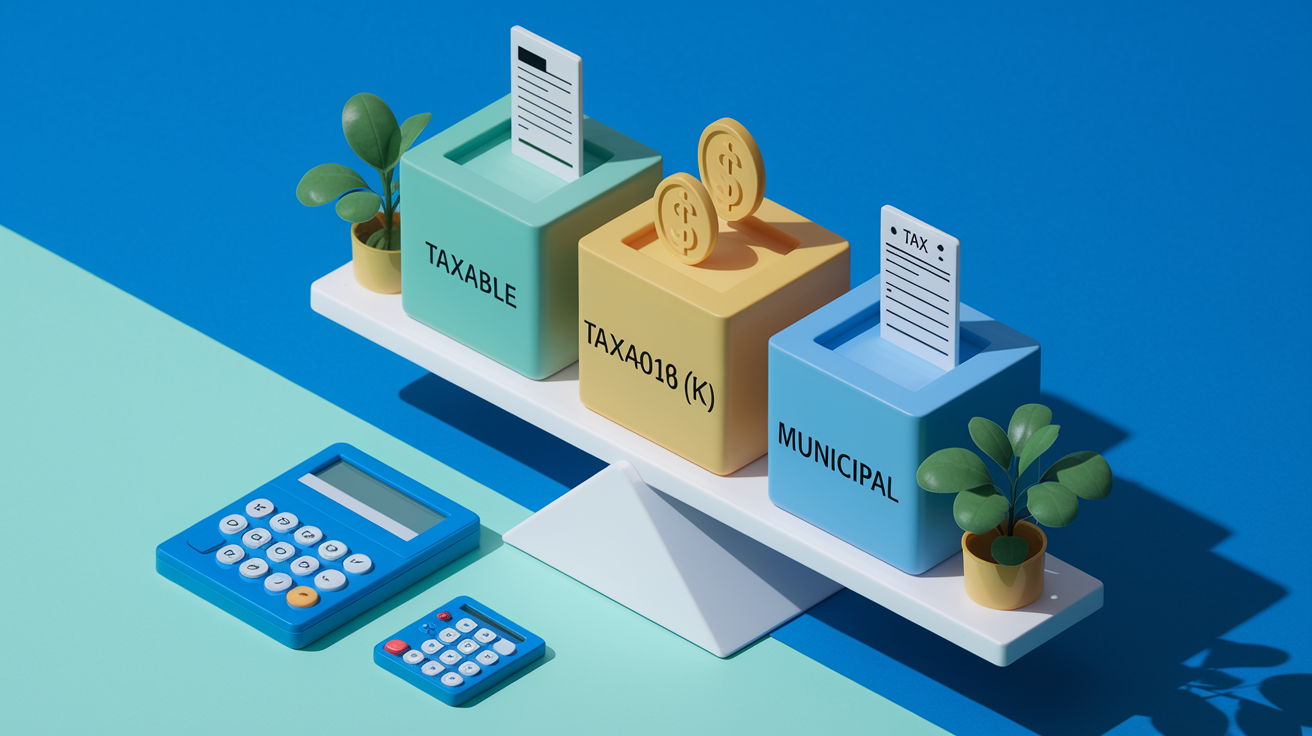
Taxes can consume a quarter or more of your income stream if you ignore structure. Municipal bond interest is generally exempt from federal tax and often state tax if you buy bonds issued by your home state. A New York resident buying New York munis pays no federal or state tax on the interest, though capital gains on sale remain taxable. Compare the taxable‑equivalent yield, the pre‑tax yield a taxable bond must offer to match the after‑tax return of a muni, before choosing.
U.S. Treasury interest is federally taxable but exempt from state and local income tax. If you live in California or New York, that state exemption can add 50 to 100 basis points of after‑tax value compared to a corporate bond paying the same nominal yield. Qualified dividends receive favorable tax rates, 0, 15, or 20 percent depending on income, similar to long‑term capital gains. Most dividends from U.S. corporations held more than 60 days qualify. REIT dividends usually don’t. They’re taxed as ordinary income because REITs themselves pay little or no corporate tax.
- Calculate your marginal tax rate, federal plus state and local, to understand how much of each income type you keep after tax.
- Compare taxable‑equivalent yields for munis. Divide the muni yield by (1 minus your tax rate). If that number beats a taxable bond’s yield, the muni wins after tax.
- Place tax‑inefficient assets in retirement accounts. REITs, high‑yield bonds, and taxable bond funds work better in IRAs or 401(k)s where distributions are tax‑deferred.
- Hold qualified‑dividend stocks and munis in taxable accounts. These already enjoy favorable treatment, so sheltering them in an IRA wastes the tax advantage.
Screening and Research Techniques for Income Assets

Screening starts with yield but doesn’t stop there. A 7 percent dividend yield might signal value or a company on the edge of a cut. Check the payout ratio first. Earnings divided by total dividends. Ratios above 80 percent leave no margin for error. Free cash flow coverage is even better. Does the company generate enough cash after capital spending to fund the dividend and still invest in the business?
For bonds, credit ratings provide a quick filter. Investment‑grade starts at BBB–, S&P, or Baa3, Moody’s. Anything below is high‑yield. Ratings aren’t guarantees. Agencies missed the 2008 mortgage meltdown. But they summarize balance‑sheet strength, cash flow, and industry position. Maturity schedules matter for ladders and liquidity. A bond maturing in two years carries less interest‑rate risk than one maturing in twenty.
Key Metrics for Evaluating Income Reliability
Financial strength shows up in the balance sheet. Low debt‑to‑equity ratios mean the company or municipality isn’t leveraged to the hilt. High interest coverage, operating income divided by interest expense, means the borrower can handle the debt load even if revenue dips. Earnings consistency over five or ten years smooths out one‑off events and reveals whether the business model holds up through cycles.
Payout history tells you how the issuer behaved during the last recession. Did the company maintain or raise its dividend in 2008 to 2009, or did it slash payments? Did the bond issuer honor obligations on time, or did it restructure? Track record beats promises. Balance‑sheet quality includes cash reserves, asset liquidity, and off‑balance‑sheet obligations that might compete with your income claim.
- Debt‑to‑equity ratio below industry median: signals manageable leverage and lower default risk.
- Interest coverage above 3×: ensures the issuer can pay interest even if earnings drop moderately.
- Consistent or growing cash flow over five years: shows the business or revenue source is stable, not dependent on one‑time windfalls.
- Credit rating of BBB– or higher for bonds: filters out most speculative issuers and reduces default probability.
- Dividend track record spanning at least one economic cycle: proves the payout survived stress, not just good times.
Putting It All Together: Building a Balanced Income Portfolio

A balanced income portfolio mixes dividend stocks, investment‑grade bonds, Treasuries, municipal bonds, REITs, and income ETFs to generate cash from multiple sources. Start by defining how much monthly or annual income you need. Subtract any pensions, Social Security, or other guaranteed sources. The gap is what your portfolio must cover.
Match your asset mix to your risk tolerance and timeline. Someone retiring in two years favors short‑maturity bonds, money markets, and stable dividend aristocrats. Someone with a ten‑year horizon can add dividend‑growth stocks and longer‑term bonds that pay higher yields but swing more. REITs and high‑yield bonds deliver extra income but require a stomach for volatility. Keep any single position under 5 percent of the portfolio to limit concentration risk.
Rebalancing keeps your allocation on target. If dividend stocks rally and grow from 30 percent to 40 percent of your portfolio, trim them and add bonds or other underweights. Rebalance once or twice a year, or when any slice drifts more than five percentage points from its target. Tax‑loss harvesting during rebalancing can offset gains and reduce your bill.
- Set clear income goals. Calculate the dollar amount you need each month or year, and decide whether to spend distributions or reinvest them for compounding.
- Choose your allocation framework. Split the portfolio among dividend equities, investment‑grade bonds, Treasuries, munis, REITs, and income funds based on risk tolerance and timeline.
- Screen and select high‑quality holdings. Use payout ratios, credit ratings, yield history, and balance‑sheet metrics to filter candidates in each category.
- Review tax implications. Place tax‑inefficient assets like REITs and high‑yield bonds in retirement accounts. Hold munis and qualified‑dividend stocks in taxable accounts.
- Diversify across issuers and sectors. Avoid loading more than 5 percent into any single company, bond issuer, or narrow sector to reduce single‑point failure risk.
- Rebalance regularly. Trim winners, add to laggards, and harvest tax losses once or twice per year to maintain target allocations and manage drift.
Final Words
You’ve got a clear playbook: build a foundation with dividend stocks, bonds, REITs and income funds. We covered how dividends and interest create cash flow, how to compare bonds, use ETFs for diversification, manage taxes, and check risks.
Next, pick a goal, choose an allocation that fits your timeline, screen for quality, and automate regular contributions. Start small and rebalance over time.
A straightforward income investing strategy aims for steady cash flow, accepts tradeoffs, and rewards consistency. You can do this.
FAQ
Q: How to make $100,000 a year in passive income?
A: To make $100,000 a year in passive income, aim for roughly $2–3 million at a 4–5% yield, spread across dividend stocks, REITs, bonds and income funds, and reinvest until you hit the target.
Q: What is the 3 3 3 rule for money?
A: The 3 3 3 rule for money is a simple cash-buffer guide: keep three months of living expenses in easy-access savings, review your budget every three months, and set three short-term financial goals.
Q: How can I make $1000 a month passive income?
A: To make $1,000 a month in passive income, aim for about $300,000 invested at a 4% yield, or use rental income, dividend ETFs, REITs, or income funds while reinvesting earnings and automating savings.
Q: How much money do I need to invest to make $3,000 a month?
A: To make $3,000 a month, you need roughly $900,000 at a 4% yield; with yields from 3% to 6% the range is about $600,000 to $1.2 million, depending on risk and taxes.