

What if chasing stock picks is the reason many investors underperform the market?
Index fund investing is the simpler alternative: you buy a fund that copies a market index, so you own a tiny slice of many companies and let the market do the work.
It’s low cost, hands-off (passive), and gives instant diversification, which helps protect you if a single company tanks.
If you want steady market returns with minimal fuss, this is the basic approach, but remember it won’t beat the market and you should match it to your timeline and comfort with ups and downs.
Clear Explanation of Index Fund Investing for Beginners
An index fund is a pooled investment that tracks a specific market index, like the S&P 500 or the total U.S. stock market. Instead of hiring someone to pick individual stocks, the fund automatically buys the same securities the index holds, in the same proportions. When you invest in an index fund, you own a tiny slice of every company in that index. Buy shares of an S&P 500 index fund, and you instantly own a piece of 500 of the largest publicly traded U.S. companies. The fund’s value moves with the index it tracks, minus a small annual fee called an expense ratio.
Index fund investing is a passive strategy. The fund doesn’t try to beat the market. It aims to match the market’s performance as closely as possible. The fund manager’s job is simple: keep the fund’s holdings aligned with the index’s composition and weightings. If the index adds or removes a company, the fund follows. If a company’s market value grows and its weight in the index increases, the fund adjusts. This hands-off approach keeps costs low and eliminates the risk of a manager making bad bets.
People choose this strategy because it’s predictable, simple, and historically effective. The first broad-market index fund launched in 1976. Passive indexing became widely popular as investors realized that most actively managed funds fail to outperform the market over the long term. Broad U.S. equity indices have delivered roughly 10 percent nominal annual returns on average over multi-decade periods. Past performance isn’t a guarantee of future results, but index funds offer a straightforward way to capture market growth without the guesswork.
Key traits of index fund investing:
Passive tracking. The fund mirrors an index without trying to outperform it.
Instant diversification. One fund can hold hundreds or thousands of securities.
Low fees. Minimal expense ratios because there’s no stock picking or frequent trading.
Transparent rules. Index methodology is published, so you always know what the fund owns.
How Index Fund Investing Works in Practice
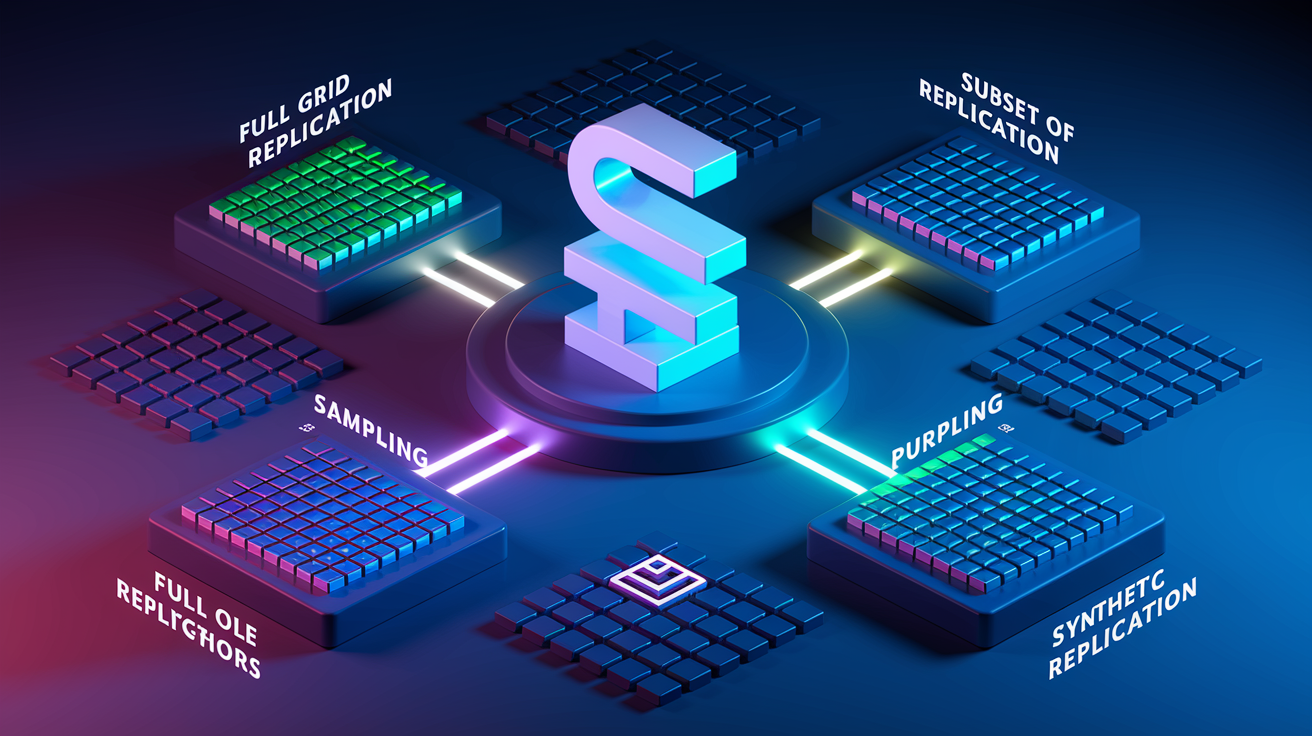
Index funds replicate the holdings of an index using one of three main approaches. Full replication means the fund buys every security in the index at the exact weights. This is common for large, liquid indices like the S&P 500. Sampling is used when an index holds thousands of securities or includes hard to trade bonds. The fund buys a representative sample that behaves very similarly to the full index. Synthetic replication uses financial derivatives such as swaps to mimic index returns, though this is less common in retail funds. Each method aims for the same goal: match the index as closely as possible.
Most major indices use market cap weighting. In this system, companies with larger market values make up a bigger percentage of the index. If a company represents 7 percent of the S&P 500’s total market cap, the fund allocates roughly 7 percent of its assets to that stock. When market prices change, the fund’s weights shift naturally because the underlying values change. The manager only trades when the index adds or removes a company, or when new cash flows in. This keeps trading activity and costs very low. Equal weighting and other schemes exist, but market cap weighting is the most widely used standard.
Main replication methods:
Full replication. Buy every security in the index at exact weights.
Sampling. Hold a representative subset that closely matches the index.
Synthetic. Use derivatives to replicate index returns without owning underlying securities.
Tracking error measures how closely the fund’s return matches the index. Well managed index funds typically keep tracking error between 0.01 percent and 0.50 percent per year. Small differences occur because of fees, trading frictions, cash drag (the fund holds a bit of cash for redemptions), and dividend timing. A fund with a 0.05 percent expense ratio and good execution might trail the index by about 0.05 percent to 0.10 percent annually. That tiny gap is the cost of convenience and diversification.
Types of Index Funds and What They Track

Broad U.S. stock index funds are the most popular starting point. The S&P 500 index tracks 500 of the largest U.S. companies and is market cap weighted. A total stock market index fund goes further, holding thousands of U.S. companies of all sizes, from giant corporations down to small publicly traded firms. The Russell 2000 tracks about 2,000 smaller U.S. companies and gives exposure to the small cap segment. Each of these funds offers instant diversification across a wide swath of the American economy. A single total market fund can hold more than 3,500 individual stocks.
International and emerging markets index funds extend diversification beyond U.S. borders. International developed market funds track large and mid sized companies in countries like Japan, the United Kingdom, Germany, and France. Emerging markets funds invest in countries with faster growing but more volatile economies, such as China, India, Brazil, and South Korea. These funds add geographic and currency diversification to a portfolio. They also carry country specific political and currency risks, so returns can swing more sharply than U.S. funds.
Bond index funds provide income and stability. A total bond market index fund holds thousands of U.S. government, corporate, and mortgage backed bonds with varying maturities. Short term bond funds focus on bonds maturing in one to three years and offer lower volatility. Intermediate and long term bond funds hold longer dated securities and are more sensitive to interest rate changes. Bond index funds are often used to balance the ups and downs of stock funds. When stocks drop, bonds often hold steady or rise, cushioning the overall portfolio.
Niche index funds target specific strategies or values. Sector index funds track industries like technology, health care, or energy, letting you tilt toward areas you expect to do well or avoid areas you dislike. Dividend index funds hold companies with higher than average dividend payouts, appealing to income focused investors. Environmental, social, and governance (ESG) index funds screen out companies based on ethical criteria, such as carbon emissions or labor practices. These funds add flexibility but can carry higher concentration risk or underperform broader benchmarks if the screened group lags the market.
Costs and Fees in Index Fund Investing

Expense ratios are the most visible cost. This is the annual fee you pay, expressed as a percentage of your investment. Many broad S&P 500 index funds charge between 0.03 percent and 0.10 percent per year. A total stock market fund might run 0.04 percent. Even at the higher end for index products, around 0.50 percent, the cost is far below the 0.50 percent to 1.50 percent or more charged by actively managed mutual funds. Over decades, a difference of just 0.50 percent per year compounds into tens of thousands of dollars on a mid sized account. Always check the expense ratio before you buy. Lower is better, as long as the fund tracks the index accurately.
ETFs can also incur bid ask spreads. This is the difference between what buyers pay and what sellers receive when the ETF trades on an exchange. For heavily traded ETFs, the spread is often just a few cents per share, adding very little cost. For less liquid ETFs, the spread can be wider. Many brokers now offer commission free ETF trades, but if your broker charges commissions, buying and selling frequently will eat into returns. Index mutual funds avoid bid ask spreads because they price once per day at net asset value (NAV), but some may charge purchase or redemption fees if you sell too soon after buying.
| Cost Type | What It Means |
|---|---|
| Expense Ratio | Annual percentage fee deducted from fund assets (e.g., 0.03%–0.50% for index funds). |
| Bid-Ask Spread | Difference between buy and sell prices for ETFs; usually very small on liquid funds. |
| Trading Commission | Broker fee per trade; many platforms now charge $0 for ETFs and mutual funds. |
| Fund Minimum | Initial investment required; ETFs often have none beyond one share; some mutual funds require $1,000–$3,000. |
Benefits of Index Fund Investing for Long-Term Investors

Index funds deliver instant diversification. Buying a single broad market fund gives you ownership in hundreds or thousands of companies. If one company goes bankrupt, it barely affects your overall return because it represents a tiny fraction of the fund. A total U.S. stock market fund spreads your money across every publicly traded sector, from technology and health care to utilities and consumer goods. International index funds add global exposure, reducing your dependence on any single country’s economy. This diversification lowers single stock and single sector risk without any extra work on your part.
Low fees preserve more of your return. Actively managed funds spend money on research teams, frequent trading, and marketing. Index funds skip all that. The fund simply follows the index’s rules, keeping turnover low and trading costs minimal. Over 20 or 30 years, the compounding effect of saving even 0.50 percent per year is huge. If the market returns 10 percent annually and your fund costs 0.05 percent, you keep nearly all of it. If another fund charges 1.00 percent, your net return drops to 9 percent, and that difference snowballs over time. Lower fees mean more money stays invested and compounds.
Tax efficiency is another advantage, especially with ETFs. Index funds trade infrequently, so they generate fewer capital gains. ETFs have a structural benefit: when investors sell ETF shares, they sell to other investors on the exchange. The fund itself doesn’t have to sell securities to raise cash, avoiding taxable events. Mutual funds sometimes distribute capital gains to all shareholders when managers sell holdings or when large redemptions force sales. Over decades, tax efficient investing can add meaningful extra returns, particularly in taxable accounts. Inside retirement accounts like IRAs or 401(k)s, the tax benefit is less important because those accounts defer or avoid taxes anyway.
Core benefits of index fund investing:
Diversification across hundreds to thousands of securities in one fund.
Low costs that let you keep more of your returns over time.
Simplicity with no need to research individual stocks or time the market.
Tax efficiency from low turnover and (for ETFs) in kind redemption mechanics.
Transparency because index holdings and rules are published and predictable.
Drawbacks and Risks of Index Fund Investing

Index funds can’t beat the market because they are the market. If the S&P 500 rises 8 percent in a year, your S&P 500 index fund will return about 8 percent minus the expense ratio. If the index drops 20 percent, your fund drops roughly 20 percent. There’s no manager making tactical moves to avoid crashes or exploit opportunities. You’re locked into whatever the index does. For investors who accept market returns, this is fine. For those hoping to outperform, index funds will always disappoint.
Market cap weighting creates concentration risk. In the S&P 500, the 10 largest companies often represent more than a quarter of the index’s total value. If the biggest technology stocks stumble, the whole index feels it. Smaller companies in the index have tiny weights and almost no impact on returns. International and bond index funds carry their own risks. International funds face currency fluctuations, political instability, and less developed legal systems. Bond index funds lose value when interest rates rise because existing bonds become less attractive than new bonds paying higher rates. Every type of index fund participates fully in the risks of whatever it tracks.
Index Mutual Funds vs Index ETFs
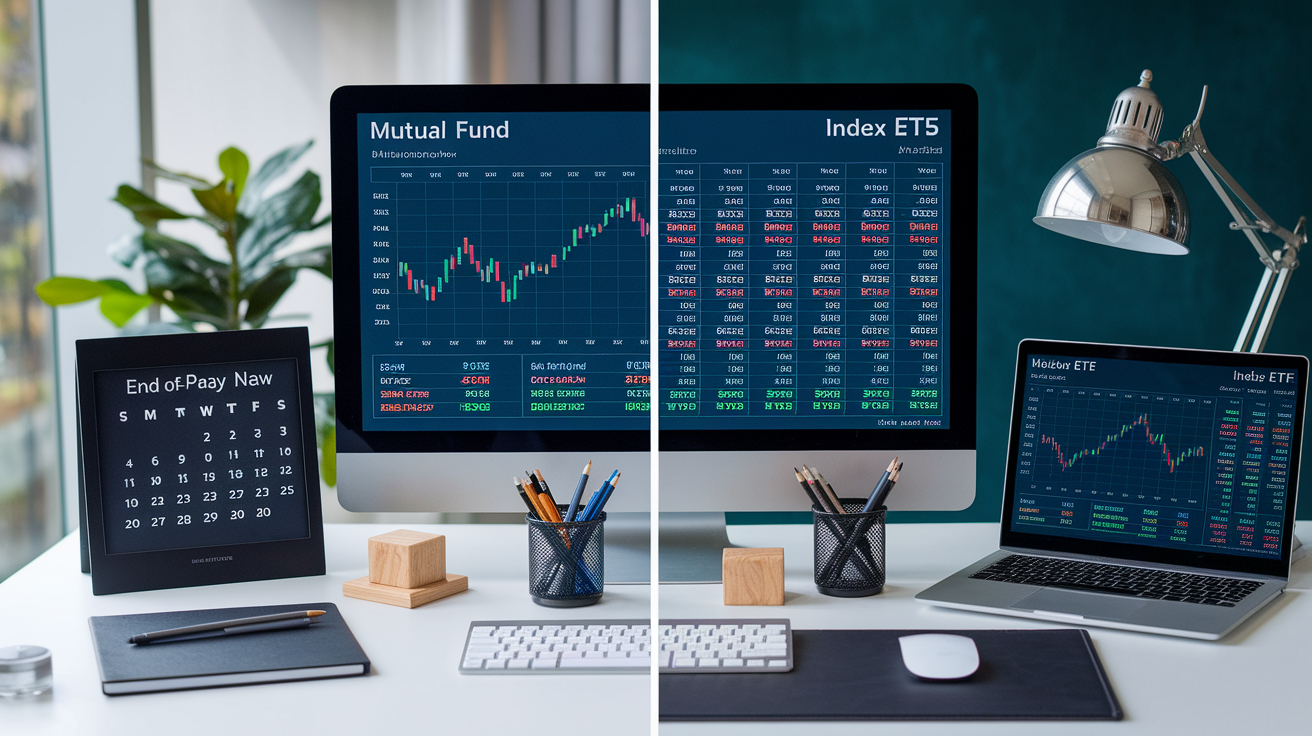
Index mutual funds and index ETFs both track the same indices, but they trade and price differently. Mutual funds price once per day at the close of the market. When you place an order, you get the end of day net asset value (NAV) no matter what time you submitted the trade. This makes mutual funds straightforward for regular contributions and automatic investing. Many brokers and retirement plan providers make it easy to set up monthly transfers into a mutual fund.
ETFs trade throughout the day on stock exchanges, just like individual stocks. You can buy or sell shares at any moment the market is open, and the price moves in real time. This intraday trading adds flexibility, but it also means the ETF’s market price can drift slightly above or below the true NAV during the day. For buy and hold investors, these small differences rarely matter. ETFs also allow limit orders and stop orders, which mutual funds don’t support. If you want control over the exact price you pay, an ETF gives you that option.
Tax efficiency and minimums differ. ETFs use an in kind creation and redemption process that lets large institutions swap baskets of securities directly with the fund, avoiding taxable sales. This keeps capital gains distributions low. Mutual funds don’t have this mechanism, so they may distribute gains to shareholders even if you didn’t sell. Some index mutual funds have minimum initial investments, such as $1,000 or $3,000 for certain share classes. Many ETFs have no minimum beyond the cost of one share, which can be as low as a few dollars for some funds. Some brokers now offer fractional ETF shares, erasing even that small barrier.
| Feature | ETF | Index Mutual Fund |
|---|---|---|
| Trading | Intraday on exchanges at market price | Once daily at end-of-day NAV |
| Minimum Investment | One share (often fractional shares available) | Often $0–$3,000 depending on share class |
| Tax Efficiency | Typically higher due to in-kind redemptions | Can distribute capital gains to shareholders |
How to Start Index Fund Investing Step-by-Step

Decide which index you want to track. If you’re just starting, a broad U.S. total stock market index or an S&P 500 index is a simple choice. These funds give you exposure to the overall market without betting on any single sector or stock. If you want bonds for stability, pick a total bond market index fund. If you want international diversification, add a developed or emerging markets fund. Match the index to your goals and timeline. Stocks are for growth over many years. Bonds are for income and cushioning short term drops.
-
Choose your index and fund. Look for a fund that tracks your target index and has a low expense ratio. Aim for less than 0.20 percent on core stock and bond holdings. Compare a few options and check historical tracking error if the data’s available.
-
Pick ETF or mutual fund. If you plan to invest a lump sum or want intraday trading flexibility, an ETF works well. If you want automatic monthly contributions and don’t care about real time pricing, a mutual fund is easier to set up and forget.
-
Open the right account. Use a tax advantaged account like an IRA or 401(k) if you’re investing for retirement. These accounts let your money grow without annual tax on dividends or capital gains. If you’re investing for a goal outside retirement, a taxable brokerage account is fine.
-
Fund your account. Transfer money from your bank. Some brokers let you link accounts and move cash in minutes. Others take a few business days. Make sure you have enough to meet any fund minimum if you’re buying a mutual fund.
-
Place your order. For an ETF, enter the ticker symbol and the number of shares you want to buy. For a mutual fund, enter the dollar amount. If you’re using a taxable account, consider starting with a smaller amount and adding more each month to ease into the market gradually through dollar cost averaging.
-
Set up recurring contributions and rebalancing. Automate monthly or biweekly transfers if possible. This keeps you investing consistently without having to remember. Plan to rebalance once a year or whenever your target allocation drifts by 5 to 10 percentage points. Rebalancing means selling a bit of what’s grown and buying more of what’s lagged, bringing your mix back to your original plan.
Simple Index Fund Portfolio Examples
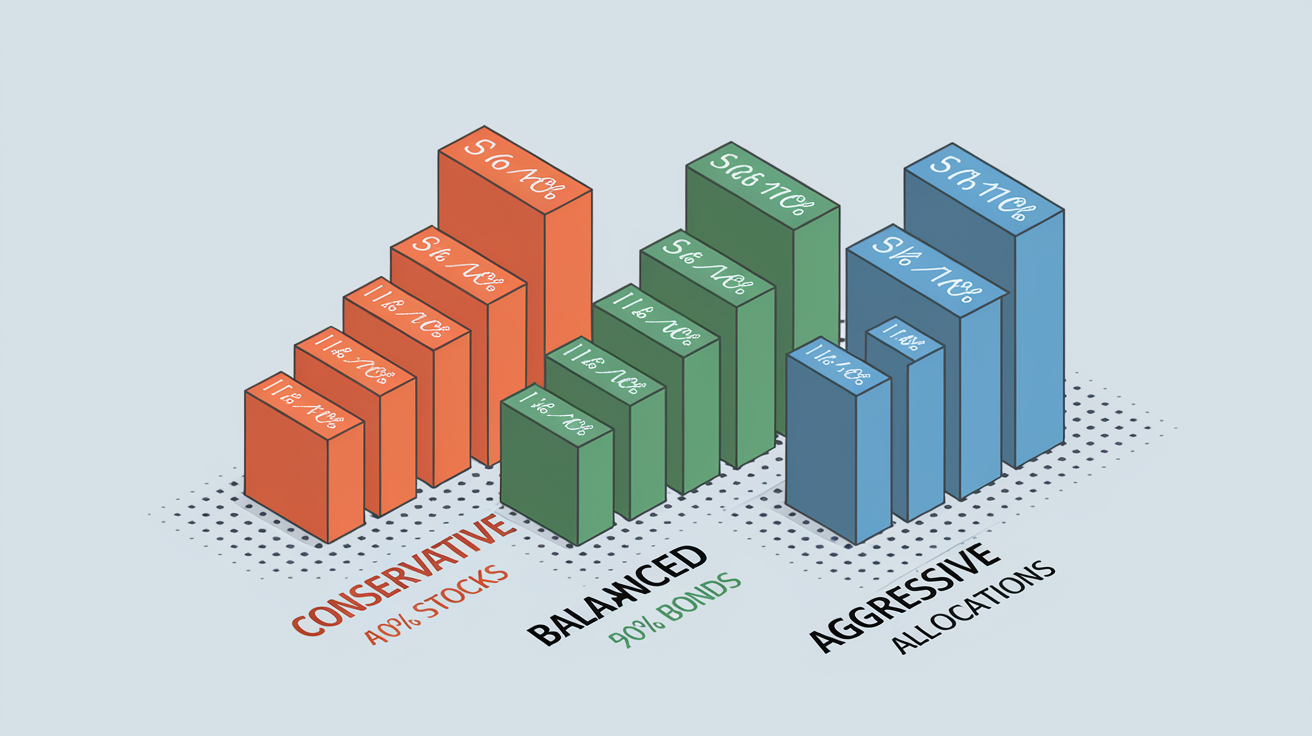
A conservative portfolio prioritizes stability and steady income over growth. A common conservative mix is 30 percent in a total U.S. stock market index fund and 70 percent in a total bond market index fund. The large bond allocation cushions against stock market drops, making the overall portfolio less volatile. This approach suits investors close to retirement or anyone who can’t afford to see their account value swing by double digits in a bad year. The tradeoff is lower long term returns. Bonds have historically delivered much lower returns than stocks over multi decade periods.
A balanced portfolio aims for moderate growth with reasonable volatility. A typical balanced mix is 60 percent in stock index funds and 40 percent in bond index funds. You can split the stock portion between U.S. and international funds, such as 40 percent U.S. total market, 20 percent international developed markets, and 40 percent bonds. This mix participates in most stock market gains but has enough bonds to reduce the sting of major downturns. It’s a middle ground for investors who have a decade or more until they need the money and can tolerate some ups and downs.
An aggressive portfolio chases maximum long term growth and accepts higher short term volatility. A common aggressive allocation is 90 to 100 percent in stock index funds, with little or no bonds. You might hold 70 percent U.S. total stock market, 20 percent international developed, and 10 percent emerging markets, or go all in on a single total world stock index fund. This strategy makes sense for young investors with 20 or 30 years before retirement. Over long periods, stocks have historically outpaced bonds by a wide margin. The risk is that your account value can drop 30 percent or more in a severe bear market. If that would make you panic and sell, dial back the stock percentage.
| Portfolio Type | Equity Allocation | Bond Allocation |
|---|---|---|
| Conservative | 30% | 70% |
| Balanced | 60% | 40% |
| Aggressive | 90–100% | 0–10% |
| Rebalancing Frequency | Annually or when allocation drifts 5–10 percentage points | |
Taxes and Common Beginner Mistakes in Index Fund Investing

Index funds typically generate fewer taxable events than actively managed funds because they trade less. When the fund does distribute dividends or capital gains, you owe tax on those distributions in a taxable account. Qualified dividends from U.S. stocks often get favorable tax rates, and long term capital gains are taxed at lower rates than ordinary income. ETFs usually produce even fewer capital gains distributions due to their in kind redemption structure. If you reinvest dividends automatically, you still owe tax on the distribution in the year you receive it, even though you didn’t take cash. Inside an IRA or 401(k), you don’t pay tax on dividends or gains until you withdraw money in retirement, which makes index funds especially powerful in those accounts.
Tax loss harvesting can help in taxable accounts. If an index fund drops below what you paid, you can sell it at a loss, use that loss to offset other gains, and immediately buy a similar (but not identical) fund to stay invested. This strategy lowers your tax bill without changing your market exposure. It’s more common with individual stocks or multiple similar index funds. Always check the wash sale rule: if you buy the same or a substantially identical security within 30 days before or after the sale, the loss is disallowed.
Common beginner mistakes to avoid:
Chasing last year’s best performing fund instead of sticking to a long term plan.
Ignoring expense ratios that differ by tenths of a percent, which compound into large differences over decades.
Under diversifying by holding only one sector or country fund instead of a broad market mix.
Overtrading or checking account balances daily, leading to panic selling during normal market dips.
Failing to use tax advantaged retirement accounts (IRA, 401(k)) when eligible, giving up years of tax free compounding.
Final Words
Start by picking a low-cost index fund that matches your goal. This post explained what an index fund is, how passive tracking works, replication methods, and main types like S&P 500, total-market, international, and bond funds.
We also covered fees, taxes, risks, ETFs versus mutual funds, simple portfolio examples, and a clear step-by-step start plan, including checking expense ratios, account choice, and setting up regular contributions.
Keep it simple, stick to your plan, and review once a year. If you’re asking what is index fund investing, this guide gives the basics to begin with confidence.
FAQ
Q: Are index funds a good investment?
A: Index funds are a good choice for many long-term investors because they spread money across many companies, keep costs low, and match market returns; they still rise and fall with the market.
Q: What if I invested $1000 in S&P 500 10 years ago?
A: If you invested $1,000 in the S&P 500 ten years ago, it would likely have grown to about $2,600 assuming a 10% annual return; dividends, fees, and exact dates change the result.
Q: What are the big 3 index funds?
A: The “big 3” index funds usually mean an S&P 500 fund, a total U.S. stock market fund, and a total bond market fund—three simple building blocks for many portfolios.
Q: How much money do I need to invest in an index fund?
A: How much money you need depends on the fund: many ETFs let you start with one share or a fractional share, while mutual funds can require $0–$3,000; start with what you can afford and set a regular plan.